Are you Prepared to go?

Cyrus God's Servant

Ezra 1-4 God’s Servant

What does a servant look like and act like? Ezra was a Jewish scribe living in Babylon during the 70 yr. captivity that God ordered to discipline his errant children. Jeremiah prophesied about it, Daniel read about it, and Isaiah prophesied about a king named Cyrus who would release them. Ezra was that person prepared to go when Cyrus released them!

Cyrus knew these facts: The Lord, God of heaven, had blessed him with the rulership over all the kingdoms of the earth.[Ezra 1:2] Secondly, he knew that this God of the Hebrews had enlisted him to build a house for Him in Jerusalem. So thirdly, he set about to carry out those orders by opening the storehouses in Babylon, where Nebuchadnezzar had placed the wealth of the Jewish Temple for over 70 yrs. ago! [Is. 44:28] Just think, God’s prophets had set the wheels in motion for all of this to happen, and King Nebuchadnezzar had willingly placed all the riches for 70 yrs. in safekeeping in the Babylonian temples.

Application for us: Long ago, in eternity past, God preserved us as His treasure and, at His appointed time, revealed us to the world for one purpose:  “so that [we] may proclaim the excellencies of Him who has called [us] out of darkness into His marvelous light;” [1Pet 2:9]

Cyrus willingly served the God of heaven, do we?

“What legacy are you leaving?”

What is your legacy?

2Chron 33 If someone would open your life’s diary what would they read? Would it be like the life of King Manasseh who had a godly father in King Hezekiah or would it read that you rebelled and refused God’s ways…until…

The Chronicler records these words: the annals record all of King Manasseh’s sins and unfaithful acts along with the sites where he built high places and erected Asherah poles and idols. Even though God spoke to him, he refused to listen. So, God disciplined Manasseh with hooks in his nose, bronze chains, and extradition to a foreign land where he languished in a prison cell with cold gruel, day-old bread, and water. It was then that his senses were awakened and he “realized that the Lord is the true God” and repented. [2Chron 33:13] It was because of the mercy of God that he was released and returned to his kingdom. God’s mercy is overflowing!

God has placed this event in His Word to remind us that it begins with a heart that is humbled but also that sin produces consequences not just for us but also for family and children. Manasseh may have repented but the damage was long-lasting. His son Amon followed in his footsteps of an unrepentant lifestyle and his life ended in an assassination.  

Generations come and go and we can learn much from the ancestral record. Hezekiah: godly. Manasseh: ungodly but repentant. Amon: ungodly to the end.

What would your diary say about your life?

What is your R.S.V.P.?

Jesus has an invite for you

2Chron 30 “An Invite that is Rejected.”

With great energy, Hezekiah continued his reforms for his nation. He wisely sought counsel from his officials and sought to protect Jerusalem from invaders while trusting in God to be his guide. He sought to reunite the kingdom that had been divided through the observance of the Passover and sent messengers with invitations as far north as Zebulun. But much like the people in Jesus’ parable in Luke 14, the people responded, Sorry, but I have work to do that cannot wait, etc. followed by “Please excuse me.” In addition, many mocked and ridiculed the messengers. 

In the parable Jesus taught, the invited had one main reason; they were “just.too.busy” to come. Their priorities were self first and God last; they were stubborn. How like the world today when the invitation is given to accept Messiah. They offer these excuses: that is ok for you but not for me or another time, or I am doing just fine and I don’t need God; or lastly, I am “just.too.busy.”

Those that chose to come to the Passover were blessed and rejoiced in the celebration. So it was in the parable; those that came filled the Master’s house to overflowing with rejoicing!

God’s invitation is for all. How will you respond? Are you ‘just.too.busy.’ or will you answer, Yes, Lord! 

The Contrasts: Pride & Humility

Pride and Humility

2Chron 26 Pride goeth before the fall.

Uzziah started with glowing statements of following God, but like Joash, who was faithful only as long as his mentor Jehoiada the priest was alive.  Uzziah, similarly, was only faithful during the lifetime of the priest Zechariah, who had faithfully taught him how to honor God.  Both Joash and Uzziah are, as Romans 1:20 says, “without excuse.”  God always provides what we need to be faithful, but it is our choice, and for both Joash and Uzziah, the lack of repentance came at a cost.  Uzziah had a faithful façade, but behind that was an insatiable desire for power, leading to his downfall.  Listen again to the Proverbs, “a proud and arrogant person, whose name is scoffer acts with overbearing pride.” [Prov 21:24] King Uzziah lived that verse at the most critical point in his life; when he became powerful.  

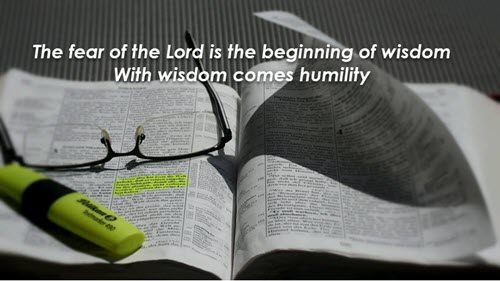
How then can we master this enemy of pride?  Interestingly, the Proverbs writer again counsels us: the fear of the Lord is the beginning of wisdom.  [Prov 9:10] As sinful people, we do not naturally seek to fear and honor God.  It goes against our nature because we want to be God, like our arch-enemy, Satan.  We must cultivate a reverent fear of the holiness and majesty of God, so we are not caught in the sin of pride like Uzziah. 

“Be Ye Steadfast”

be steadfast

2Chron 20 The Chronicler tells us in Ch. 22 “Jehoshaphat followed his father Asa’s footsteps and was careful to do what the Lord approved.” What a tribute! What did he know that helped him stand apart from the world? He knew these things and applied them:  

He lives in heaven, he rules over all.
He knew that God has the strength and the power so that no one can stand against Him.
He knew and remembered that God had delivered in the past so he could trust God for the future.
He knew that before facing any enemy he needed to stand before God.
He knew that God hears the cry of his children and that God is a deliverer.
He knew he could request help from God even when he didn’t know what to do.

However, for all that he knew, in his later years, he aligned with the evil king Ahaziah king of Israel, and acted wickedly in so doing. The prophet told him because you allied with Ahaziah, the Lord has destroyed your works.

Paul was right: be ye steadfast immovable always abounding in the work of the Lord. [1Cor 15:58]

Ahab’s Foolish Decision

Ahab foolishly ignores the prophets words

2Chron 17-19 Jehoshaphat did right because he followed David’s example. Sounds good, right?  However, he made a glaring mistake when he decided to ally with “wicked” king Ahab. What was he thinking? 🙁  1Co 15:33 Do not be deceived: “Bad company corrupts good morals.” Second mistake. Jehoshaphat listened and agreed to join Ahab in a battle. 🙁  However, before he stepped onto the battlefield, he wanted to hear from a godly prophet. So far, so good, 🙂 but now Ahab denigrates the holy prophet, Micaiah. 

Jehoshaphat reminds Ahab of a wise principle my daddy taught me: If you can’t say anything good about a person, be quiet. But, Ahab is a slow learner. He knows Micaiah is a truth-teller. Therefore when Micaiah tells him that he will lose in this battle and die he should have listened!!!!! But fools do not listen! He chooses to go into battle anyway—and yes he died—just as the prophet said. Beloved, some people refuse to believe no matter what! They are stubborn. 

End of story: Ahab sends Micaiah to the dungeon before he leaves, saying he will release him after his return. Since Ahab didn’t return, what happened to Micaiah? God has left that part of the story for eternity.

Life Lesson: Pay attention to wise counselors, or you might end up like Ahab.

A King’s Folly

King Asa was a fool

2Chron 13-16 In the 36th year of King Asa, he made a deal with a neighboring king to come to his aid against a formidable enemy.  This deal goes down in history as Asa’s Folly.  Asa had been victorious over the Ethiopians, but now he sought help, not from God, but from his stores of wealth to buy protection.  Therefore, God sent a seer to remind him that when another enemy was on his doorstep, he sought God and saw victory.  The point of this story is that when Asa relied on God, he was victorious, but when he relied on his own endeavors, the enemy was kept at bay—for a time.  God’s prophet reminded him that reliance on human efforts is always the wrong way. Now, God would remove His hand of blessing, and from this point on, Judah would have wars and rumors of wars.

What do you rely on when an enemy comes prowling about seeking whom he can devour?  [1Pet 5:8] Do you seek God’s help or rely upon your storehouses of human wisdom or riches?  When we rely upon our resources, we may be victorious for the moment, but in the end, it always fails.  James gives us a principle: If you are wise and understanding, you will reveal it in godly wisdom instead of earthly wisdom.  [James 3:13-17]

Rehoboam’s foolish Decision

Be wise not foolish

2Chron 10-13 and 1Kings 12 Slow learners reap enormous consequences 

God had promised Solomon that HE would keep his kingdom strong if he was obedient to Him and honored him. What happened along the way is anybody’s guess, but this we do know: Solomon’s heart was drawn away by his idol worshiping wives. He fathered Rehoboam by Naamah, and she was an Ammonite. When Solomon died, Rehoboam reigned for 17 yrs. and although much of it was reasonably good, he was not a wise king initially. He did not listen to the wise leaders but was hoodwinked by his own “buddies” who were young like him. End of story, God sent trials into his life, and he failed many of them. The ten tribes of Israel left him, and thus the kingdom was divided. What are we to learn from his life? 

First, be holy as God is holy if you want to be blessed. Secondly, be strong and courageous. Thirdly, Pro 4:27 Do not turn to the right nor to the left; Turn your foot from evil.  

The Danger of the Fading Memory

memories fade like film

2Chron7 -9 God Speaks to Solomon

When we are on a high celebrating, all goes well, but after the glow, the high fades from memory much like film that has been exposed to the air. Perhaps that is why God came to Solomon the second time to remind him that He is God and there is no other. God came to Solomon as he slept, and that is how God sometimes speaks to us in our deep sleep where other thoughts cannot usurp our devotion to Him. God reminded him that He was the giver of blessings of all things. He was pleased and would bless IF Solomon remained faithful. He was also the “discipliner” (said nine times in Heb 12) of those whom He has called.

We need to be reminded of this principle: God blesses obedience and disciplines disobedience.

People who Pray

Are we people of prayer

2 Chron. 4-6 Dedication of the Temple

King David had wanted to build the house for the Lord, but because he was a man of war and had shed much blood, God allowed him to collect the materials but the actual task was given to his son Solomon. As the new king, Solomon had planned and ordered the building and the day finally arrived to dedicate it. The program included music, sacrifices without number, and a lengthy prayer by King Solomon.

In his prayer, Solomon asked God to hear from heaven over and over. Solomon knew that the presence of God was not in the Temple but in the heavens seeking God’s blessing and forgiveness for sins committed. As he closed his prayer he asked God to listen, heed and remember his people.

God loves to hear his people pray and especially when we use the ACTS way: Admit we are sinners, Believe that God hears and will forgive, Thank Him for the blessings he has bestowed, and Supplication or petitioning for others. May we be a people who pray.

Optimized by Optimole