
 As we read this last chapter in Luke we wonder why he did not focus on just the beauty of the resurrection. Dr. Luke is drawing us into these real life scenes that we might relate as to why there are those today who also cannot understand the resurrection and see how God is at work amongst us. We are brought front and center that we might learn from these encounters as a means to share the gospel message.
First are the women who needed an angel to walk them back spiritually to the words of Jesus: “Remember how he told you?” The two on the road to Emmaus needed the presence of the risen Christ to jog their memory of the passages he had taught them. And just as with the women, we too need our physical and spiritual eyes opened that we might recognize the risen Christ. Is this not the work of the Holy Spirit? We remember John’s words: For God so loved and we begin to put the puzzle pieces together.
It took an angel to open the understanding of the women. It took the “stranger” to begin questioning the Emmaus walkers as to what they already knew. But, it was not until the angel asked the key question and it was not until Jesus broke the bread at the table of fellowship that their eyes were opened and they recognized and put 2 and 2 together.
So what is the lesson? God loves us and He will provide what we need to have our eyes opened and our understanding illuminated. Where are you? God will provide what we need to see and understand the risen Christ.
 “people are appointed to die once, and then to face judgment,”[Heb 9]. Our question is: are you prepared for your entry into eternity? In Luke 23, we are presented with three candidates for us to observe and determine ours.
 In the opening verses of Job, we find the villain Satan in the presence of God as the accuser of the brethren who has been on the prowl looking for someone to devour. [1Pe 5:8]
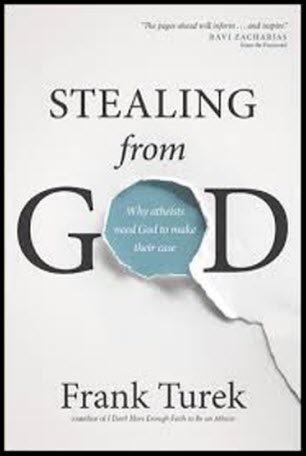 Frank Turek, author of “Stealing from God” wrote: “the amazing evidence of God’s sovereignty is revealed in how even those who don’t believe in Him call upon Him to remind them of the source that paved the way to their disavowal of belief in His existence.”
 “Though troubles assail us and dangers affright” are the first words of the hymn written by John Newton. In the third stanza, he writes “when Satan assail us …we triumph by faith.” But even though we are people of faith we are also prone to think God is ‘afar off.’ The psalmist’s words echo back to us: “You are near Lord!..the Lord is near all who cry out to him.” [Ps 119/145]
 As a parent these words have been heard more often than not when an older sibling gets to go do something but the younger only hears the ‘no.’ Do we think that it is just a parent that has to say ‘no’?
 Jan 3rd Luke 2 “Being Used by God”