Forgiveness

LUKE 23 As hard as it is to read this chapter and to walk the road of suffering with our Savior, it is noted that even in the hardest time of the life of our Master, His one thought was forgiving men for their sin. Is that our thought when others condemn us or say lies about us? Can we have a forgiving spirit and words to tell those that they are forgiven or does the enemy come and tell us to be silent or worse do we, like the fearful disciples hide ourselves away from the crowd? 

Today, may we have the heart of Jesus in these hard times. May we earnestly desire that our words and actions prove we are His disciples, His followers, His trusted ones. 

Why are we surprised?

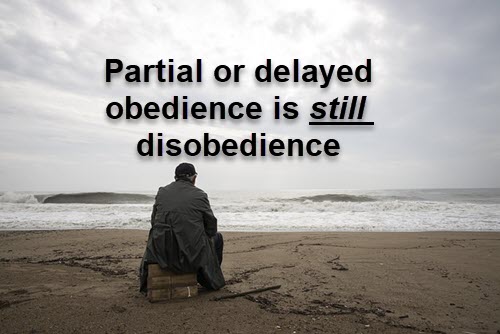
Luke 19 When God tells us something is going to happen or He gives us directions to do this and so, why are we surprised when it actually happens? Jesus told the disciples to go into the city and find a colt tied. He said untie it and bring it to me. Just as He said, the bystanders asked the reason they were untying it. As Jesus had directed, so they said, “He needs it.” End of story! We can’t be a fly on the wall but we can imagine the discussion as they wandered back through the city streets to where Jesus was. It is things like this that cause us to stop and wonder, what has God told me to do step by step. Have I been as obedient as these disciples had been without question or do I question the reasons? One thing is true: any partial obedience is still disobedience and total obedience is blessed by the Lord. 

 Stop and ponder your day. Were you totally obedient or only partially obedient? He said to go and make disciples. How are we doing with that command?  He said to love our enemies. How are we doing that? He said to forgive; how are we doing that? What would be the grade He would give us this day? 

What does your heart reveal?

Luke 7: Do you have a heart of compassion for the most needy among our society or do you wonder and think that there is no hope for them. Listen to the story Jesus has recorded for us about two individuals; one is a noted sinner and the other is one who feels or thinks he is the righteous one. The most “righteous” one says to himself, doesn’t he realize what kind of woman this is that has come uninvited to my home? How often do we too make judgments and we presume without the compassion of God? That was Simon, the Pharisee.

The scene is this: Simon invited Jesus to dinner and while dinner was being served, a woman of the streets crept in uninvited and lay down at the feet of Jesus. Scandalous! Doesn’t Jesus realize who she is? While this happening, Jesus tenderly turns to her as she lay weeping, wiping his feet with her tears and pronounces her faith and her forgiveness. Jesus then turns to Simon and in compassion asks him about who should be more forgiven, the one who has sinned much or the one who has sinned little. 

Jesus placed this story here to remind us that we quickly presume and often judge without compassion. We wonder if Simon learned that lesson that evening. We never know when Jesus will open our eyes to our sin and our lack of compassion. Be alert! We are not forgiven because of our many works but because our heart is open to His love. 

War and Peace

Romans 8-10 “Therefore there is no condemnation for those who are in Christ Jesus” because you are free from the law of sin and death and are alive in Christ.”]Rom 8:1]

Beloved, remember this truth; as we noted in Rom 7, the unbeliever “does not get it and never will get it” because they are in a battle against God, not against you. Remember, they do not have the Holy Spirit within, so they are unwilling to agree with God. Therefore, they are at war with themselves and God and are hostile to God. This is the truth according to Rom 1 and Gal 5. We need this list before us when unbelievers persecute us, and we are asking why. They don’t know any different because they are governed by their flesh, which is governed by the prince and power of the air, Satan himself. PRAY FOR THEM/ WITNESS TO THEM.

Remember the words of Jesus and Peter, “Do not think it strange when you are reviled and persecuted.” This is the battle of the flesh against the Spirit. It is a spiritual battle [Eph 6], and because it is a spiritual battle, those who do not know Him will lose in the end without the intervention of our witness and the power of the Holy Spirit to bring them to the saving knowledge of Christ and His work of redemption.

So how, then, do we find the peace that passes all understanding? We must have the desire of the heart to pray for their salvation. For whom are you praying today that is under the dominion of the evil one?

How About You?

2 Cor 10: Obedience in Word and Deed
It always amazes me when I see myself, as Paul describes it. He says in chapter 10 that we are disobedient to the heavenly light, and we do it when we do not bring our thoughts in obedience to Christ. He writes: “we take captive every thought to make it obedient to Christ.” [2Cor 10:5] This verse was my “go to” verse at a very hard time when I was not obeying, and it caught me and straightened me out! Further on, Paul tells us why: ” what we are in word by letters when absent, such persons we are also in deed when present.” [2 Cor 10:11] In other words, Paul says to be consistent in word and deed!

How about you?

What or Whom do you love?

Malachi 1-4 Malachi, Malachi, what are you telling me? You are telling me the same thing Jeremiah has told me in chapter 3 of his book. People are sinful and unrepentant. They are told that simple statement and reject it. Both authors use the Socratic method of God asking a question and the people responding. God presents His case, and the petulant Israelites ask how or, why, or when. God asks why do you refute the evidence I am presenting to you? The people say You can’t really be angry with me because I go to the temple and get my ticket punched for being on time, bringing my sacrifice as prescribed by Moses, and I tithe. And audaciously, God says He loves me; how can that be? And so, for four simple chapters and many more chapters in Jeremiah, the message is clear: God loves His unrepentant children. He will move heaven and earth to help them see this truth, yet as the Apostle John said, men love darkness rather than light. They love their sin.

Century after century has passed, exile has come and gone. The temple has been rebuilt, but men’s hearts have not changed. The utter futility of sin is before them, and yet they refuse to change. It is into that scene that God does one more thing: He sends His messenger to clear the way for Christ to come.

Will we accept him? Will we listen to him? Will we resoundingly repent and be restored? Today is the day of salvation. Will you accept God? 

God Protects & Delivers

Esther 6-10 As we have been studying, one theme continues to repeat itself. The people of God are to remember that God is our protector and our deliverer. [Ps 78:35] Here in the story of Esther, the Jews set up a day each year called Purim to remember that principle. The backdrop of this story goes all the way back to King Saul when he was told to exterminate the Amalekites for their hatred of the children of Israel as they left Egypt. Saul did not do as Samuel had told him, and now centuries later, we see the fruit of that disobedience for Haman is of that line. God graciously has provided centuries for the people of Haman to right their wrongs and seek God, but they have chosen instead to continue to hate. Haman hated Mordecai not so much because he would not bow to him but purely because he was a Jew.

Over and over, we see the principle of Ps 78 coming true. Although we may not remember it when we are facing troubles, as in this story, but God has not forgotten. God sees, and He will turn the tide to overrule what the wicked have designed. The psalmist wrote: “certainly the Lord guards the godly, but the way of the wicked ends in destruction.” [Ps 1:6] There is a lesson here for us: When we choose God’s way, we can trust Him to protect and deliver us. 

The Shedding of Blood

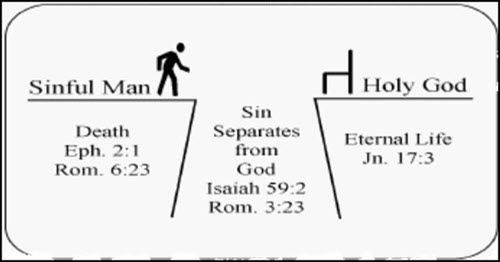
Ezek 45: The picture of the shed blood begins in Exodus as a picture of God’s overarching protection. Ezekiel is told that in the future, the priests will reinstitute that practice, and it mirrors that of Exodus 12, where the angel of death would see the shed blood and pass over the household on the night of the last plague where the death of the firstborn of Egypt would be taken. The Hebrews author reminds his audience that without the shedding of blood, there is no forgiveness. [Heb 9:22] Christ was the completed fulfillment of this when He shed His blood on the cross for the payment of our sins.

If Christ fulfilled this through the shedding of His blood, why then is it then reinstituted? Perhaps to remind us of our sinfulness and the price that had to be paid. Surely, this should stop us and remind us of the night in which He was betrayed. He then said: “this is the cup of the new covenant in my blood. Do this, every time you drink of it in remembrance of me.” [1Cor 11:25] Take heed, beloved, as you partake and seek cleansing of your sins and the price paid

Reconciliation or Steadfast unforgiveness?

Obadiah 1, Ps 82-83 “An Unforgiving Heart” Edom is the land of Esau, the twin of Jacob. Jacob stole Esau’s birthright as well as his father’s blessing. Esau fostered this hatred throughout his nation, and they carried a bitter grudge for centuries. Outwardly, Esau acted like he forgave Jacob when he returned home, but years later assisted the Babylonians as Judah was fleeing. They were traitors to the core, all because of an unforgiving spirit.  So Obadiah writes that they will be made small, be slaughtered, face shame, be swallowed up, and be extinguished from the earth. What strong words!  

Obadiah reminds Edom that they “should not” have done what they chose to do and provides a lesson for us about cultural and racial hatred. Instead, we are to pray for those who curse and mistreat us, hoping they will turn and be saved. [Luke 6:28]  The reason is to hope “that they may seek you, O Lord…and know that you alone are the Lord, the Most High over all the earth.” [Psalm 83:16-18]

Where are we praying for cultural and racial reconciliation? Are we a part of it or a hindrance?  

You Can’t Go Back, But You Can Move Forward

2 Samuel 11-12, 1 Chron 20 The Apostle John wrote much about the price of sin and the cost Jesus paid for our forgiveness. While John writes to help us, the accuser of the brethren, Satan, waits for us to sin, and then he begins his dastardly work. First, he watches, and then he enters God’s throne room to accuse us of what we have done. And, like King David, we are slow to learn that there is no returning to our former state of bliss once we have sinned. Just as Nathan rehearsed God’s Words in David’s hearing, we too come to realize that we “have shown contempt for the Lord’s decrees.” [2 Sam 12:9] It is then that the  Holy Spirit begins his work to “convict [us] concerning sin and righteousness and judgment” [Jn 16:8] so that we might repent.

However,  Satan will rehearse our sin because he wants us to think we are unworthy to be called a child of God. But remember this truth, Jesus was revealed to take away our sin and remove our guilt and remove the Scarlet Letter over our heart.  [1Jn 3] so we might know that “the Lord has forgiven your sin.” [2 Sam 12:13]

Know this truth: God’s grace is greater than the accusations of Satan and our sin. Although we cannot go back, we can move forward and tell the accuser: I am forgiven because of God’s great mercy.  

Optimized by Optimole