Man’s Downfall

2Chron 9, 1 Kings 10-11 God had blessed Solomon with great wisdom, power, and plenty. The fruit of that was broadcasted across the nations until the Queen of Sheba decided to find for herself if all she heard was true. As we say, she was flabbergasted because all she heard was true and beyond what she had heard. How would you respond if someone heard you were wise and wealthy and came to see if the story was true? God allowed this to test Solomon’s heart; would it remain true?

We are wealthy beyond words because of Jesus Christ’s gift of salvation to us. When others see and hear our testimony, what do they say? Do they give God praise as the Queen of Sheba did for God in the life of Solomon? In Solomon’s case, pride led to Solomon’s fall. His wisdom and wealth did not carry him to his death, and it may do the same for us IF we are not careful to stay faithful to God.

Today as you read this tale of woe, put yourself in Solomon’s shoes for a moment and ask; is my testimony solid and sure? Do I wholly follow the Lord? Where have I allowed this world’s gods to corrupt me so that others would turn from God rather than to God?

Self Talk

Eccl 7-12 Solomon compares and contrasts the wise and the fool; from that, we can analyze our responses, and as the author of Proverbs, King Solomon has pondered this area of thought repeatedly. His wise principles are written for all of us to consider our ways.

The Preacher walks through his daily struggles by analyzing his choices. For example, he says it is better to receive a rebuke from those who are wise than to listen to the song of fools because fools laugh at calamity but do not change their ways. He also warns us to be careful of how we respond to oppression, for if we do not face it with calm resolve and patience; we may end up responding just like the fool!

To sum up, he reminds the reader that wisdom, like an inheritance, is good. The writer of James reminds the reader that one needs wisdom and should go and ask God to will provide just what is needed for the moment.

Self Talk: Am I wise or a fool today? How do I respond to challenges? When I face the end of my life, will I have done what has been wise? 

Wise Counsel

Eccl 1-3 Solomon spent much time musing on many topics. He came to the conclusion that all this striving is futile, fleeting, and incomprehensible. Yet, unlike many of us who tend to give up, Solomon kept going back to his drawing board with this phrase “I said in my heart; I searched in my heart; and I turned my heart.” That is where we all have to go as we wander this life; go back to the source, the heart of the matter. And when he did that, he concluded that God has set eternity in man’s heart. He drew two conclusions: serving God is our highest calling, and God has made everything beautiful in its time.

Are you at that point in your thinking and your life? Solomon knew, and you can know that if you want to be wise and if you want to understand God’s ways, ask Him. James 1:5 “But if anyone is deficient in wisdom, he should ask God, who gives to all generously and without reprimand, and it will be given to him.” Remember, “God is the Father of Lights and bestows good gifts to His children.” [James 1:7] 

Mirrors only tell half the story…

Proverbs 27:19 Mirror mirror on the wall
In the fairy tale Snow White, the wicked queen talks to a mirror and asks who is the fairest of them all. The mirror replies that Snow White is the fairest because although the queen is beautiful outside, she is wicked inside. Who you are to yourself, and others is only known by your heart. You and others know you by facial recognition, but God knows you by heart. Thus both the Proverbs writer and the NT author James remind us that the mirror reveals only what is superficial, but God sees the true you.
Prov 27:19 As in water, the face is reflected as a face, so a person’s heart reflects the person.

And the author of James reminds us that if we merely listen to what God has to say about our outward and inward person, we are just like the queen before the mirror asking who is the fairest of them all. We are not truthful to ourselves and God.

James 1:23 For if someone merely listens to the message and does not live it out, he is like someone who gazes at his face in a mirror. We might just be fooling ourselves but not God. What does your mirror say to you today?

Discernment

Prov 25-26 Similitudes and Instructions

A similitude is a comparison of one thing to another. Solomon’s words in these two chapters are collected into these two categories using the word “like.” Example: “Like apples of gold in settings of silver, so is a word skillfully spoken.” [25:11] Solomon is comparing the beauty of gold and silver to how we respond to another. The point is words spoken at the right time in the right way can be accepted as the view of fruit sitting perfectly aligned on a platter. How fitting are our words to the hearing ear is the point?

Again, vs. 12, “like an earring of gold and an ornament of find gold, so is a wise reprover to the ear of the one who listens.” We know from 2Tim 3:16 that one of the ways God’s word is used is to reprove or to correct that which is in error. How are our words received? How are God’s words received?

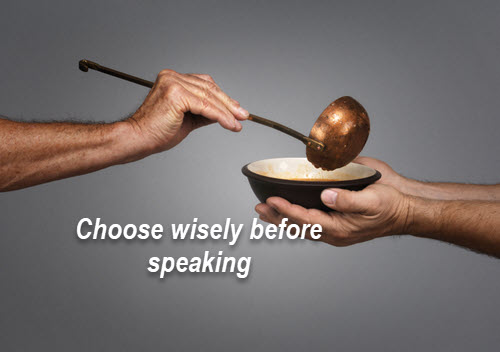
Prov 26 is the view of the wise and the fool. You wouldn’t honor a fool, for he does not understand your words. They must be constantly reprimanded, so choose your words carefully and wisely. Remember this advice from Prov 10  “Wisdom is found in the words of the discerning person…”

The point is that we must be discerning in our words and honoring people. Carefully see what the Spirit is teaching you through these comparisons. Make a list if you desire, and check yourself throughout the day.

Compromise

2Chron 8; 1 Kings 9 Compromising Solomon

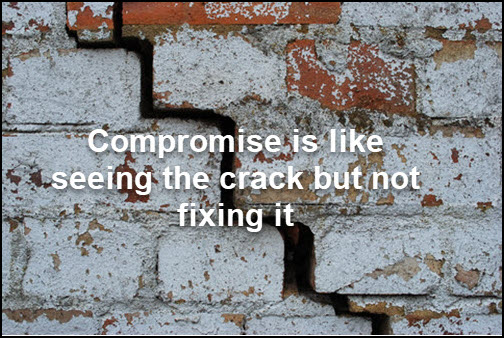
Solomon conscripted the non-Israelites to work on his projects. God had said to rid the land of them, but instead, Solomon, like his predecessors, conscripted them, much like Joshua had done with the Gibeonites. What is the lesson from this? Just as God said, they would turn their hearts away from God. It happens, not at first, but spiritual fervor slowly died, just like the frog in the pan over the burner.

Solomon moved his wife, not an Israelite, but an Egyptian, into her own home. He said, “My wife must not live in the palace of the King of Israel.” Compromise brings lessoning of obedience to God’s explicit commands. At this time, just as in our own time, God came to Solomon again. He also comes quietly to speak to our hearts. He reminded Solomon of his prayer and his promise to bless him. He also reminded him of the consequences of not heeding these words. When that would take place, even the pagan nations around would ask: Why did the Lord do this? The answer was clear: “they abandoned the Lord their God.” [1Kings 9:8-9]

Is there something you vowed to do before God but out of the ease of the moment, you chose to compromise? Choose ye this day whom you will serve! [Jos 24:15]

Hallelujah and Praise the Lord!

Ps 148-150 The psalmist is drawing his book to a close and, with it, a reminder of who God is and why we should praise Him.

 Ps 146 Praise Him for the life you are living and sing praises to Him as long as you have life. What are you doing today or plan to do today to give God praise?

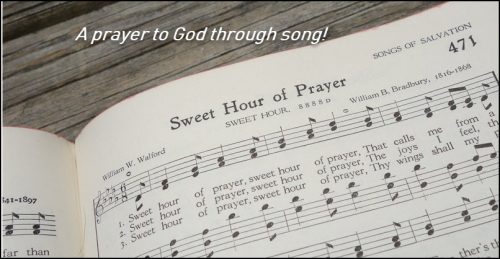
 Ps 147 It is good to sing praises to our God. What song are you singing today?

 Ps 148: Praise God for his revealed attributes, let them praise the name of the Lord, for his name alone is exalted; his majesty extends over the earth and sky. Which attribute has grabbed your attention today? Praise Him for that!

Ps 149: Praise Jehovah in the assembly of the godly. The Lord takes delight in his people; Praise God for those He has sent your way as believers.

Ps 150: Praise God in his sanctuary. Praise him when you view the sky; for his mighty acts, his surpassing greatness. Praise him with song and musical instruments. Let us all, with one accord, praise the Lord.

Begin now to prepare to attend your local congregation so you can praise Him. Until then, take time to reflect and praise the Lord using these psalms.

Forever is a very long time!

2Chron 6-7Psalm 136 Forever is a very, very long time

Solomon has finished the temple and now takes time to praise God for who He is and what He is like. His love endures FOREVER, and forever is a very long time.

By His name, He is immutable; He is self-existent. Think of him with words of admiration, of love and lovingkindness, for that is His character. Do not only magnify the Lord because he is God; study his character and doings, and thus render intelligent, appreciative praise.” [C.H. Spurgeon]

He is the Lord God Almighty, Jehovah, Yahweh, maker of heaven and earth! There is no one like him. Bow down and praise Him!

Pray Today

2Chron 5, 1 Kings 8 Prayer

 Solomon called for the temple’s dedication. Overwhelmed by its beauty and God, he bowed in humble adoration, kneeling with hands lifted high. He prayed a prayer that we could all follow. He began by blessing the God of Israel, noting there is no God like Him in heaven or on earth beneath, keeping covenant and showing lovingkindness to His servants who walk before you with all their heart.

Solomon’s prayer included seven requests for God to hear and to heal. This chapter is significant theologically as well as practically. Solomon, as Israel’s leader, set the pattern for others to follow, and they did so until the Babylonian captivity. He offered three requests: God’s blessing on the nation with His presence that the people would walk in obedience to His covenant, and that God would keep these requests close to his heart. Solomon prayed to God for the people.

Do I pray this way for the people of God today? ARe my prayers more “me” centered rather than “God” centered?

What is your highest priority?

2Chron 4; 1Kings 7 Buildings for God & Buildings for Man

Solomon was given the privilege of building the Temple for God. He began on the second day of the second month of the fourth year of his reign. The Chronicler says that while the house was being built neither hammer or axe nor any iron tool was heard in the house while it was being built. When I am doing the work of the Lord, is it quiet so that I can hear the voice of God?

He began in the fourth year of his reign, and it was completed in seven years.

After finishing this huge temple project with the help of others, he set out to build his own home. It was a massive project and took thirteen years. Do I spend more time building my own “home?” Is my own home greater and more massive than God’s home?  What does this say about my priorities?

Optimized by Optimole