More on the topic of destiny

Ezek 28-31 Destiny

Throughout history, there have risen many leaders who boasted of their prowess and their accomplishments. King Solomon warns that those who self-exalt will be humbled, and as it was written, so it came to be. Nebuchadnezzar boasted of the city Babylon as the work of his hands and spent the next 7 yrs. living as a wild animal. God was gracious to bring his kingdom back, and he wrote of that experience that we can read in the book of Daniel. But two other leaders will not be so fortunate. The King of Tyre will be overthrown, as will Pharaoh of Egypt. In both scenarios, Ezekiel is to remind them that what He has said, He will do for He is the “Lord who rules over all,” repeatedly over and over in Malachi.

Why has God recorded all of these stories for us? He wants us to know that the circumstances of life are brief, and He alone is God both now and eternally. He raises up and puts down leaders, and He is gracious to the humble and destroys the self-exalted. He alone is God, and He alone is to be praised.

James wrote: Humble yourselves in the presence of the Lord, and He will exalt you. [James 4:10] God looks at the heart, not what we have accomplished. 

“It isn’t fair!”

Ezekiel 24-28 and beyond. “It’s not fair.”

The elders sat around Ezekiel, wondering what was going on and why they were in Babylon. While they are pining away, they are saying it isn’t fair that we are in Babylon while our enemies walk free and clear of their sins, How often do we say the same: Why me? Why not them? So, in this time, God graciously shows them that although they sinned and are now in exile for that sin, there will come a time when all of the wrongs will be made right. God will reveal Himself to these enemies one last time so they may know He is Lord of all and has spoken in order that they might repent and be saved.

How often are we, like Thomas or the Jews of Jesus’ day, looking for signs? Jesus told the Pharisees that the only sign He would give them was His resurrection. Over and over, He had revealed His power through miracles, but they closed their hearts, eyes, and ears. The exiles are just like them. God sent prophet after prophet to warn them, but they rejected them, and now they are here in Babylon, asking why.

God is so patient and long-suffering. Do I ask why instead of seeking Him and seeking to do good? Do I listen to the Word rather than obeying the Word?

God looks…

Ezekiel 22 Standing in the Gap

As the prophet of God, Ezekiel uses great illustrations to grab our attention and help the exiles understand their problem before a holy God. One is this statement: Eze 22:30: “I looked for a man from among them who would repair the wall and stand in the gap before me on behalf of the land, so that I would not destroy it, but I found no one.” Before then and even now, God looks, and He observes. He notes those who are faithful and those who are faithless. He needs just one man, one woman, to stand for Him. They must be strong, individualistic, honest, and faithful to God in all ways. God uses Ezekiel to tell the errant elders that God looked for one of them, but He found not one. 

When God looks down from heaven now does He see those who exhibit those qualities? Does He see that in me? Am I faithful and true to His Word? Do I stand ready to defend God before a lost and dying world? 

Oaths and the Stubborn Heart

Ezekiel 20 Oaths

Three times God says he raised his hand in an oath to complete an action. We take an oath before a judge and jury to tell the truth, the whole truth, and nothing but the truth. God is saying that to these disobedient rebel elders as they come to Ezekiel to hear from God. He is so angry that he says he is in a rage! A rage is an uncontrollable anger, and that is how God is towards these He has chosen to carry His name to the nations. He no longer will listen to them. Have you ever experienced that kind of rage? I did once, and it was destructive and disheartening to me. Did it get my attention? It sure did. But these elders are so hardened to the voice of God and His rage that Ezekiel must have been, as we say, flummoxed. There is only one way back to a right relationship with God, and it begins with repentance, but they are not yet ready to take that step. You can hear the heart of God saying; Return to Me, seek Me, and live but alas, they are not ready. What will it take? It will take 70 more years, and even then, they will wallow in their sin.

Why are we so stubborn? Why are we so unrepentant? Jeremiah said it perfectly: The heart is deceitful and desperately wicked. [Jer 17:9] Only God can change that; we must be ready to yield to His call. The overwhelming patience of God is mind-boggling. Are we ready to yield to Him?

Choices and Destiny 

Ezekiel 19 Yes, you are free to make choices, but you are not free from those consequences. As noted, the rich man in Luke 16:19-31 will live through eternity with the choice he made here on earth. He can’t blame God, for God has provided all the evidence one needs to accept or reject Him. The apostle Paul wrote: “For since the creation of the world His invisible attributes, His eternal power and divine nature, have been clearly seen, being understood through what has been made, so that they are without excuse.” [Rom 1:20] 

Richard Dawkins is in the news again as he seeks to undermine the beliefs of Christians and those seeking. Yet, one day, he may find himself as the rich man with no avenue of redemption. Yet, on the other side is the author Sarah Young of “Jesus Calling,” who is now seeing Jesus face to face as she passed away today. 

Choose ye this day whom you will serve. Wisdom is found in hearing from God about your destiny. 

Choose Life!

Ezek 18-19  God speaks, am I listening? 

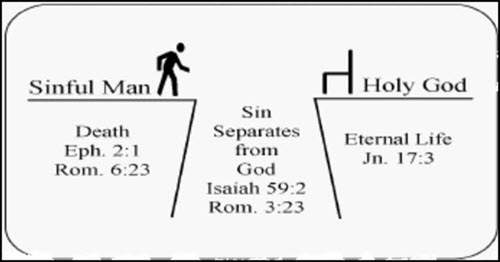
God speaks regarding man’s destiny: each person has a choice to live or die regarding eternity. Secondly, He takes no pleasure in the death of the wicked. Peter reminds us of this truth: God is not willing any to perish, but all come to repentance. In other words, they must choose life! Moses reminded the Israelites of this principle back in Deuteronomy. To not choose is already a choice, and we see that principle in Luke 16:19-31 in the parable of the rich man and Lazarus. As he stood in Torments, he could see Lazarus, across the chasm, who had chosen life, and he wailed and pleaded: Abraham, send someone back from the dead to tell my 5 brothers to choose life. Abraham’s answer was that even if a man rose from the dead, they would not believe him.

That is the plight of men today. Jesus rose from the dead, but they reject Him as Savior and Lord. They have many arguments as to why, but the most profound are these: All roads lead to heaven, and all go there. That is a lie from the pit of hell. The second is just like it: I will make my decision when I face death. The rich man had a choice in life, but in death, there is no choice. 

What is your decision today? 

Choosing Christ

Ezekiel 13 -1 5 Salvation

Has anyone ever asked you about your salvation? When you asked them when they chose Christ some look at you with questions. Many reply I have always been a Christian, or my grandmother, grandfather, or parent was a Christian. That is why these chapters are key to helping someone understand that there are no grandchildren believers. God reiterates over and over by using Noah, Daniel, or Job, the most righteous men of the OT, as examples. Each person must choose just as those three men did.  God spared Noah and his family. He spared Daniel and his three friends. But, He did not spare Job’s children. You cannot count on God sparing your family just because you chose Christ.

Although this is a hard concept, God has spoken and is saying: Choose ye this day whom you will serve. Joshua challenged the Israelites to do just that, and now, centuries later, that same choice is before the Israelites. Will they choose idolatry or God? History reveals that they chose the latter, and that is why they are exiled in Babylon. Ezekiel is presenting this same case to the elders, but they turn a deaf ear.

Today, whom or what will you choose?

The Art of Mime

Ezekiel 9-12 Marcel Marceau was arguably the most famous mime artist of the century, and his craft has not only endured but is used by many in the entertainment industry. Today, many look to him to learn the craft of mimicry. God used mime as an illustration to the rebellious house of Israel in Babylon. He cautioned Ezekiel to know that even though they see with their eyes, they would not understand nor believe. How often do we present the gospel message only to hear that is too simple, or I must clean up my life before God can save me. Yet, in these chapters, God knows the heart of men; some will believe in eternal life, and others will reject it.

Yet, just as Ezekiel was faithful, we are to be as well. To whom will we present God’s plan of salvation, whether they hear or reject?

A Prayer for Restoration/Revival

Lamentations 4-5 Jeremiah takes us on a whirlwind tour of the destruction of Jerusalem, and we “walk” with him through the ruins of what was once a beautiful city. Not too long ago, as we walked through Ephesus, it was like seeing what might have been, and it was so in Jerusalem. The beauty and grandeur are gone, only rubble and broken homes and the temple as well. How quickly life changes, and then we must stop and consider why God has allowed this. Today we hear over and over, why does God allow all of this evil to occur? It is so that we will stop and consider: He has spoken, He has done this to humble us.

As Jeremiah closes his lament, he reminds us that the Lord has spoken and sovereignly has brought this about to humble his people.

As I look at our own nation, I see how God is divinely bringing about the curses because of our disobedience. Like Israel of old, we have been blessed, but we have turned a blind eye to Him who has provided those blessings. Turn us back, Lord! Open our eyes to see and our hearts to yearn for you. Jeremiah closes with these words:

Restore us to You, O LORD, that we may be restored; Renew our days as of old, [Lam 5:21]

Great is His faithfulness

Lamentations 1-3 God is…

The author is not named, but most scholars attribute this book to Jeremiah because of the many times he ‘laments.’ in his book. He laments the end of Jerusalem; he has been at this task for 40+/- yrs. The faithfulness of Jeremiah is a challenge to us also to be faithful no matter the circumstances. One principle is clear: In times of uncertainty, keep your eyes on God. Habakkuk said he would stand and watch, and Jeremiah echoes that same idea. Neither wanted to see the destruction of Jerusalem and the Temple but trusted God to bring about these circumstances to awaken the people to know He is Lord and not some idol.

A sin to avoid is to allow yourself to lose heart in the midst of calamity. Instead, lift your eyes to the hills, for His redemption draws nigh. [Luke 21:28] Remember Jeremiah’s words: “Great is your faithfulness.” We sing that, but do we believe it?

Optimized by Optimole