Ezekiel’s Four Parables

ezekiel 15 to 18 parables3a2a

Ezekiel  15 to 18 In the NT Jesus told three parables about things or people that were lost and found. One is about a family with two lost boys who were lost both physically and spiritually. Ezekiel’s four parables mirror this story in many ways because it is true, parables are earthly stories with a heavenly purpose.

Parables: #1 In the branch parable we see a branch full of life thrown into the fire. Life without God is like the fires of hell.  #2 In the unfaithful bride parable we see a rags to riches story. God takes us from the gutter and bestows his blessings yet the lure of the world is always at the doorstep of our heart.  Be on guard!  #3 A beautiful and prized eagle, God, raised up a people yet a false eagle, Satan, offered promises that were false. Beware false “eagles” come dressed as sheep in wolves clothing.  #4 In the parable of the two sons we see a family whose lives mirrored the NT story. The younger was restless and disrespectful of his father. Seeking his inheritance he left and walked the world.  The older son served his father but with an ungrateful heart. The younger returned and sought reconciliation but the older remained unforgiving. Confession of sin is the first step back to God.

Israel had been blessed by God but was unfaithful and ungrateful. Yet, like the prodigal’s father, God was always waiting to restore the relationship. She would need to return to the Father in confession and repentance. What would she do?


God Doesn’t Tickle Our Ears!

Pantomime with red heart on the pink background

Ezekiel 12-14  Marcel Marceau is arguably the most famous mime artist of the century. Using white face and dramatic eyes, he referred to mime as the “art of silence.”  In the quiet, the audience can reflect what the actor is explaining without words and cause dialog after. God had Ezekiel pantomime what was happening in Jerusalem some 900 miles away. The exile’s ears were being tickled by the messages of the false prophets: Peace is coming tomorrow!

Are your ears being tickled too?

God told Ezekiel:  “While they are watching dig a hole in the wall; while they are watching raise your baggage and carry it out in the dark; lastly cover your face as an object lesson of shame.” Jeremiah’s words should have come rushing back to their memories. Instead, people came asking, what are you doing?

Ezekiel’s mime gave them food for thought. Without words, they could watch, discern and heed God’s message of truth yet they still were a hard-hearted people. Even today men watch world events and ask: What is going on?

God used mime drama another time to reveal His eternal plan for our salvation. Christ died for our sins; He was buried and rose on the third day according to the scriptures. Do you believe this or are you saying; I will choose God tomorrow when it is convenient? God doesn’t tickle our ears. He tells us the truth:

We all are sinners. We all must choose God’s way to be saved.   

Pray for God to open your eyes to see, your ears to hear and your heart to understand this truth.


Fight or Surrender

Jeremiah 50 to 52 The book of Jeremiah is long and there are some pointed lessons to learn and they come through the tale of two kings; Zedekiah and Jehoiachin.

Jeremiah 52 fight or surrender.2ajpg

Both had the privilege of having Jeremiah speak the words of God to them and both had sought the advice of him as the Babylonians were crouching at their doorstep. Both were placed in the position of leadership yet failed because of their wickedness. One believed Jeremiah, surrendered and saved his family. The other rejected and lost his family and the royal household. Both ended up in a Babylonian prison yet one was released after 37 yrs. to sit at the king’s table. The other would die in his bronze chains and in blindness remembering the faces of his children as they were slaughtered. Neither would have a descendant to take their place on the throne.

What is our take away from these two men and their end? When we ask God what to do and He tells us, we have a choice; we can keep fighting God or surrender. God says surrender your life to me and you will have everlasting life but often we say we can save ourselves. I can fix myself. I can…I can…etc. etc. etc. Yet, Jesus said “I am the way, the truth, and the life. No man comes to the Father but by me.”

Surrender to God and be saved; reject and enter a Christ-less eternity.


One Door, One Decision

Jermiah 21 decision2a

Jeremiah 21:8  The phrase great minds think alike is often used when one or another come up with the same thought. Moses, Joshua, Elijah and Jeremiah thought alike, talked alike, and wrote alike in many ways. Listen to their words:

Jeremiah: ‘I will give you a choice between two courses of action. One will result in life; the other will result in death.[Jer 21]

Moses: Today I invoke heaven and earth as witnesses against you that I have set life and death, blessing and curse, before you. Therefore choose life. [Deut 30]

Joshua: Choose for yourselves this day whom you will serve [Josh 24]

Elijah: How long will you falter between two opinions? If the Lord is God, follow Him, but if  Baal, follow him. [1Kings 18]

The people were at a crossroads. They could choose God’s way or the world’s way. Moses said: It is in your mouth and in your mind so that you can do it. [Deut 30:14]

But men do not like rules; they can delay or choose their own way. Jesus said; For whoever wishes to save his life will lose it, but whoever loses his life for My sake, he is the one who will save it.

Choose God and life or Baal and death. What will you choose?

An ‘OUCH’ post!

More than once I have heard, I don’t need to tell anyone about Jesus. That’s the preacher’s job OR I don’t feel comfortable doing that OR I don’t know how.  Is that really the reason? Le’ts check those assumptions out.

Let’s get down to the nitty-gritty; let’s have a dialog. Let me ask you:  Are you ashamed of Jesus? Perhaps you wonder why I ask? I ask because the psalmist says we will tell the next generation about the Lord and his saving deeds and what he has accomplished. If you don’t tell what does that say? We can’t pass that job off onto the preacher or the missionary. It says “we” will tell. Jesus said to “go and tell.” Perhaps you counter back, well my faith is personal, I don’t share it, I just live it.  These two psalms remove those arguments! We are to tell the whole world about God’s saving grace. God says if we don’t tell, God will hold us accountable for lives who would have chosen Jesus had they heard.

The psalmist says to tell the next generation so that the truth will be shared beyond our lifetime.  We need to do that so they hear from our lips the truth of the gospel message. We also need to do that so that they will not be a stubborn and rebellious people, not committed to the Lord. But, more importantly, if we don’t share what does that say about our love for others? ps 22 and 78a telling good news priscilla du preez unsplash

Psalm 78:6 says to tell the next generation, and they, in turn, will tell the next generation about Jesus. If each generation carries on this tradition, imagine how many souls will hear the gospel? And in contrast, if we don’t tell, how many souls will enter a Christ-less eternity because we have failed in our responsibility?

Today I challenge you to tell someone about Jesus—OR

ARE YOU ASHAMED OF HIM?

“For whoever is ashamed of me and my words, the Son of Man will be ashamed of that person when he comes in his glory.” [ Luk 9:26]


Seek God while He may be found…

Job 35-37 We have been following Job and his friends as they respond to his suffering. The young Elihu continues to wax eloquently and finally near the end he poses a question that has been asked for centuries: whom or what do you seek when you are in distress. The world seeks to find help in themselves or other avenues but often leaves God out of the equation. Sometimes they never seek God…read to the end…. It is disheartening when that happens but again we present the truth but the results lay in the hand of the receiver and God.

job 35a

Elihu says it really doesn’t matter, God is God and He is not at all bothered about whether we do good or bad. At that, we want to stop and say “whoa!” Not affected? Doesn’t care? What presumption! Elihu is wrong on both accounts and we need look no further than Ezekiel chapter 20 and you get a very different picture. There the elders come to Ezekiel inquiring about life and wanting to know when this exile will end. What they got must have been a deafening wake-up call. God answers their inquiry with this: “I will not allow you to inquire of Me.”  God was definitely affected.  He told Ezekiel that when men leave God out of the equation He is grieved and broken-hearted—especially when He has called you. Rejecting God has serious consequences and without Him, you are bereft as a boat without a sail.

Elihu is right about one thing: Storms come that we may seek His face and His understanding. He is also right in his description about God: He is all of splendor and more. We cannot attain to Him. God is God and man is man.

The question is will you seek Him or will you be like my neighbor who said, I never needed God in all of my life and I don’t need him now—as he breathed his last.  I thought it was hard enough to hear my grandmother say that but then when my neighbor said that my heart felt like it had been run over with a bulldozer. Men choose their destiny…don’t ever forget that. When you need God don’t be like these two examples. Seek Him while He may be found!

God was right after all….

Job 25-27 Chapter 25 is a very short summary of what Bildad has discerned and it is this: he has no personal relationship with the God Job believes in. He uses the word “might” to show us his uncertainty in all of life both present and future. There is nothing to base life on if you have no God. Life is futile and without substance. You believe you were conceived, lived and died; end of discussion. That in itself is more than tragic. Job comes back to him saying you don’t realize who God is and then proceeds to extol the attributes of God. He, in essence, says what Paul said in Romans 1:20

“For since the creation of the world his invisible attributes – his eternal power and divine nature – have been clearly seen because they are understood through what has been made. So people are without excuse.”

And Job says these are only a few of the ways God is God and why people who deny Him are without hope. Yet I serve the living God and I know that my Redeemer lives. I will never ever set aside my integrity and I will maintain my righteousness in my suffering to my very last breath.

job 27 god right after all2

Are you more like a Bildad living without hope? Or are you more like Job who will stand firm until the very end no matter what comes your way?

And now we see why God called Job his blameless man.

Let’s talk about this if you are a Bildad. Send me a note or comment below.


Is it true that there is no hope???

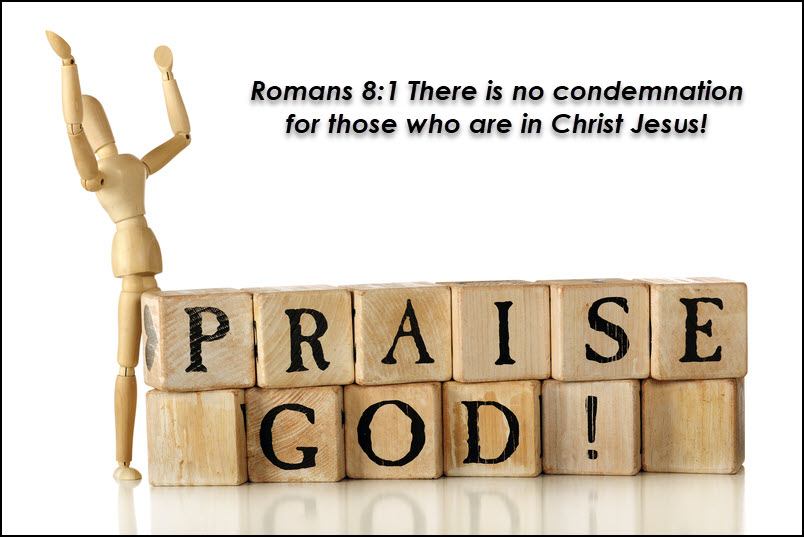
Job and his three “comforters” have been dialoguing back and forth on the points of wickedness and righteousness. The three, Bildad, Eliphaz and Zophar are sure Job is in the camp of the wicked. As their words show they believe the contrast to Romans 8:1!

Listen in to the dialog between Job and Eliphaz In Job 21 to 24  to get the whole story and then go and read Psalm 73 to see another person who faces this same conundrum.

job 21 ps 73 praise2a

Job responds to the next challenge by asking the same thought Asaph pondered. Why do the wicked seem to prosper and the righteous seem to falter and many times fade away. Asaph wondered if he, like Job, had remained faithful for no reason. We often say the same thing as we watch all of our life’s savings eaten by moths and our bodies suffer from disease and harm by others. God is not in a box, closed and secure from all of life; He is omniscient!  So Job’s three friends and Asaph himself have to look at life from another viewpoint.

Asaph returns to the Temple where he says: I entered the precincts of God’s temple and then I understood the destiny of the wicked. But, Job has no temple yet to attend so he is left with his thoughts and trying to piece them together. He says the “counsel of the wicked is far from me!” I just don’t understand and if only God would come and we could talk about this it would all be made right. Eliphaz remains steadfast in his critical argument against Job but Job tells him: He knows the path I take and if he tested me I would come forth as gold. As we read those words we must decide if that is true for us. If God would come and stand in our presence would He say that? Job and Asaph looked at life without that confirmation but if you are a born-again believer you can attest to this truth because of Roman 8:1:

There is therefore now no condemnation for those who are in Christ Jesus.

Christ our Perfect Sacrifice

Do you see yourself as this picture; carrying around your sin? Beloved, Christ paid it all. He carried your sin and my sin to the uttermost part of the desert. They are gone never to return.

Lev 16 atonement2a

Leviticus 16  and “The Day of Atonement”

“Christ has come as the high priest of the good things to come. He passed through the greater and more perfect tent not made with hands, that is, not of this creation, and he entered once for all into the most holy place not by the blood of goats and calves but by his own blood, and so he himself secured eternal redemption.” [Heb 9]

Leviticus paints for us the picture of what the Israelites were to look forward to but now we look back to see its completion. Christ became for us the perfect atonement for our sin. Now we are allowed to enter boldly into the Most Holy Place because of His sacrifice. No longer does Aaron need to dress as he did to enter only once a year. Now because of Christ, we can enter at will at any time. Jesus became the sacrifice and the scapegoat all at once. He shed his blood which was then sprinkled on the mercy seat and became the goat which took our sins to the uttermost part of the desert.

Have you received this perfect sacrifice of Christ as your atonement?


God’s Mercy

ben-white-the mercy of god.2ajpgExodus 11 to 13  As we have watched, there were two camps of people in Egypt; those who believed and obeyed as in the hail plague. God’s mercy was showered upon those who obeyed because they took their animals and families in and were spared.

God’s mercy overshadowed all that we have seen and now see in the 10th plague. Pharaoh’s heart remained hard but the Egyptians hearts were softened because of God’s doing. Pharaoh had no respect for Moses yet Pharaoh’s servants had respect.

God desired that Pharaoh and the Egyptians soften their hearts and turn to Him because He does not delight in the death of the wicked. Instead, He is long-suffering giving them many opportunities to turn to Him and not perish. [Ez 18:23 & Ezek 33:8; 2Peter 3 ] God offers the way to salvation but if men continually reject His mercy His plan will be executed. [Is 55:8]

God’s mercy led the Israelites out from the hardened Pharaoh and away from the land of the warring Philistines. He covered them with a cloud from the searing heat of the sun by day and the pillar of fire by night to keep them warm.

Truly God demonstrates His mercy to all yet each man is responsible for his attitude and response.

Where are you?


Optimized by Optimole