Rejection and Decisions

1Sam 13-14 How do we handle rejection? The people rejected Samuel in favor of a king. God reminded him that they were not rejecting him but God Himself. That is a powerful lesson for us to remember when we, too, face rejection. Samuel’s humble character is revealed in how he faced this. He went to God, not other people. What do I do when rejected? Do I turn to God and lay this burden before Him, or do I wallow in my self-imposed pity party? May I learn from Samuel that when rejected, handle it with humility.

Saul is chosen king, but he is a faithless king. He is ensnared by his fear of people rather than God. [Prov 29:25] He makes foolish vows which cause the people to be faint, which happens when God is not consulted. He who makes foolish vows will ultimately pay the price as King Saul did. Be wise and discerning when considering a vow because it is usually hypocritical and because of pride. “OUCH!”

Lessons for us from these passages: Remain humble when rejected and understand that God is rejected more so than us. Secondly, consult God before making decisions that will affect others.

How do you handle the “no” word?

When rejected what do you do?

1Sam 8-10 When you face rejection, what do you do; how do you feel; what is your response? Samuel was such a man. Called by God to lead the people spiritually but rejected because the people did not look with their spiritual eyes. They only saw his son’s faithlessness. True, Samuel did not learn from Eli’s failure, but God is sovereign, and He can change hearts just as He chose to do in the heart of Saul…but we are getting ahead in our story. 

In this time of grief, Samuel responded by going to God in prayer. In that time of quiet, Samuel heard these words: Samuel, they are not rejecting you, but Me! Samuel’s broken heart is comforted, and he hears go and give them what they want. How often do we not what God wants, but what we want? How often do we only feel our own rejection, but not God’s?  

Samuel anoints Saul and warns the nation of the consequence of their choices…but, like us, they turn a deaf ear. We do the same more often than we want to admit. Saul’s heart is transformed so he can lead the people in His way. Will he? Stay tuned.

One broken heart is comforted by God. One heart is transformed by God.   Where are you in this story?

How do you handle rejection?

How do you handle rejection?

2Samuel 10: Have you ever done something nice only not to receive a thank you but a rebuff? With a pure heart, David sent emissaries with a sympathy message at hearing the king of the Ammonites died. God sent His Son, but men have rebuffed his message of the gospel. Instead of receiving David’s message with a pure heart, the king’s son saw this as a challenge to war, whereas David had only meant peace and friendship.

There is a story in the NT about a vineyard that belonged to a king, a.k.a. God. God sent emissaries, but none were accepted. Instead, they sought to murder each representative He sent. Lastly, He sent his Son, and they killed him. These two stories are similar in many ways. God sent His Son to the vineyard, but his Son was humiliated. David sent sympathy gifts but the Ammonites rejected his overture. God sent His Son but He was rejected and ultimately crucified.

David had been more than patient with the Ammonites for what they had done earlier at Jabesh Gilead. He chose to retaliate then. God has been more than patient with his children, but there will come a time when He will act like David and retaliate.

What would we choose to do; be as David or patient as God?

“Acceptance And/Or Rejection”

Will you follow Jesus?

Acts 6 to 9 The gospel narrative revealed a fickle populace. They wanted miracles but not the Savior. After Jesus’ ascension, the disciples were moved by the Holy Spirit’s power to share the good news but just as with Christ; the message was accepted only as the physical needs were met but rejected when the spiritual needs were noted. 

The Greek-speaking Jewish widows raised a complaint that they were being rejected in the food distribution. Out of this predicament, two men will surface; Stephen and Philip. Stephen will debate and preach but is finally rejected by the religious council, stoned, and left to die. Philip will leave Jerusalem and be used by the Holy Spirit to bring the gospel message to Samaria and Caesarea. A chief rejecter, Saul, meets Messiah on the road to Damascus, and his life is forever changed, yet he too is rejected by many. 

No matter where God has placed us, we meet fickle people. They desire but do not have because, as James said, they ask amiss. [James 4:2] No matter the circumstance, the gospel message is used to pierce the hearts of men, so they are without excuse. [Rom 1:20]

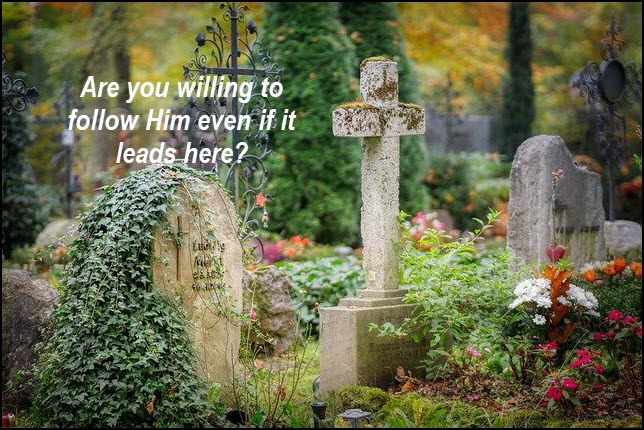
God asks, do you love me more than these? [John 21:15-19] Will you pick up your cross and follow Him—no matter where it leads.

“Flattery vs Honesty—which wins?”

ImageThere is a saying “It’s funny how everyone considers honesty to be a virtue yet no one wants to hear the truth.”  As we read Acts 24 these words should remind us of why, when you share the gospel message and are rejected, it is not you they are rejecting but the very Son of God. But, we are to remain true and steadfast as Paul demonstrated and Dr. Luke shares with us.

In chapter 24 we meet one slick flatterer, Tertullus the high paid lawyer, who arrives with a huge entourage but lacks any genuine witnesses. His flattery and falseness leads to a quick “falling flat on his face” before the Governor Felix. In contrast we see the truth of the prophecy of God regarding Paul to be “my chosen instrument to carry my name before Gentiles and kings and the people of Israel” and the words of Jesus ““Have courage, for just as you have testified about me in Jerusalem, so you must also testify in Rome” is coming to pass. If we were writing this story we might have Felix hear the false and flattering words of Tertullus and like Gallio dismiss the charges against Paul but the words of Isaiah are ringing forth as true: ““Indeed, my plans are not like your plans,” and now the reason…..

God had an eternal plan for this man Felix to hear of the mercy and redemption for his sins but because of his procrastinating, fear and lack of decision making it appears that he never crossed the divide from unbelief to belief. If that is true, he one day will hear these words: “depart from me, I never knew you” because you are “without excuse.”  I sent my servant Paul to tell you about My Beloved Son and you would not listen nor accept My truth that Jesus is “The Way, The Truth, The Life” and no man comes to me without that.

Beloved, as you read this chapter do you see the plan of God for someone you love and has yet to choose Jesus? Are you encouraged that just as God gave Felix many opportunities to hear and to respond so too the very fact that your loved one stands still upon this earthly shore means that God is not finished yet with their soul? Do you see the marvelous patience and power of the Word as Paul presented it to Felix over and over and over? That is my friend, God’s love and mercy for the unsaved. Take courage and be ye steadfast knowing that your labor is not in vain.

The Resurrected Christ…A View from Matthew 28

ImageA journey with the Apostle Matthew has taken us on a circuitous route, or sinuous if you like. It has been fraught with danger, and filled with expectation of what lay beyond the next bend. We have journeyed in and out of Israel, found those who are faithful and those who are not. It is as we say journey of highs and lows but with the Messiah always in charge. Today in Matthew 28 will be no different.  Today we will see that what men contrived for evil God will turn to fulfill His ultimate plan that all nations would hear, all men would decide for or against, all believers would have the promise of “I will never leave you nor forsake you.”

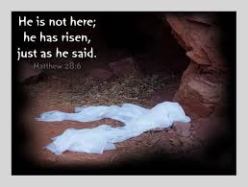
Matthew tells us that it is in that the semi-darkness women have left their beds to walk to a cemetery to “look” at a tomb. Matthew leaves us wondering, yet wants us to focus in on the miracle unfolding. He points to the earthquakes, both as Jesus uttered “It is finished,” to the timing of the resurrection. Just as God dispelled darkness and ushered in light so too here God dispels the darkness with a stroke of light along with an earthquake and the moving of a tombstone as if it were a pebble. The messengers of the Lord who announced the coming Messiah come now to announce His resurrection. He is no longer wrapped in the cloak of death but is risen “just as he said.”  Matthew Henry wrote: “On the first day of the first week God commanded the light to shine out of darkness. On this day did He who is the Light of the world, shine out of the darkness of the grave.”  

In this same time frame there are guards who see the miraculous of the tomb opening, an angel whose appearance was like lightning and faint as dead men. Upon awakening from this faint, they rush to the side of the religious leaders to share the news only to be given large sums of hush money with the promise of “we will protect you.” Instead of the truth just say the disciples came while you slept and stole the body. It reeks with the breaking of yet another commandment: “do not bear false witness.”  The religious leaders had asked Jesus for a sign from heaven, yet when given, they add insult to injury and deny themselves and others the right to eternity. Truly Jesus was right when he said: Mat 23:13 “But woe to you, experts in the law and you Pharisees, hypocrites! You keep locking people out of the kingdom of heaven! For you neither enter nor permit those trying to enter to go in. The plainest evidence will not affect the hardest hearts of men without the illumination of the Spirit of the living God.

Thus the guards’ fear along with the religious leaders denial and total rejection of God’s sign will be to encapsulate them like the grave shroud that Jesus shed. It will encase their minds and physical being and will remain with them until they face eternity where they will hear God’s voice utter: “I never knew you.”

 In contrast the fear that the women face is quickly discarded with a stroke of light as it illuminates not just an angelic being but an empty grave. Their fear turns to joy when they hear two times “do not be afraid,” first from the angel and then from the lips of our risen Lord. Their immediate fear is banished by God’s messenger and His Beloved Son in whom He is well pleased. That is what happens to us when we accept the Risen Savior as the Resurrected Christ, our fear turns to joy and unlike the guards who cowered in fear we shout and praise God: “Hallelujah.”

As you ponder all of this closing segment of Matthew, may you also search your heart. There is a principle we would gather here: When we come with pure hearts, we are given great and mighty blessings. When our hearts are defiled those blessings are withheld not only now but for all eternity.

Image


Optimized by Optimole