What is God recording about your life?

2 Chronicles 1-3 This week Queen Elizabeth celebrated her 94th birthday and 70 yrs. as the queen of England. David was king over Israel for 40 yrs. 1&2Chronicles records the life of David, the good, the bad, and the ugly. It is all there. Did you know that you also have a book about your life? One day it will be opened, and you will hear what God has recorded about you.

After David’s death, Solomon, David’s son, began his reign. Interestingly, Solomon also reigned for 40 yrs.  Early in his reign, God appeared to him in a dream and asked him what God should give him. If that was you, what would you be on your list?

Solomon, in his humility,  asked God for wisdom and discernment to effectively lead the nation. God was pleased and gave Solomon that and more, and as a king, he prospered. He wrote the books of Proverbs and Ecclesiastes that men might learn wisdom and moral instruction and to discern wise counsel. If we want to have the same gift of wisdom and discernment, try reading a chapter of Proverbs each day of the month. Begin wherever you are on the calendar and proceed each day forward.  Here’s a nugget from Solomon’s Proverbs diary for day 23:  Apply your heart to instruction and your ears to the words of knowledge. [Prov 23:12]

A Parent’s Prayer

1 Chron 29:19 How many times have you stopped and read the obituaries of others who have died looking for clues as to their accomplishments both materially and physically? Ever read that they prayed for those who will now take up the mantle and carry on?

David’s obituary might have read like this: Grant my son Solomon a willing heart. “I” planned, prepared and wanted to build the Temple. But, God said no to that request. Instead, my son, Solomon would build the temple. So “I” prayed that God would give him a willing heart of obedience to all that God had commanded.

Is that your prayer for your child/children? Are they adding to their bank accounts or their spiritual accounts? David had prepared the blueprints for the Temple to be built and gathered the materials.  But David’s command to Solomon was to:  “tell the next generation about the Lord’s praiseworthy acts.”  A parent can tell much but unless the heart is willing the telling falls on deaf ears. It must begin early when we take time to teach children and speak of these acts as you sit, walk, and all other times in between. [Deut 6]

“God’s plan is unfathomable” but He has given us the Holy Spirit to teach it to us. “The Advocate, the Holy Spirit, whom the Father will send in my name, will teach you everything, and will cause you to remember everything I said to you.” [John 14]

Preparing for your departure

1 Chron 24-26 Today we received yet another note from one of the international staff that they had been tested and it was positive. Will this person weather the corona storm? But, add to that the many that are already near their finish line. One friend’s father is 104 and another is 101. Will they continue on or will they move to their eternal destiny. Only time will tell. Both are in excellent health. On the other hand, King David knew his time was drawing near and so he set about to plan for the future and the next king. Do we do the same? Do we plan ahead so our children and extended family are prepared? Do we have all or bank accounts set up with our children or someone else as a beneficiary? Have we made out our will so that our testimony is clear to those who are not saved?

Read carefully David’s planning structure. “David, Zadok (a descendant of Eleazar), and Ahimelech (a descendant of Ithamar) divided them into groups to carry out their assigned responsibilities,” David also prepared some for music and words to encourage and edify. Paul captured this idea as he wrote to the Ephesians: “speaking to one another in psalms, hymns, and spiritual songs, singing and making music in your hearts to the Lord,” [Eph 5:19] Along with that, David outlined the duties of those who would care for the new temple.

These are timely examples to us.

How do you face the death of a dream?

Dreams that die

1 Chron 17 Being quarantined to protect ourselves from the coronavirus has been a challenge for many. Some of us have had our dreams put on hold or even terminated. This might be a good time to ask God what He is doing. Does He have a different plan for your life?

King David had a vision or a dream. It came from a pure and humble heart. There was nothing wrong with David’s dream, and there may be nothing wrong with yours. But God wants us to dream with Him. Sometimes we share our dream with those closest to us, just as David shared his with the prophet Nathan. Nathan was excited and encouraged David to commence—but then God came to Nathan with a message for David. God was not only delaying the dream, but he also was not going to fulfill it. Hearing Nathan brought David to a point where he had to make some choices about how he should respond to the “death of his dream.”  He went in and sat before the Lord humbly. How we respond shows whether our dream was ours or His. Note this lesson; God didn’t take away David’s dream. Instead, God was saying; your dream is too small. I have bigger plans for you that you can’t even imagine just as the prophet Jeremiah told the Israelites. In a nutshell, God said: I have plans to prosper you and to give you a future filled hope. {Jer 29:11 author’s thoughts}

Don’t stop listening when God says no. He usually has something far greater or bigger than you can imagine.

“Praising God in Song”

1Chron 16 There are exciting and powerful nuggets in the OT.  For instance, the prayer of Jabez in 1Chron 4 and the prayer of Nehemiah are very similar. Check them out. Now in 1Chronicles, we have insight into the praise and worship of the Israelites. The author saved it as an example of our praise and worship.

If you take time to read this praise and worship hymn that David recorded for the people, you will see that the focus is on God, not “me.”  It seems that lately, many of our praise songs are touchy-feely in sharp contrast to this one in which God is extolled and honored. David asked Asaph to teach it and rehearse it. Some scholars think it was incorporated into the worship services from then on. When Paul tells us to speak to one another in psalms, hymns, and spiritual songs, could he have been thinking of this passage?

Note there is a reminder to sing, seek, and thank God.  David wanted the people to consider the wonder of God and to boast about his holy name. He wanted them to recall and remember what God had done. He wanted them to do it continually. In fact, if you read it from beginning to end, there are ten commands but only one request.

There are essential stories behind many of our favorite hymns. Do some research and learn about your favorite hymn. Then share what you found with us.

Photo: Crosswalk.com

“Saul’s Death”

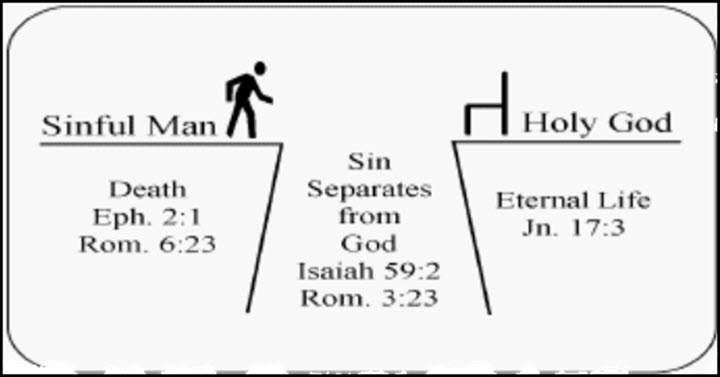
Salvation Graphic

1Chronicles 10 Was it God’s will for Saul to die is a question that comes to mind as we read this short but vivid chapter. In vs. 14, we learned that “the Lord killed him,” so the answer to that question is yes. God willed that Saul should die because he was unfaithful. He did not obey the Lord’s instructions. He tried to use a witch to determine his safety. These are hard words for us to swallow, and we would like Saul’s end to be like many of our fairy tales; they lived happily ever after. But, Saul chose his path and his destiny just as we do. God’s grace is ever-present because He is longsuffering even to the point of death.

Preparing for our entrance into eternity is as simple that a three old can understand it: Admit you are a sinner in need of redemption; Believe and trust in God. Confess your sin to a loving and holy God who will cleanse you in preparation for his glory. We stand on the threshold of eternity every day. The gospel is God’s power for salvation, and the righteousness of God is revealed in the gospel from faith to faith. It is also true that since creation, God’s invisible attributes, His eternal power, and divine nature – have been seen and understood through creation. Therefore men are without excuse for not knowing. Saul knew it, and men today know it.  

What do you want on your tombstone? This: “well-done thou good and faithful servant” or this: “he/she was unfaithful.” It really is your choice.  

Graphic: https://bible.org/article/gods-plan-salvation

“The Sin of Unbelief and the Rewards of Belief”

2Kings 7 to 10 There are two kinds of people in this world; they either believe the Bible, or they don’t believe it. You can’t mix in those people who say they believe some of it. Those are still unbelievers. They have one thing in common; they see the evidence but cling to their unbelief. They look for excuses not to believe even when the evidence is before them. God has no mercy on those, and at death, they will join the Luke 16 rich man in torments.

So what does have to do with today’s reading? The story begins and ends with a man who scoffed at Elisha’s prophecy of the salvation of a city. Lepers find the coats and armor and horses of the enemy left behind; go to the city to report it, but the king surmises a ploy. He sends horses and men to check it out, and the city is saved. In the end, the scoffer was trampled and died just as Elisha said he would because of his unbelief.

Is there any hope? Yes! God gives us a ray of sunshine in the Shunammite woman who obeyed Elisha, leaving her home to reside in the Philistine territory during the famine. After the famine, she returns home to claim her land. In the palace Elisha’s servant, Gehazi just happened to be in the presence of the king and verified her story. The king returned her property and the profit of it during the years she was gone.

Both stories reveal the principle of belief vs. unbelief and the rewards or consequences of each. Which category fits you?

You Can’t Fool God!

You cannot fool or hide from God

1Kings 14 The gecko in the garden tries to fool by staying still and changing his coat to match the plant. He thinks they don’t see me just like King Jeroboam thought he could fool the prophet Ahijah. He sent his wife to him disguised as just any woman to get help for their sick child. But, Jeroboam didn’t know that the old prophet was now blind and no disguise would be of help. Yet, God is God, and He would be His eyes. 

Is. 46:9 says, “Truly, I am God, I have no peer; I am God, and there is none like me.”

Our disguises do not fool God. Even blindness cannot fool God. We may change our clothing, put on a new face, but God sees us as we are. God sees our heart. He sees our motives. He sees the situation.

Do we attempt to conceal ourselves, so the world doesn’t know us a believer? Jesus reminded us: “For whoever is ashamed of me and my words, the Son of Man will be ashamed of that person when he comes in his glory and in the glory of the Father and of the holy angels.” [Luke9]

And also, this is true, if God wants someone to know us; He will reveal who we are.  Are we trying to hide behind a disguise? Come out from among them and let the world know who you really are.

From Unbelief to Belief

1Kings 8-10 There was no social distancing the day Solomon dedicated the Temple. The dedication lasted for seven more days. Also, three times a year, Solomon offered burnt offerings and peace offerings on the altar he built for the Lord.  God was at work there in Jerusalem.

The news of the dedication spread from Jerusalem to many nations—until it reached the ears of the Queen of Sheba. God had turned the world upside down, yet the Queen was skeptical. She could not believe what others had said and decided to see for herself.  She responded as unbelievers respond to our transformation. In fact, in the book of Acts on the day of Pentecost, a crowd gathered and heard the disciples speaking in their own language. Some jeered at the speakers, but many believed, and 3000 people were added to the new church. She came and plied Solomon with many hard questions.  Unbelievers do the same to us and why need to hide God’s word in our hearts so we can witness with boldness. End of story, the Queen was amazed; all that she had heard was true.

When others hear our testimony, are they amazed and see that our life has really been transformed?  Do they walk away like her saying, “The report I had heard was true!” Do they leave praising God? 

Earthly Stones vs. Living Stones

1Kings 6 Peter uses the word picture of living stones for people building the “living church.” The Temple used manual labor. We, as “living stones,” are building the living church using the ‘manual’ labor of scripture reading, witnessing, and prayer. 

Hiram willingly assisted Solomon all because David had laid the foundation of a lasting friendship. What lasting friendships have we cultivated?

In Exodus, we saw how the people gave willingly to build the Tabernacle. Here in this passage, we read that David had accumulated the necessary materials to build the Temple. Are we giving voluntarily to build the living church?

 The Temple used stones from under the earth. Believers are “living stones” on the earth to be a holy priesthood and to offer spiritual sacrifices that are acceptable to God through Jesus Christ.” [1Pet 2]

God led, but men did the work, all under the leading of the Holy Spirit.  God directs our work and records it in our Book of Life—if our name is there! It is only there if we have accepted Jesus as Savior. One day, the books will reveal what is in those books.

Are you ready to hear what the Book has under your name?

 Time is fleeting. Will your works be wood, hay and stubble or gold, silver, and precious stones?

Optimized by Optimole