Forgiveness or Unforgiveness

Do you only forgive once or more?

Matt 18 How deep is your forgiveness cup? Is your content shallow like a teacup, or is it deep like a mug? How often is our forgiveness like the shallow teacup whose contents get cold quicker? Peter wanted to forgive only seven times, but Jesus reminded him that our forgiveness must be deep and heartwarming.

When Jesus had finished that statement, he launched into the story of the unforgiving servant. The king heard his tale of woe and, with great passion, forgave his debt fully. Yet, after leaving his presence where he was forgiven all, he refused to forgive a paltry amount of another slave. The servant seemed to have only a teacup’s worth of forgiveness.

The unforgiving servant is a picture of how we hold onto to hurts and refuse to forgive. They say that if you seek forgiveness and hear the words “I forgive,” you can move on. But, what if the person who offers forgiveness on the outside is still stewing about that problem? The unforgiving servant is a picture of what we do when we refuse to forgive another. We not only imprison another, but we also imprison ourselves.

Today be willing to forgive, for it is the deepest gift you can give another for as the Father has forgiven you, so you should forgive another.   

“Transformed by Jesus”

Jesus transforms us

Matthew 13:53-58 One of the wonders of God’s creation is the butterfly who goes through a transformation from a caterpillar to a winged creature with beautiful colors.  As a believer you have been transformed when you moved from darkness to light. Just like the marvel of the butterfly’s transformation, Jesus transforms us and we are no longer as Nathanael asked: what good can come out of Nazareth.

 Jesus was the person who moved away and has returned; he came “home” to Nazareth and began to teach the people in their synagogue. The people’s reaction was much like Nathanael’s.  Those in our hometown recall our life story just as they knew Jesus’ story, but it was when Jesus began to teach; they reacted with astonishment. Their wagging tongues began to whisper, where did he get all of this wisdom and miraculous powers?

Just like the Nazarenes, they had preconceived ideas and others will have them about you. They will be watching you, and it will be your fruit–your spiritual beauty–that they will examine. Will you reflect the life change wrought by Jesus?  Jesus said by your fruits—by your spiritual transformation—that you will be known.

How Great is Your Faith?

How great is our faith

Matt 8 to 10    One question Jesus asked those who came seeking healing: Do you believe I can do this? They and we may respond with an affirmative, but it is the action behind our answer that proves whether we believe or not.

 Jesus asked the leper: Do you believe I can do this, but even without an answer,  Jesus responded with instant healing. How great is His mercy! Then the centurion came and sought healing, but responded that Jesus’ healing powers were so powerful that He could heal without even seeing the afflicted one. What great faith! Seeing his daughter die, the synagogue leader came and asked Jesus to lay his hand on her and restore her to life. Why would he take that step unless he believed in His power? While a storm raged, the fearful disciples woke Jesus up and heard him ask: “Why are you cowardly, you people of little faith?”

Jesus tested all of these with one question: Do you believe I can do this? Is our faith in Jesus so strong that we believe with a word, in his presence or not? We say we believe, but our actions prove whether we are just answering or responding in faith.

Study under the Master

The Master Class 101

Matt 5 This is the first in a series of “Heaven on Earth 101” class, where we will learn how to make the gospel relevant to our society. One of the things we learn from Jesus is that He always took advantage of the opportunities God the Father gave him to “go and make disciples.” So in the chapter on the Beatitudes, we see him using this time to fulfill what we are called to do: “go and make disciples, baptizing them and teaching to obey.”  As the master teacher, He used real-life examples to show them that to “just” know the gospel is not enough. The test is demonstrating what we have learned in “real-life.”

Jesus also places some warnings so that we should not hesitate to do what He has commanded. The first is if we break one of the least of these commands to be salt and light, to be meek, and yet do not mourn over sinful habits, then we are no better than the experts in the Law who knew God’s Law but did not live by it.

Truly James was right; the world does not know us and therefore does not know the one we call Savior because our walk and talk don’t harmonize. Beloved, “heaven on earth” is to not just live by the letter but by the heart.

“God’s Who’s Who Record”

Jesus has the answers

Matt 1- 4  Who’s Who is a book that contains concise biographical information about people both present and past. God has his own Who’s Who the Book of Life. Matthew’s gospel begins with God’s record of those individuals He would choose to be in the line of his Son, Jesus Christ. Matthew begins at the beginning with the genealogical records. We will look intently that we might see this story through his eyes for one purpose; that we might come to know Jesus, the divine Son of David, Son of Abraham was and is Immanuel, God with us.

God’s Who’s Who Book of Life includes names of those who were scoundrels and those who were of notable reputation, each saved by His grace alone. We, too, are sinners in need of salvation saved by His grace for this Jesus, Immanuel, God with us, came to “save his people from their sins,” and we fall into that same category.

 The Apostle Matthew will reveal Jesus as the divine Son of God, Son of Man, who will save us from our sins. Matthew seems to have taken copious notes as would befit his character. He begins with the account of our Savior’s birth and ends chapter four with the excellence of Christ’s journey into the wilderness where he conquered temptation and the works of the adversary, Satan.

The question remains: are you in the Who’s Who Book of Life today?

Believers should be ready!

Are you ready to give an answer?

Zechariah 8 The leaders from Bethel had come to inquire regarding the fasts they had been keeping. Should we continue as we have in the past? God did not directly answer that question of them, but He did tell them what He required. He gave the same answer to Micah and later to James, which is “do good, love mercy and faithfulness and obey God.” James also added to care for the orphans and widows in their adversity.

Instead of directly answering their question, he probed their hearts and saw their hypocrisy. He asked them, “did you truly fast for me…and now are you not doing it for yourselves?” An outward ritual of fasting and keeping the traditions is not what God is looking for. Isaiah had prophesied correctly about their hypocrisy. “You honor God with your lips, [and your fasting,], but your heart is far from Him.”

But, when our heart is pure and righteous, we do that which God loves, and others take note! They wanted to know why God is blessing them. They wanted to know the secret of peace. They heard others saying, “let us go with you, for we have heard that God is with you.”

Are others asking those questions of you about the gospel? Are you ready to give an answer to anyone who asks about the hope you possess?

Laundry Problems Solved

Only Jesus can cleanse

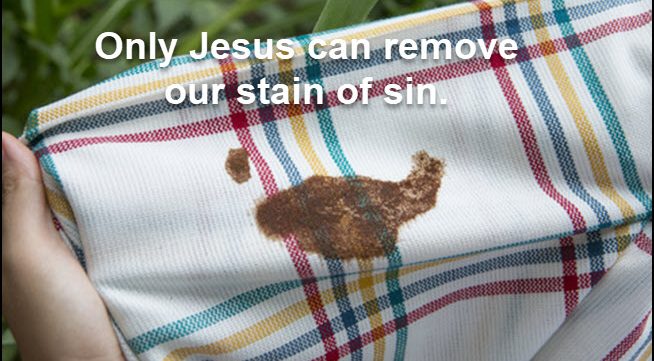
Zechariah 3-6 From Genesis to Revelation, we have learned that Satan is the accuser of the brethren. [Rev 12:10] He continues to accuse even today!  Thus in chapter three, we are given a marvelous symbolic example of what each believer can know about the accuser’s work and how we can be cleansed from sin to receive salvation. As we are, we “have become like one who is unclean, and all our righteous deeds are like a filthy garment.” [Is 46:6] We have a spiritual laundry problem and Satan tries to make us think that our works will make us clean, but that is a lie. “He saved us not by works of righteousness that we have done but on the basis of his mercy, through the washing of the new birth and the renewing of the Holy Spirit.” [Titus 3:5] We are only worthy because of what Christ has done because, like the priest, Joshua, we too wear the filthy clothes of sin. We need a launderer to cleanse us, and Jesus did just exactly that. Jesus is qualified to wear the robe of righteousness because He paid the redemption price for our sinful deeds and heart. Now He alone can rebuke the evil one. If we accept his gift of cleansing, we are now worthy of wearing fine clothing and a clean turban on our head.

 The Lord of Heaven’s armies reminds us we are worthy to walk among the Body of Christ in our new robe of righteousness.

God Loves Our Prayers

God loves a praying people

Zechariah 1 -2 When we read the prophets we come away with our minds swirling because in our 21st century we know we are reading a historical record with implications for our spiritual lives. A new administration under Cyrus allowed the exiles to return to rebuild the Temple. In that time Isaiah prophesied that this was His plan and even named Cyrus as ruler several years before his birth! (Isaiah 44:28)

Both Haggai and Zechariah would remind them that God wanted his people to learn. Learn and do not fall back into what your ancestors did not do. He had sent prophets but they did not pay any attention or listen to them. He offered hope to them if they turned from their evil wickedness but their words fell on deaf ears. Micah had reminded them God would turn and have compassion upon them and cast all their sins into the depths of the sea. Now with this ringing in their ears, they listened and began to confess:  “The Lord of Heaven’s Armies has indeed done what he said he would do to us, because of our sinful ways.” Words of repentance are a sweet balm to the Lord in heaven. He loves to hear of our words: I am sorry and I am willing to obey.

It is then that the floodgates of heaven swung open! “Sing out and be happy!” but also a simple reminder: “be silent in the Lord’s presence…”

“Where are you God?”

Habakkuk How often have you heard: “God doesn’t answer prayer” or “I tried faith, but it didn’t work.” Beloved know this; those who say this won’t believe even if and when the evidence is presented to them. They are obstinately content to live and walk in darkness. As one of Jeremiah’s contemporaries, Habakkuk teaches us how to persevere. He sifted through the pretense of his own belief and gleaned something that shook him to the core. Even as a believer, he too, was saying: “I can’t believe this is happening!” 

Habakkuk asked, “Why are you allowing this God?” He was brutally honest with God—he even accused God of not working! Yet Habakkuk didn’t walk away but persevered in his dialog with God. The refreshing thing to note is this: God loves us to be honest about how we feel. What other God would allow us to vent our feelings and our questions? And so unlike God’s silence with Job, God answered, “stand still and see me work.” Through his dialog with God, Habakkuk learned three principles:

Only the just will live by faith.

Someday God’s glory will fill the earth.

The Lord is still in his holy temple [Ps 73] and at work.

As Habakkuk’s world was swirling with ungodliness, he stood firm EVEN when he did not understand! Habakkuk determined to “remain stationed on the wall and keep watching so he could see what God says.”

Are you standing on the wall watching for God’s answer or wandering in the darkness?

False or True Repentance

Is your repentance true or false

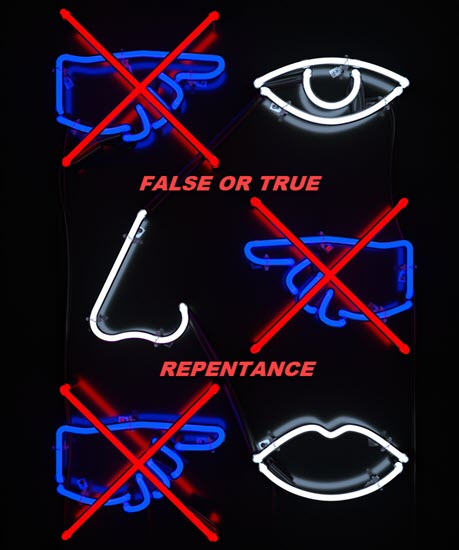
Nahum 1-3  Nahum, the Elkoshite, prophesied to the wicked Assyrians about their short-lived repentance. One hundred years earlier, when Jonah spoke the entire city, both man and beast put on sackcloth and ashes in repentance. But, now, they had returned to their cruel ways. Some today may make a faith profession, but later it is as if they had never heard. Just like the Ninevites, they had short memories. The “message they heard was of no value to them, because those who heard did not combine it with faith.[Heb 4:2]  Although Jeremiah wrote that God’s mercies are new every morning, He will call all accounts due sooner or later.

‘Listen Assyria; God is slow to anger not willing any should perish, but all come to repentance, yet He is also zealous and will avenge His people.  Whereas your king of old repented and you were spared, your new king is indolent and degenerate. You are ripe for enemy nations.’

Just because you think it won’t happen doesn’t mean it won’t. Assyria was destroyed, and their idols burned. Scoffers say to us: “where is the promise of his coming? It is as it always has been.” [2Pet 3:4]  Amazingly, in 1845, an archaeologist stumbled upon Nineveh’s site and found an extensive library proving Nahum’s words were true and accurate.

Beloved, God is merciful, but He will be patient just so long. If Jesus were to return today, would you be ready?

Optimized by Optimole