How Then Shall We Live?

Living by Faith

Habakkuk 1 – 3 The headlines scream as the government fails. Where are the spiritual leaders? They were hiding then, as many are today. Habakkuk sees an encroaching army and asks God why He is allowing this; weren’t the Israelites His people? God responds as He has in the past: renounce your sin and turn from your wickedness, and I will restore. 

Why do we have to see this? Why does God allow a wicked nation to come? Where are the protectors? God then answers Habakkuk with a visual word picture about these villains. They mock the righteous. They scorn anyone who speaks with a righteous tongue. And like him, we ask: “Why do you say nothing when the wicked devour those more righteous than they are?”  [Hab 1:13] God reminds Habakkuk and us that one day these will stand in His judgment and be found wanting. 

What is the lesson we are to take from this book? It is the same for us as it was  then: “the righteous will live by faith.” Secondly, like Habakkuk  say: “I will rejoice because of the Lord.” Where are we rejoicing instead of whining? Where are we watching on the wall for His word? Where are we faithful?

Habakkuk pleads with God in prayer: “But when you cause turmoil, remember to show us mercy!” [Hab 3:2] Is this our prayer?

“Search the Scriptures”

Search the scriptures

2Kings 2-25, 2Chron36 No matter where we read, we see that over and over, God was gracious to send His messengers to the people so that they would know what He required. How did they respond? They mocked the messengers, despised his Word, and scoffed until the wrath of the Lord arose against His people until there was no remedy. There is a saying; learn from the past so you don’t have to repeat it.


How do we respond to the messengers God has sent?  Are we gleaning one truth each day from our reading and then applying that to our life? Prov 3:5-6 tells us to trust in the Lord with all our heart, lean not on our own understanding, acknowledge God in all our ways, and He will make our paths straight.

How are we responding to the Word of God? We can only respond if we are “in the Word” daily. Are we reading to glean a truth to guide us today?

The Israelites refused and ended up in captivity. May we learn from them what not to do and what to do.

Are you an Interceder?

God has planned for us to intercede

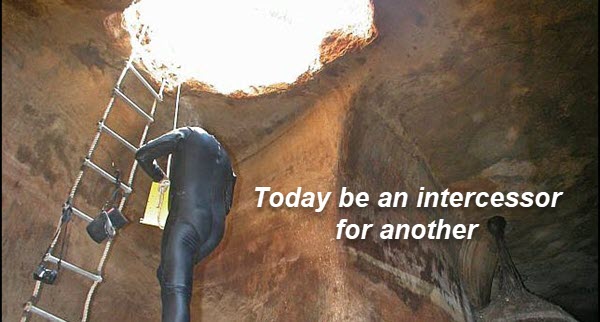
Jeremiah 38 As often as we read stories like this, we get caught up in the excitement and danger of the storyline, we call it a “cliff hanger” and we wait for the savior to rescue the one in danger. Those are fiction, but this is real and we see that in the midst of danger, God always has a “man of the hour” ready to step in. God may not call us to confront a king or a president regarding the plight of another, but He may call us to serve through intercession. Ebed-Melech had the heart to serve no matter the cost. He was willing to step in and confront the vacillating cowardly king Zedekiah. Over and over through scripture, we see how God orchestrates events and places people in places to serve His chosen ones.

In Genesis, we read about Joseph being placed unjustly in prison, just like Jeremiah. There, an unlikely series of events brought Joseph face to face with Pharaoh’s servant, who had a dream that he interpreted.  The cupbearer promised to speak to Pharaoh, but it would be two more years before he remembered. Because God used the cupbearer, Joseph was released and elevated. Because Ebed-Melech was God’s servant, he was willing to be the man of the hour to step in and save Jeremiah from certain death.

Has God placed you in a position to save another? We have the gospel message to save men from sin; are we sharing it? Have you stepped up to the plate, or are you like the cupbearer who failed to remember his promise?

“Faithfulness vs Unfaithfulness”

God rewards faith and curses unfaith

Jeremiah 35 to 37 Joshua challenged the men of Israel many years ago before these chapters: “Choose ye this day whom you will serve, but for me and my house we will serve the Lord.” [Josh 24:15]. It would have been wise for the men of Judah to have remembered these words because God had placed a similar challenge before them again. Jeremiah puts three stories before us to show us the rewards of faithfulness vs. the consequences of unfaithfulness.

The Rechabites, a nomadic tribe, were faithful to their ancestors never to drink wine and remain nomads. Even as Jeremiah tested them, they remained steadfast, and God gave them a blessing. “Jonadab the son of Rechab shall not lack a man to stand before Me always.” [Jer 35:19]

In sharp contrast to the Rechabites is King Jehoiakim, who “did not rend his garments” nor humble himself but burned the scroll of God’s words. To him came this pronouncement: “He shall have no one to sit on the throne of David…I will also punish him and his descendants and his servants for their iniquity,” [Jer 36:30-31]

The third story Jeremiah is about King Zedekiah, who was a vacillating king. Although fearful, he would not trust the words of Jeremiah about the impending overthrow of Jerusalem by King Nebuchadnezzar. However, he would later see that what God had said would come true. [Jer 39]

What is the lesson God wants us to learn?

God rewards faithfulness and removes blessing from the unfaithful. Where are you?  

God the Master Pruner

God prunes us

Jeremiah er 27 God the Master Pruner. As a gardener, one learns sooner or later, pruning does not hurt but helps the plant. Removing the dead growth gives room for the new growth to occur, and the newest is stronger. The dead is weak and takes nourishment from the plant. Jeremiah reminds Israel that they are the vine that God chose, but it needs pruning, and He places his pruning shears in the hand of King Nebuchadnezzar of Babylon. Jeremiah tells the people of this impending pruning, but they refuse to listen and instead want to “prune” Jeremiah by cutting him off. But, God is not only the Master Pruner, but He is the Master Protector and does just that for his prophet, Jeremiah.

Sometimes we can’t understand what God is doing, but God is in the business of pruning us so we might grow stronger. He often uses trials and challenging circumstances for that to happen.

Do we resist His pruning shears or allow their sharp cuts to take away the deadness?

How to be discerning

use scripture to discern

Jeremiah 23 “We dare not become lazy and expect others to do our studying and thinking for us.” [B. Deffinbaugh] As we listen to Jeremiah’s words, we hear the newscasts of today, which “demonize what is right and celebrate what is wrong.” Our culture wants God’s love apart from the price paid on the cross.  The people of Judah were uncomfortable with Jeremiah’s words of impending judgment for their sin. Jeremiah’s words fell upon deaf ears and sometimes landed him in stocks or a mud-filled cistern.

Jeremiah gave the people at least six ways to discern false prophets. We can learn from his words.

Observe and listen carefully. Do their words line up with God’s Word? Secondly, observe their lives and ask if they are consistent? Are they honoring God in word and deed? Thirdly, are they presenting false hopes? These countered Jeremiah’s words of judgment with ‘nothing bad will happen to you.’ Fifthly, they were in a hurry to deliver their message. Sixthly they claimed to hear God speaking, but if they had been in God’s inner circle; they would have heard the exact same words of impending Babylonian judgment due to their disobedience.

Fast forward to today. There are sheep in wolves’ clothing amongst us. We must also discern their character. Listen and look; observe their fruits; listen to the doctrine they teach.

Jeremiah’s Alexander Day

Jeremiahs' Day reflection

Jeremiah 20: Have you ever had one of “those” days when nothing goes right? There is a story about a boy named Alexander whose life seems like that. His day begins with gum getting stuck in his hair, and the rest of his day is all downhill. It really is one of those “Terrible, Horrible, No Good Days.” Jeremiah is having just such a day, to put it bluntly. God has called him to preach to a people who just will not listen. Like the men in the depression who wore storyboards to announce something and people walked by ignoring them or making remarks better left unsaid, Jeremiah takes his storyboard of God’s message to the passers-by and has the same reaction. Yes, it is one of Jeremiah’s “Terrible, Horrible, No Good, Very Bad Days.” 

His day ended with sitting in the stocks in the city square, thanks to the Priest Pashur which he used to make Jeremiah a laughing stock. Jeremiah has come to the end and shouts to God: ‘I QUIT!” Can you relate? God listens but does not comment. Yes, God is silent just when we need to vent. But then, in the quiet, Jeremiah stops and begins to tell God:

Your message is like a fire burning within me. I am tired, God. I want to quit God. But, then a still quiet voice says; keep on keeping on. I hear, and I note, and I have a blessing for you—so “hangest thou in there.” 

So when you are having an Alexander Day, stop and talk to God, and like then just like Ezekiel, listen for His quiet voice.

You can “know” God or just “about” God…

You can know God or just about God

Jeremiah 10 to 14 is all about Jeremiah reminding the people that they can “know” God, not just “about” God. Paul reminded the reader of Romans this truth: “since the creation of the world his invisible attributes – his eternal power and divine nature – have been clearly seen, because they are understood through what has been made. So people are without excuse.” [Rom 1] in sharp contrast to the idol worshipers. Jeremiah boldly told the people of Judah that idols are man-made blocks of wood covered in silver; they must be hammered to stand upright, they have no ears to hear and no mouths to speak. All who worship them “will prove to be stupid and ignorant.” [Jer 10:14]

In the book of Ruth, Orpah “knew about” God from Naomi. but Ruth “knew God.” We can discern that because of their response. Orpah knew about God, but she turned and went back to Moab when Naomi said, go home. Ruth, however, did not and insisted on going not back to Moab but forward to Bethlehem. That is the picture of the gospel. We either turn back to the world or move forward toward the “house of Bread” Bethlehem.

You can “know” God, not just “about” God. The question is, where are you?

Boasting about God

What are you boasting in?

Jeremiah 7 -9 The heart of God and the heart of Jeremiah.

God has revealed to Jeremiah the sin of his people. They are hypocrites and have a hard heart. Jeremiah reminds them that these are the two things God hates and He will bring judgment on them because they refuse to listen and obey. At the end of chapter nine, Jeremiah reminds them that if you want to be wise and you want to glory, then look and see if you are demonstrating God’s character. What then can we “brag” or boast about? It is this: “God chose what is low and despised in the world, what is regarded as nothing, to set aside what is regarded as something, so that no one can boast in his presence” [1Cor 1:28]

 “Wise people should not boast that they are wise. Powerful people should not boast that they are powerful. Rich people should not boast that they are rich.  If people want to boast, they should boast about this: They should boast that they understand and know me. They should boast that they know and understand that I, the Lord, act out of faithfulness, fairness, and justice in the earth and that I desire people to do these things,” says the Lord. [Jer. 9:23-24]

These are the characteristics of the Lord that stand in contrast to what men boast in. What are you boasting in this a.m.?

Do we?

Jeremiah 5 Is our Heart like God’s?

Jeremiah began to wonder, is there any good news? Is it all bad news?

Like Ezekiel whom God told to look for a man who would stand in the gap, [Ezekiel 22:30] God told Jeremiah, “See if you can find a single person who deals honestly and tries to be truthful. If you can, then I will not punish this city.” [Jer 5:1] In Gen 18 the Lord and Abraham had one of those “hard conversations.” Abraham asked God if he would kill the godly with the wicked. [Gen 18:25] In His mercy, God had quietly shared with Abraham; if I find 50 godly people, I will spare the whole place for their sake.

One of the marvelous things we can count on is that God always thoroughly investigates a situation before passing judgment. He cannot nor will He arbitrarily destroy because He is a fair and judge. As He did with Sodom, He does with us.

We can count on the fact that the God we serve is “compassionate, gracious, slow to anger, abounding in lovingkindness and truth.” It is because His “lovingkindnesses indeed never cease, for His compassions never fail.” [Lam 3:22] 

Do we have these same character qualities? Do we judge before we have evidence? God’s heart is clear: He is fair and just and He expects us to be the same.

Optimized by Optimole