
Listen Up!

Are you silent before God?

Zephaniah 1-3 The rich and famous dress, talk and move accordingly to the ways of that circle. Zephaniah was in that circle because of his lineage but not of that circle. He could have used that to gain introductions to the movers and shakers, but instead, he listened to God and spoke His message about their sin. However, his message fell flat, and perhaps he even heard; you can’t really believe that. What universe are you from? Don’t you know “The Lord neither rewards nor punishes?” [Zephaniah 1:12] But, Zephaniah’s total message was “be silent before the Sovereign Lord.” [Zephaniah 1:7] hoping that some would stop this life on the merry-go-round and seek God’s way. They found it hard to understand that he was a believer because he didn’t fit with their idea of success.

God used Zephaniah to describe the Day of the Lord, yet their hearts were hard, and they responded to the truth of God with delay, disregard, and dismay. Like some today, they couldn’t believe that “one of their own” could believe in a God who is sovereign. So, they disregarded his words and his warning to repent. They only saw a God of love and failed to realize that God is holy and cannot live with sin. They fail to realize that God is looking for His remnant of believers.

Who are you speaking to today that needs this message, and will you be strong like Zephaniah?
Facade or True?

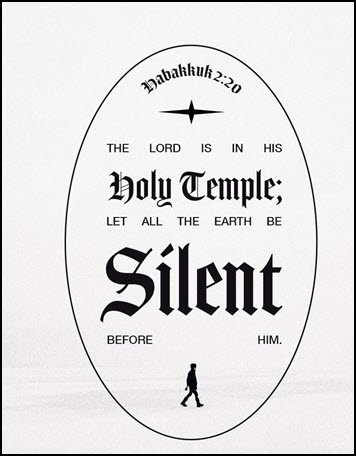
Be silent

Habakkuk 1-3 God called Habakkuk to share God’s plans for His children as they lived and wallowed in their sins. Would they repent, or would they suffer the consequences of their sins? God revealed His plans that they might know—even if they didn’t understand. How gracious is our God!

Habakkuk was disturbed that God would use the evil Chaldeans to discipline His children, but when push comes to shove, that was needed to get their attention. God does the same with us. If you won’t listen and parade around with a facade of holiness, but your heart is unrepentant, then God will reveal true wickedness through persecution. But, beware of saying you are persecuted when you are just using that as a coverup for disobedience. [Matt 5:10]

Three things Habakkuk learned from this interaction with God. One is that we can come boldly before His throne and voice our questions, and He will answer! Secondly, only the just will live by faith. Thirdly, God is still in charge and at work.

Am I standing on the wall with Habakkuk watching and listening for His voice, or am I just walking around with the mask of holiness, but if removed, it would reveal my hypocrisy of false holiness?

God Avenges

Are you ready?

Nahum 1-3 As the prophet of God, Nahum reveals the ways of men, which are cruel and without mercy, and God, who seeks men’s hearts to turn to Him. Assyria was the cruelest of all the nations of Nahum’s time, and their leader considered himself to be invincible, yet in God’s perfect timing, he would be brought low.  God’s patience is extraordinary! One hundred years earlier, He had sent Jonah to them to call for repentance, and they did. Yet, now, Nineveh has not only returned to their evil ways but multiplied it beyond.  Yet, God, in His mercy, calls them to repent again. Because they would not, they are but a historical memory that archaeologists seek to understand. The lesson and message is this: God is slow to anger, not willing any should perish, but all come to repentance, yet He is also zealous and will avenge His people.  [2Pet 3:9]

God is merciful, but He will be patient just so long. If Jesus were to return today, would we be ready for His avenging power? Watch the heavens, for soon He will return on the clouds in great fury over the wickedness of men and avenge His people. “The Lord is good— indeed, he is a fortress in time of distress, and he protects those who seek refuge in him.” [Nah 1:7] Do you know this character of God? 

God’s Requirements

God's Requirements

Micah 6:8 Three Things God requires

God has clearly laid out what He requires, a simple 1-2-3 plan for His children. This is not a how to get saved plan, but a plan for the saved–meaning this is how a believer is to live.

Do justly; that is, whatever you choose to do, do it with the pattern of how God would act.

Secondly, love mercy or love faithfulness as the NET has it. God loves mercy, and He dispenses it with his justice. We should do the same.

Thirdly, walk humbly. Our life should mirror the life of Christ; in humility.

“He has told you, O man, what is good, and what the Lord really wants from you: He wants you to carry out justice, to love faithfulness, and to live obediently before your God.” [Micah 6:8]

Choose the Right Path

Choose the right path

Micah 1-4 Why has God used this prophet during the reigns of four unfaithful kings? Like many prophets and the author of Hebrews, God uses him to call us to remember from where we have fallen and repent.

 Micah was sent to a people who were not faithful to Jehovah. He used puns to share God’s word. Yet, even with that, the people and their leaders did not listen or change their ways. What does God have to do with us to get us to pay attention and change our ways? Ray Stedman writes: “Micah took the names of the cities and shared what God was showing him. For example, “Tell it not in Gath, weep not at all” Gath means “weep,” and the prophet plays on that name. Here is how it would read: “In Weep Town, weep not; in Dust Town, roll yourself in the dust.” (Bathleaphrah means the town of dust.) “In Beauty Town, beauty will be shamed.” (That is the meaning of Shaphir—beauty.) “In Zaanan (which means march) they’ll march not forth.”

God is sending both nations a warning. The author of Hebrews does the same. The message is: “Don’t harden your hearts!” God wants soft hearts, purity, and righteousness, but like people today, who only call on God when circumstances are grave, Micah is saying just like Joshua: “choose today whom you will worship.”  [Jos 24:15]

Forgive as God forgave you!

Bitterness divides/forgiveness unites

Obadiah and Jonah: Because Bitterness Divides but Forgiveness Unites

Do you recall the story about a feud between the Hatfields and McCoys who harbored grudges spanning several years? They were led by a rogue clan member who refused to forgive. Read Obadiah with this tale and the Jacob/Esau story in mind. Just like the Hatfield/McCoy feud, the descendants of Esau or Edomite’s hearts were full of bitterness. Esau was bitter because his brother Jacob got the birthright and blessing—by trickery. He never forgave him, although when he met Jacob many years later, he “seemed” repentant.

God sent Obadiah to Israel to prophesy about Edom to show them that unforgiveness is a trap laid by Satan. The Edomites harbored a grudge against this event’s outcome years ago. Like the Hatfield/McCoy’s, they rehearsed it repeatedly, probably embellishing the details to the next generation as to why they would not, should not, could not forgive their enemy. The reality is unforgiveness is a sin. Instead: “If your enemy is hungry, give him food to eat; And if he is thirsty, give him water to drink; For you will heap burning coals on his head, And the LORD will reward you” [Rom 12:20]

Israel lies precariously close to this story because they refused to forgive their neighbor Judah. For us, it is a warning sign of what happens when we cling to hatred instead of forgiving.

Truth Principle: When we do not forgive, we are shackled in our past. Forgive as God forgave you.

Optimized by Optimole