Insomnia —

Do you have insomnia? What do you do when it crops up in the middle of the night? What is its cause? Asaph faced it and I face it often. How about you?

Ps 77 “ Facing Insomnia?”
Insomnia is defined by the dictionary as an inability to obtain sufficient sleep, especially when chronic; difficulty in falling or staying asleep; sleeplessness. No matter the cause, the results are the same when we experience insomnia; bone weariness upon arising. Asaph seemed to have experienced this. Asaph uses this time to pray and seek the face of God. He cries out to God. He recalls God and His attributes, and he prays all night long. He “remembers the song I once sang. I will think very carefully. I tried to make sense of what was happening.” What do you do at times like this?

George Rogers once wrote: A good man cannot rest upon his bed until his soul rests upon God. That is a truth we need to remember when we have nights when we are chasing sleep or insomnia.


Psalm 73 Life Isn’t Fair–Yet

Do you talk to yourself? Let’s listen in on Asaph’s self-conversation.

Listen, God, life is not fair.  You tell me to be humble, but I see the prosperous, and they are not! They are proud and pompous while I am poor and suffer adversity. They lack for nothing and live life with a “God owes me ” mentality. I am a man of integrity, and yet here I am facing problems. Where is my material prosperity, God? Why do I face challenges? If you are God, why am I suffering? Does this sound familiar?  Asaph has a problem and we do as well. We fail to see life through the lens of the eternal perspective.

There are three lessons we should note. First, Asaph was envious.  Envy is a sin that began in the Garden of Eden and is alive and well today. Secondly, Asaph shares, “If I had publicized these thoughts, I would have betrayed your loyal followers.” Today’s translation: I would become a stumbling block! Do we do the same without thinking what our grumbling might do to a young believer’s faith?  Asaph then realized as he entered the precincts of God’s Temple; what he needed was cleansing. He pondered the consequences of being a stumbling block to others, so wisely, he sought God’s counsel.  Lastly, in God’s presence, he saw the reality: We are here for one purpose:

to behold His beauty and to worship Him in all of His fullness.

In the parable of Luke 16, we see the point of it all. Lazarus was poor and needy, but in the end, he was the one whom God blessed. The rich man, not hardly. You see, he had the “God owes me mentality.” So, where are you in your thinking?

Handing Off to the Next Generation

Psalm 71 and 78 Getting older is not for sissies, but until we take our last breath, God has work for us to do. Senior citizens have much to offer the younger generation about the lessons gleaned from trials to blessings. But how do we ensure that the next generation knows these lessons? We must purposefully choose to take time to sit with them and share our life’s story.   How many years are there between you and the next generation? Twenty or even fifty? One of my regrets is that my parents did not tell us about their lives even when asked.

Beloved, time is fleeting, and memories are being lost. We must begin to tell the next generation of our story—whether good or bad.

The psalmist is writing from his perspective of being “old and gray.” He has one request of the Lord. His prayer is that God allows him to remain until he tells the next generation about God’s strength and His power. What is your prayer? Do we choose to tell about His praiseworthy acts, strength, and the amazing things He has done? Do we choose to teach and speak of His splendor and tell about His marvelous deeds, power, and majesty?

What is your prayer this day? Don’t waste this opportunity! Prepare now to tell your story.

Our Responses Reveal our Hearts

Ps 69-70 Psalm 69 is the third most quoted psalm in the NT.  (e.g., those who hate me without cause [Jn 15:25], Immediately one of them ran, and taking a sponge, he filled it with sour wine (some translations use vinegar) and put it on a reed, and gave Him a drink… [Matt 27:48].

David begins his psalm with an analogy of physical drowning as he tries to cope with the criticism of others and finds himself in a pit with no way out. David’s loneliness reminds us of the story of Joseph and his cry. Later the brothers would recall his cries: “We saw how distressed he was when he cried to us for mercy, but we refused to listen.”

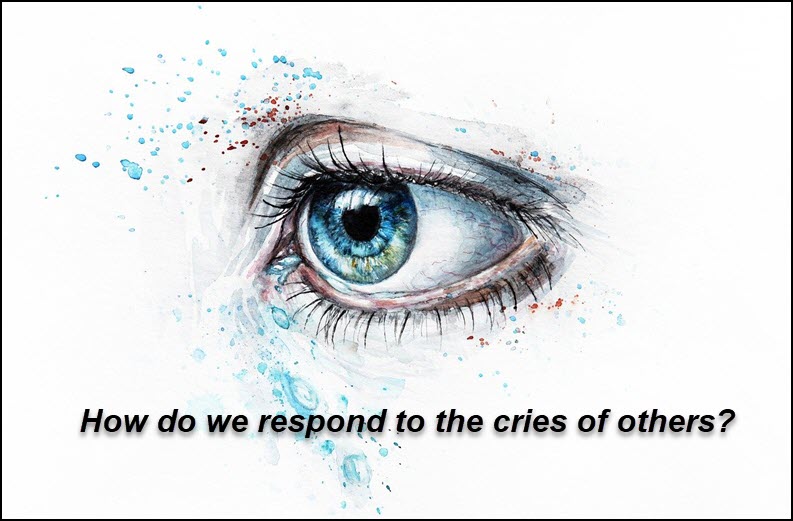
When we hear the cries of others in distress, do we also refuse to listen?

David’s tone changes as he reminds himself of God’s lovingkindness and compassion, his saving truth, the fact that God alone is one’s redeemer. He pleads with God, “pour out your judgment upon them, do not vindicate them, may their names be deleted from the scroll of the living.” These are harsh words!  In the NT, we see the higher way to seek justice as Jesus becomes our example “Father, forgive them for they know not what they do.” [Luke 23:34]

Today may we choose the higher path, the path of our Savior, our True Messiah.

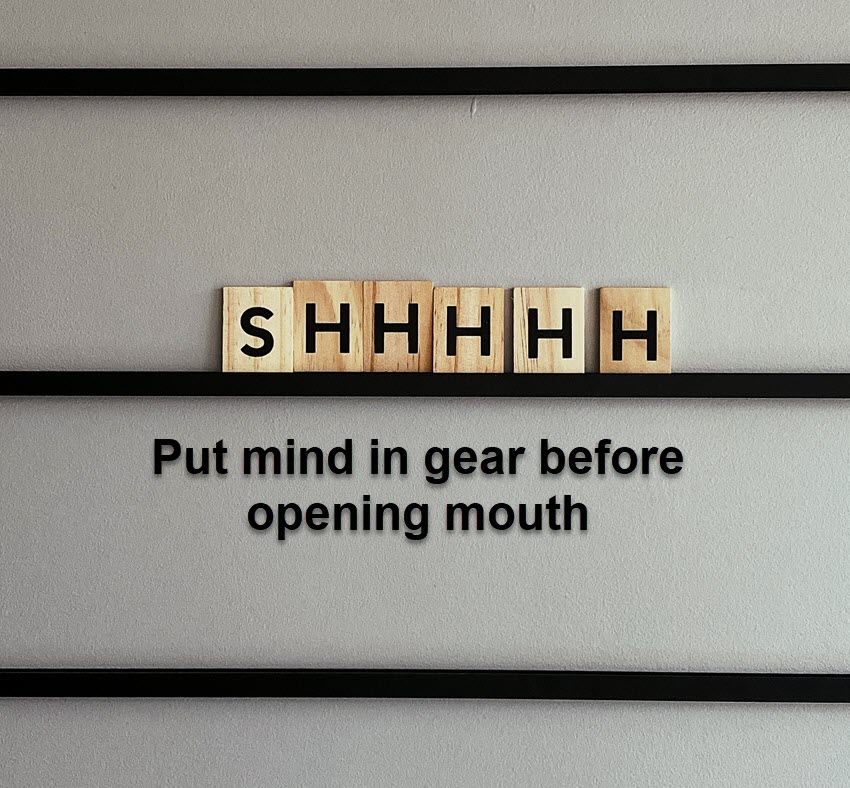
SHHHHHHH…

Psalm 64 Whether a child or an adult, we are easily hurt by another’s words, which aim at the heart. We quote this ditty when challenged: “sticks and stones may break my bones, but words will never harm me.” But we know that is not true. Words hurt or words edify. David knew this all too well as he notes that his enemy ‘sharpens their tongues like swords; they aim their arrows, a slanderous charge.’ 

Words either edify or tear down. Words lift, and praise or words seek to destroy. Jesus said that the things that come out of the mouth originate in the heart. James reminds us that our tongue cannot be subdued; it is a restless evil, full of deadly poison. With it, we bless the Lord and Father, and with it, we curse people made in God’s image. Men face this problem. Perhaps that is why David challenged himself with these words: I will put a muzzle over my mouth, and again I will watch what I say for once words are said, they cannot be retrieved. But, also like David, we become impatient, wanting to speak our minds.

We would do well to memorize and apply Ephesians 4:29 “You must let no unwholesome word come out of your mouth, but only what is beneficial for the building up of the one in need, that it would give grace to those who hear.”

shhhhh
Just a sweet reminder!

What is the Right Advice in Times Like This?

Psalm 62  Do you find it hard to wait? David was in a desperate situation. Jesus was nearing the end of his earthly life, and he told the disciples to stay alert and watch lest you fall into temptation. How often do we fail to stay alert and ‘wait?’ How often do we fall asleep like the disciples or try to manipulate circumstances as we see fit? The irony is that God knows our past, present, and future. He knows the very hair on your head, and He knows each heart, whether it is single-minded or double-minded. David was busy waiting, not knowing when his adversaries would arrive on the scene. Like David, Jesus was busy praying, but the disciples were asleep. Is this our pattern too? 

In his waiting, David noted that his enemy was like a leaning wall, like a tottering fence, but God was His stronghold. Years earlier, Nehemiah also heard the taunts of the enemy: “Even what they are building-if a fox should jump on it, he would break their stone wall down!” Neh 4:3 At desperate times, we need to take our concerns to God. David reminded himself: ‘wait in silence for God only.’ 

Therefore Beloved remain steadfast, immovable, always abounding, and focus on the God who never fails.

Jungle Prayers

Psalm 57-59 There is a jungle out there; not a literal jungle, but a jungle of hatred and evil. For David, it was enemies and a king trying to kill him. Thus how pertinent is this group of psalms to our day today! These psalms include David’s thoughts of asking God to invoke judgment upon his enemies.  Even in his trials, David relied upon God to handle his adversity, enemies, and also as Ps 57 notes, corrupt judges. David always went to God when he faced troubling times. The question for us is, do we go to God in our trials?

David counted on that God alone is the avenger and not he, which is a truth we need to employ as we in our world of unjust judges or leaders. David pours out his heart and then says in Ps 57:7, “I am determined, O God. I am determined. I will sing and praise you.” He ends this imprecatory psalm by saying, “May your splendor cover the whole earth.” 

Dr. Constable writes: “Life sometimes seems similar to a jungle with wild beasts threatening to devour hostile hunters trying to trap us. Nevertheless, the godly can count on supernatural assistance and can rejoice in ultimate salvation. In the meantime, we should live for the glory of God.”

Are you facing a jungle today? May I pray for you?

A Diary Entry

Psalm 55  Do you keep a diary? How about a journal? What are your reasons?

David’s diary this day recorded his feelings of dismay when a confidant spoke against him both privately and publicly. When have you been betrayed? What is your first thought, and what are your first actions? Is it to humiliate the person, or is it to let God take care of it?

Amid his dismay, David didn’t wear his emotions on his sleeve or in his countenance. Instead, David wrote his thoughts in the privacy of his diary. You can write to your heart’s content exactly how you feel and how you think and sometimes how you act. Just because it is private at the moment, after we pass on, others may release it to the world. Thus, David leaves us a model to follow—do not name your accusers or your friends or your enemy. But, do write to release your emotions and thoughts about the situation. Always begin by approaching the throne of God in prayer.

David writes: Oh, God, hear my prayer for mercy.  Please pay attention to my appeal and answer me!

Then when you have exhausted your thoughts on paper, leave the results to God and do as David did:  trust in God.

Where is your confidence?

Ps 54 If anyone could write a novel of real life as a 007 agent, it is King David. His experience of hairbreadth escapes reads like a James Bond novel. James Bond fan, often escapes with finesse and smart tactics, thanks to cinematography. But, David lived it in real life, and today’s psalm finds him seeking a respite as he had done previously near the camp of the Ziphites, who were, in fact, blood relatives. However, they are the Judas Iscariot’s of the OT as they betray and double-cross, revealing to Saul where David is hidden.

This is the backdrop and prominent theme in Psalm 54. David voiced his prayer to Elohim and asked him for deliverance and for God to deliver him.

There is a principle here: God hears and responds to those whose heart is perfectly aligned with him. Elohim is the only one who has the power to deliver when we are in dire circumstances. Surely, he (Adonai = Lord- master) rescues us from all our troubles.

Beloved, remember our “struggle [is] not against flesh and blood, but against the rulers, against the powers, against the world rulers of this darkness, against the spiritual forces of evil in the heavens.” But, like Joseph and David, our God reigns, and He alone can deliver. David had confidence in the God he knew.

Where is your confidence this day?

“Do You Need a Heart Transplant?’

Psalm 50 & 51 People, we are in deep trouble. Instead of peace and quiet, our world is swirling with anxiety, greed, grumbling, and all the “vices” of Galatians 5. There is strife, jealousy, and outbursts of anger. We are swimming in sexual immorality, impurity, depravity, and idolatry—all because we are worshiping the creation more than the Creator.

God says we are in debt, but He also says: My Son has paid your debt.  The world is striving to do the right “things,” but God says come apart with me and listen to what I have to say. You lack the one thing I desire, which is a humble spirit, a repentant heart, or a heart transplant.

Without the sacrifice of our Savior, we remain indebted. We are guilt, but Jesus paid our sin debt; if we accept His gift of salvation. Then our sin debt is canceled. But—we are never debt-free of offerings of thanksgiving to Him for this beautiful and precious gift. God does not desire sacrifices, for if He did, we could never repay our debt. Indeed, God wants is a heart that is receptive and thankful for this unspeakable gift.

Today step aside and evaluate your worship and your lifestyle. Pray that God would create in you a pure heart and a resolute spirit.

Optimized by Optimole