God Loves Our Prayers

God loves a praying people

Zechariah 1 -2 When we read the prophets we come away with our minds swirling because in our 21st century we know we are reading a historical record with implications for our spiritual lives. A new administration under Cyrus allowed the exiles to return to rebuild the Temple. In that time Isaiah prophesied that this was His plan and even named Cyrus as ruler several years before his birth! (Isaiah 44:28)

Both Haggai and Zechariah would remind them that God wanted his people to learn. Learn and do not fall back into what your ancestors did not do. He had sent prophets but they did not pay any attention or listen to them. He offered hope to them if they turned from their evil wickedness but their words fell on deaf ears. Micah had reminded them God would turn and have compassion upon them and cast all their sins into the depths of the sea. Now with this ringing in their ears, they listened and began to confess:  “The Lord of Heaven’s Armies has indeed done what he said he would do to us, because of our sinful ways.” Words of repentance are a sweet balm to the Lord in heaven. He loves to hear of our words: I am sorry and I am willing to obey.

It is then that the floodgates of heaven swung open! “Sing out and be happy!” but also a simple reminder: “be silent in the Lord’s presence…”

“Is God First?”

Is God first?

Haggai 1 & 2 Today, a refrain is heard: I have bills to pay, and whatever is leftover, I may give to the church. But, God is clear; your thinking is backward!  “Bring the entire tithe into the storehouse; Test me and see if I will not open the windows of heaven and pour out a blessing for you until there is no room for it all.” [Mal 3 author’s paraphrase] The point being: when we put God first, He blesses, and as the Israelites were experiencing, the reverse is also true. Is it any wonder then that Haggai came to the people and rebuked them for wrong priorities?  Was it right for them to live luxuriously while the house of the Lord lay in ruins? Then he asked them to consider their priorities.

Haggai’s message was convicting! The people turned and put God first, and then God did just as Malachi said. Their crops rebounded, and their pocketbooks were replenished. God is clear: if I am first, I will be with you, and I will bless you.

“But seek first His kingdom and His righteousness, and all these things will be added to you.” [Matt 6]

Is church and giving to the work of the Lord on the bottom of your list?

Where is God in your priority list?    

“God Always Leaves a Remnant”

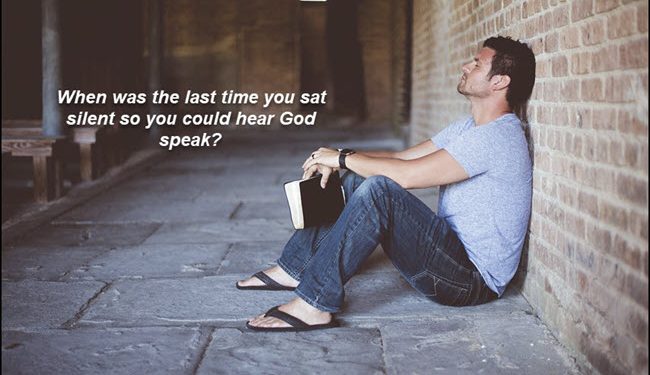
sit silently before the Lord

Zephaniah 1 to 3 A royal prophet to a royal people could be our title for this small book with a mighty message. Instead, this humble prophet chooses not to use his royal influence but to join the peasantry ranks. He was used by God to remind them that when God brings forth his judgment, they need to see themselves as a part of the remnant, which begins with a repentant heart.

Zephaniah reminds the people that unless they move from a stagnant heart to a heart that is alive and well, they will face the same judgments God has planned for idolatrous Judah. It won’t matter if they are of royal blood or not because God looks at every individual’s heart, not their pedigree. Jeremiah had reminded them that His mercies are new every morning; great is His faithfulness, but they must choose. The starting point is the cleansing of their heart, which begins when they choose to be silent before God. Use this time to reflect and repent.

After His judgment,  God will leave in their midst a humble and meek people, a remnant who will find safety in the presence of the Lord. His words will renew them with His love as He shouts for joy over them.

The real question to the people of Judah (and to us) is will we be part of the remnant?

“Where are you God?”

Habakkuk How often have you heard: “God doesn’t answer prayer” or “I tried faith, but it didn’t work.” Beloved know this; those who say this won’t believe even if and when the evidence is presented to them. They are obstinately content to live and walk in darkness. As one of Jeremiah’s contemporaries, Habakkuk teaches us how to persevere. He sifted through the pretense of his own belief and gleaned something that shook him to the core. Even as a believer, he too, was saying: “I can’t believe this is happening!” 

Habakkuk asked, “Why are you allowing this God?” He was brutally honest with God—he even accused God of not working! Yet Habakkuk didn’t walk away but persevered in his dialog with God. The refreshing thing to note is this: God loves us to be honest about how we feel. What other God would allow us to vent our feelings and our questions? And so unlike God’s silence with Job, God answered, “stand still and see me work.” Through his dialog with God, Habakkuk learned three principles:

Only the just will live by faith.

Someday God’s glory will fill the earth.

The Lord is still in his holy temple [Ps 73] and at work.

As Habakkuk’s world was swirling with ungodliness, he stood firm EVEN when he did not understand! Habakkuk determined to “remain stationed on the wall and keep watching so he could see what God says.”

Are you standing on the wall watching for God’s answer or wandering in the darkness?

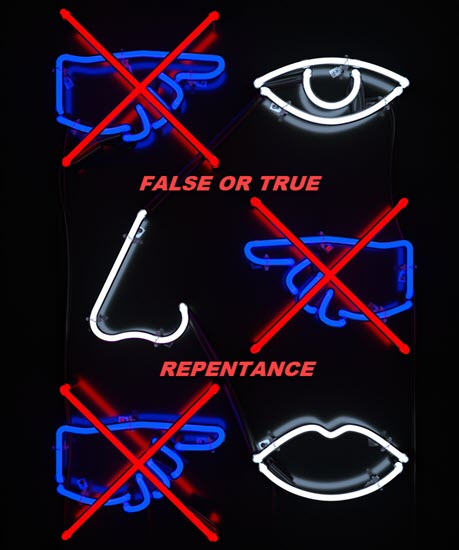
False or True Repentance

Is your repentance true or false

Nahum 1-3  Nahum, the Elkoshite, prophesied to the wicked Assyrians about their short-lived repentance. One hundred years earlier, when Jonah spoke the entire city, both man and beast put on sackcloth and ashes in repentance. But, now, they had returned to their cruel ways. Some today may make a faith profession, but later it is as if they had never heard. Just like the Ninevites, they had short memories. The “message they heard was of no value to them, because those who heard did not combine it with faith.[Heb 4:2]  Although Jeremiah wrote that God’s mercies are new every morning, He will call all accounts due sooner or later.

‘Listen Assyria; God is slow to anger not willing any should perish, but all come to repentance, yet He is also zealous and will avenge His people.  Whereas your king of old repented and you were spared, your new king is indolent and degenerate. You are ripe for enemy nations.’

Just because you think it won’t happen doesn’t mean it won’t. Assyria was destroyed, and their idols burned. Scoffers say to us: “where is the promise of his coming? It is as it always has been.” [2Pet 3:4]  Amazingly, in 1845, an archaeologist stumbled upon Nineveh’s site and found an extensive library proving Nahum’s words were true and accurate.

Beloved, God is merciful, but He will be patient just so long. If Jesus were to return today, would you be ready?

“What God Requires”

God's requirement

Micah 5 to 7 Micah was a simple peasant whom God chose to speak to His people because He had a complaint against them. Micah told them that God would contend with them because they followed Balaam, whose way was tainted by the love of money. God  told Micah to ask them this question: Have you forgotten how I redeemed you from bondage? That is a good question for us to ask ourselves as well. What drives us to be faithful? The author of Hebrews says: “Oh, that today you would listen as He speaks! Do not harden your heart.”[Heb 3:15]

Our gracious God has given us some simple tests to show that our heart is right. The psalmist says start here: “Create in me a pure heart” [Ps 51:10]  The prophet Micah tells the wayward Israelites that God has not made it hard! “He has told you, O man, what is good, and what the Lord really wants from you: He wants you to carry out justice, to love faithfulness, and to live obediently before your God.” [Mic 6:8NET]

Micah then extols the attributes of God! He pardons iniquity and He passes over the transgressions of the remnant of His heritage. He doesn’t retain His anger forever, He delights in mercy, and He will have compassion again.

That is the God who loves us; will we love Him in return?

“Puns”

choose wisely

Micah 1 to 4: Why has God used this prophet during the reigns of four unfaithful kings? Like many prophets and the author of Hebrews, God uses him to call us to remember from where we have fallen and repent.

 Micah was sent to a people who were not faithful to Jehovah. He used puns to share God’s word. Yet, even with that, the people and their leaders did not listen or change their ways. What does God have to do with us to get us to pay attention and change our ways? Ray Stedman writes: “Micah took the names of the cities and shared what God was showing him. For example, “Tell it not in Gath, weep not at all” Gath means “weep,” and the prophet plays on that name. Here is how it would read: “In Weep Town, weep not; in Dust Town, roll yourself in the dust.” (Bathleaphrah means town of dust.) “In Beauty Town, beauty will be shamed.” (That is the meaning of Shaphir—beauty.) “In Zaanan (which means march) they’ll march not forth.”

God is sending both nations a warning. The author of Hebrews does the same. The message is: “Don’t harden your hearts!” God wants soft hearts, purity, and righteousness, but like people today, who only call on God when circumstances are grave, Micah is saying just like Joshua: “choose today whom you will worship.” 

Bitterness Divides/Forgiveness Unites

Beware of Bitterness

Obadiah: Do you recall the story about a feud between the Hatfield’s and McCoy’s who harbored grudges spanning several years? They were led by a rogue clan member who refused to forgive. Read Obadiah with this tale and the Jacob/Esau story in mind. Just like the Hatfield/McCoy feud, the descendants of Esau/ Edomite’s hearts were full of bitterness. Esau was bitter because his brother Jacob got the birthright and blessing–by trickery. He never forgave him, although when he met Jacob many years later, he “seemed” repentant.

God sent Obadiah to Israel to prophesy about Edom to show them that unforgiveness is a trap laid by Satan. The Edomites harbored a grudge of this event’s outcome from years and years ago. Like the Hatfield/McCoy’s, they rehearsed it repeatedly, probably embellishing the details to the next generation as to why they would not; should not, could not forgive their enemy. The reality is unforgiveness is a sin. Instead: “If your enemy is hungry, give him food to eat; And if he is thirsty, give him water to drink; For you will heap  burning coals on his head, And the LORD will reward you” [Prov 15:22]

Israel lies precariously close to this story because they refused to forgive their neighbor Judah. For us, it is a warning sign of what happens when we cling to hatred instead of forgiving.

Truth Principle: When we do not forgive, we are shackled in our past.

The Power of Prayer

Your prayers can move mountains

Amos 7 to 9 God asks the sheepherder and agriculturist Amos: Can two walk together unless they have agreed to do so? It is a rhetorical question, of course.  Later, as Amos walked the halls and fields of the northern kingdom, he “saw” or beheld God making locusts that would devour the crops, followed by fire to consume the fields. As Amos watched, his heart was broken. As we look about us, is our heart broken? Do we plead with God: Sovereign Lord, forgive Israel for they are too weak. God answered Amos: It will not happen. Never underestimate the power of a praying person. Know this truth: God hears the pleas of His children.

What does this mean to us today? It means you can be like Amos. God is listening to your petitions, and He will respond—sometimes He may even change his plan.

Never underestimate your praying power.

Just as Amos spoke to God on personal terms, so can we. Jesus said: I no longer call you servants; instead, I call you friends. A servant is told what to do and how but has no understanding of the why and does not question. In contrast, a friend converses and seeks to understand the motives and actions. Be like Abraham, Moses, and now Amos, who appealed to God for His mercy. God heard and relented of His decision. Never underestimate the power of prayer because the prayer of a righteous man can accomplish much. [James 5:16]

Do you have that personal relationship with Him?

Are You Prepared?

Are you prepared to meet God?

Amos 4 to 6 When we go to court, we place our hand on the Bible and swear that we will tell the whole truth and nothing but the truth, so help us, God. This is a solemn oath that we take, reminding us of the consequences of not telling the truth. As we do that, we are following the pattern of God, who confirms an oath by his own holy character.  What He says is true, and it will never be altered because He is the “way, the truth, and the life.”

Amos was given the task to remind them that God has plans for their future, yet they still did not come back to Him. Amos says: the day of the Lord will come swiftly as lightning; therefore, they should prepare to meet God. It is because of God’s great compassion that He reveals his plans to men. But, just as in Amos’ day, the world is busy about spending that which will decay on material possessions but not time hungering and thirsting for the Word of God. If God were to blow the trumpet, what would He find us doing?

Ecclesiastes reminds us: When you make a vow to God, do not delay in paying it. It is better not to vow than to vow and not pay it. You took an oath/vow that you believed in Jesus. Does your life reflect that oath/vow? Thus we should seek the Lord to live, once in this lifetime and then again in the hereafter.

Optimized by Optimole