Seek God while He may be found…

Job 35-37 We have been following Job and his friends as they respond to his suffering. The young Elihu continues to wax eloquently and finally near the end he poses a question that has been asked for centuries: whom or what do you seek when you are in distress. The world seeks to find help in themselves or other avenues but often leaves God out of the equation. Sometimes they never seek God…read to the end…. It is disheartening when that happens but again we present the truth but the results lay in the hand of the receiver and God.

job 35a

Elihu says it really doesn’t matter, God is God and He is not at all bothered about whether we do good or bad. At that, we want to stop and say “whoa!” Not affected? Doesn’t care? What presumption! Elihu is wrong on both accounts and we need look no further than Ezekiel chapter 20 and you get a very different picture. There the elders come to Ezekiel inquiring about life and wanting to know when this exile will end. What they got must have been a deafening wake-up call. God answers their inquiry with this: “I will not allow you to inquire of Me.”  God was definitely affected.  He told Ezekiel that when men leave God out of the equation He is grieved and broken-hearted—especially when He has called you. Rejecting God has serious consequences and without Him, you are bereft as a boat without a sail.

Elihu is right about one thing: Storms come that we may seek His face and His understanding. He is also right in his description about God: He is all of splendor and more. We cannot attain to Him. God is God and man is man.

The question is will you seek Him or will you be like my neighbor who said, I never needed God in all of my life and I don’t need him now—as he breathed his last.  I thought it was hard enough to hear my grandmother say that but then when my neighbor said that my heart felt like it had been run over with a bulldozer. Men choose their destiny…don’t ever forget that. When you need God don’t be like these two examples. Seek Him while He may be found!

1Tim 4:12 Reminds us…

“Let no one look down on you because you are young, but set an example for the believers in your speech, conduct, love, faithfulness, and purity.”  Today many of our young people are getting a bad rap. There are many who are wise, intelligent and love the Lord…just as Elihu did. So let’s listen in on his words and see why God never said a word against him…but I digress…

Job 32-34  We have been waiting to hear another voice to answer Job’s questions and to respond to Job’s self-imposed innocence and God does not disappoint. Enter in young Elihu who respectfully refers to the others as elderly. Elihu in many ways is like the anxious young people who want to take the world by storm and solve all the problems. There were others like he: David, Shadrach, Daniel; voices God used in their youth. But also there is a reminder from Solomon we need to heed: “let your words be few because God is in heaven and he hears all you say.” Elihu seems to have missed that point—or has he?

He is at the “boiling point!” with righteous indignation. He wisely notes that it isn’t the number of years that bring wisdom; it is the spirit and the inspiration of the Almighty.  Elihu is right. Paul agrees: “let no one despise your youth, ” We should take care to listen to the voice of the young if for nothing else; they are living life in the here and now! They see life differently.

So why was he angry and boiling over? He was angry because Job justified himself rather than God. Elihu is passionate about God’s glory. Oh that we might have young people so on fire for God that they are willing to stand up and be counted.

job 32 youth2a

Take time today to listen to the young. Encourage rather than discourage those who are ‘on fire’ for God. Remember this: The youth of today will be our leaders tomorrow.


God Doesn’t Need to Speak if…

Did you ever stop to think that as long as you are speaking, God doesn’t need to? It is the same way in human conversations. If we are talking the other person has to be silent unless they interrupt. That is what we call a “no-no.” As we blather on about this and that, the other person’s eyes glaze over and inside they are wondering when we will just be quiet and listen to them! It is the same way with God but Job hasn’t learned that yet. So let’s drop in on Job’s most recent conversation which takes up four full chapters! (Job 28-31–I encourage you to stop here and read them.) Here’s the principle you want to glean ahead of your reading. Look and listen for that!

job 31 voice2a

Job:  wisdom is not something you can purchase or find by digging beneath the earth. You can search for it but it is only found when you submit to God in fearful reverence. If you want to have understanding, shun and turn away from evil. Pretty simple thoughts yet people today as then reject that simplicity in favor of digging, buying, storing up in hopes of understanding the answer to Pilate’s question; “what is truth?”

Finally, Job speaks with words of self-vindication; I have done all I can to be found as a man of integrity. Thus I rest my case before the Lord God Almighty.

As Ray Stedman points out; our self-vindication explains the silence of God. As long as we continue to justify ourselves God does not need to answer. He is waiting for us to ‘be ye still and know that I am God.’ So now as Ch. 31 comes to a close God is ready to enter the scene …ah …but not yet. There is yet another character that will enter this group of men to add his “2 cents.” Tomorrow we will listen in on his thoughts to see if he has any more to say that will unearth the why answer. Until then, may we be quiet before Him so we can hear His still small voice.

God was right after all….

Job 25-27 Chapter 25 is a very short summary of what Bildad has discerned and it is this: he has no personal relationship with the God Job believes in. He uses the word “might” to show us his uncertainty in all of life both present and future. There is nothing to base life on if you have no God. Life is futile and without substance. You believe you were conceived, lived and died; end of discussion. That in itself is more than tragic. Job comes back to him saying you don’t realize who God is and then proceeds to extol the attributes of God. He, in essence, says what Paul said in Romans 1:20

“For since the creation of the world his invisible attributes – his eternal power and divine nature – have been clearly seen because they are understood through what has been made. So people are without excuse.”

And Job says these are only a few of the ways God is God and why people who deny Him are without hope. Yet I serve the living God and I know that my Redeemer lives. I will never ever set aside my integrity and I will maintain my righteousness in my suffering to my very last breath.

job 27 god right after all2

Are you more like a Bildad living without hope? Or are you more like Job who will stand firm until the very end no matter what comes your way?

And now we see why God called Job his blameless man.

Let’s talk about this if you are a Bildad. Send me a note or comment below.


Is it true that there is no hope???

Job and his three “comforters” have been dialoguing back and forth on the points of wickedness and righteousness. The three, Bildad, Eliphaz and Zophar are sure Job is in the camp of the wicked. As their words show they believe the contrast to Romans 8:1!

Listen in to the dialog between Job and Eliphaz In Job 21 to 24  to get the whole story and then go and read Psalm 73 to see another person who faces this same conundrum.

job 21 ps 73 praise2a

Job responds to the next challenge by asking the same thought Asaph pondered. Why do the wicked seem to prosper and the righteous seem to falter and many times fade away. Asaph wondered if he, like Job, had remained faithful for no reason. We often say the same thing as we watch all of our life’s savings eaten by moths and our bodies suffer from disease and harm by others. God is not in a box, closed and secure from all of life; He is omniscient!  So Job’s three friends and Asaph himself have to look at life from another viewpoint.

Asaph returns to the Temple where he says: I entered the precincts of God’s temple and then I understood the destiny of the wicked. But, Job has no temple yet to attend so he is left with his thoughts and trying to piece them together. He says the “counsel of the wicked is far from me!” I just don’t understand and if only God would come and we could talk about this it would all be made right. Eliphaz remains steadfast in his critical argument against Job but Job tells him: He knows the path I take and if he tested me I would come forth as gold. As we read those words we must decide if that is true for us. If God would come and stand in our presence would He say that? Job and Asaph looked at life without that confirmation but if you are a born-again believer you can attest to this truth because of Roman 8:1:

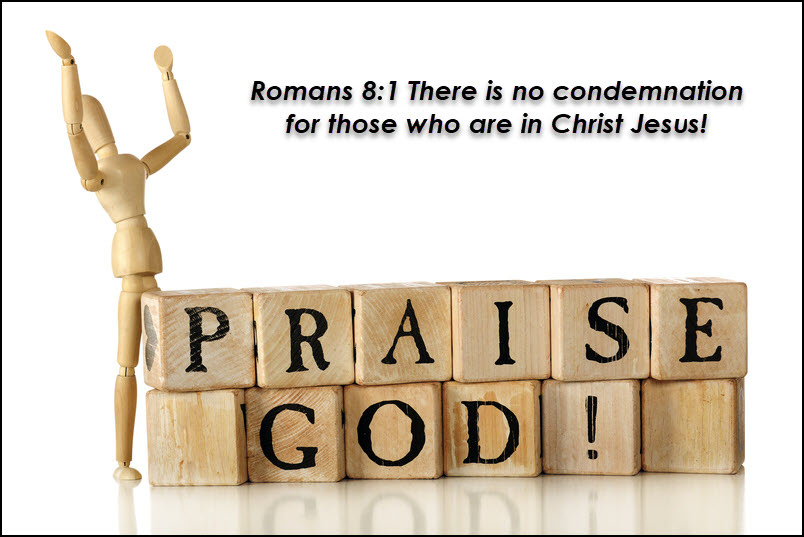
There is therefore now no condemnation for those who are in Christ Jesus.

Seeing Beyond

Facing Death in the face is hard for the person facing it and the person beholding it. No matter what, it is harder than hard. We do not want to lose our loved ones or our most precious friends but the author of Hebrews reminds us, death is certain. In those difficult moments, we want to be sensitive, not harsh. Unfortunately, there are the Bildads and Zophars who think they know what we should do to prepare. Ever met them or experienced them? Or worse—-are you one of them? 

Bildad offers his take on wickedness in hopes that Job will see himself in that light. He seems to know that the “king of terrors,” a.k.a. Satan is behind all of this and if Job doesn’t change he will go the way of all wicked men. All of his descriptions are true and graphic. We should stop and wonder why Bildad is so sure that Job fits this category?  How often do we act like Bildad when we can’t get our friend to face “facts?”

Job responds that yes he understands the ways of the wicked and yes he understands that the Almighty weighs in and yes that is the way all of this happens…BUT… you fear the sword—I do not. I know this that even in my deepest moment of crisis, God is my Redeemer and I will see Him face to face one day.

You remain in your fear; I will trust Him who holds my destiny in His hand.

job 18 to 20 destiny is surea

When a dear friend is suffering and they are asking “why,” and you think that death is imminent employ love, not fear.  Don’t assume you know the plan God has for them. Instead, help them cross the great divide by having them look to the Redeemer not the “king of terrors.”  If you aren’t sure of how to do this, take the letter from the Redeemer himself and read it:

He is life, He knows the beginning from the end. He is the resurrection and the life. He has crossed the great divide and He has the answers.

Even in this darkest of times, Job sees the light; he is sure of his vindication but not the when or how.

Send me a note if you don’t know who the Redeemer is; let’s talk. 

Eternal Destiny

Do you find it hard to talk about death? Why is it that we avoid that topic–especially if we are believers? Is it fear? Is the lack of trust? It wasn’t that way for Job or Peter or Paul or Jesus.

job 14 to 17 destiny2a

Job is a man who continues to remain strong in the midst of his three friends’ conclusions of why he is in this ‘mess.’ He is aware of his destiny but isn’t sure of what happens after death. Sadly, there are many today around in our world that also lacks the peace of knowing. They have not heard the words of our Savior nor have they seen the marvelous work that the Holy Spirit does when He comes to indwell the believer. James reminds us that we best not take life for granted. It could be snuffed out at any moment.

Eliphaz will have none of this! He is correct in saying that God judges all corrupt sinners. However, in his analysis he cannot see into the future nor can he see what Job’s destiny book shows. Although Job has reminded all three so-called comforters of this fact, Eliphaz pursues this train of thought without missing a beat. Again he calls Job a windbag of sorts and it is because of him that meditation before a holy God is certain to die.

So how do we face such harsh criticism?  Job gives us a clue when he says; I would try to comfort you. My advocate is in heaven, My intercessor is my friend. My eyes will continue to pour forth my tears to God. I will not give up.

How about you? Are you certain that if death came knocking you would be ready?


Don’t Play God!

Job 11-13  We all would do well to not presume to know the Heart of God.

job despair2a

How often do you presume, and I do as well, about what you think is true. We lather our condemnation on like shaving cream. Our theology, is the right answer and so the other person stands condemned; no trial, only conjecture. Our impatience comes across in spades as we play God; what fools we are! Job’s so-called friend, Zophar, like us, fails to consider not only the cause but the heart of the person who is suffering. Like him, we just want the main character to accept our conclusion so this can be over and done with.

So between the three friends we see that all decide to share their conclusions about Job’s suffering. Eliphaz concluded that all people suffer but good people always win and bad people always lose; therefore Job must be “bad.” Job doesn’t buy that conclusion. Bildad believed God’s mercy would be revealed if and only if Job spent time confessing his sin. Again Job denies that conclusion because inwardly he knew he was innocent. Now Zophar, who in reality is harsher than the other two, derides Job and concludes that his talk is idle and mocking.

Job’s conclusion is that all are presumptuous! They are all self-described experts but fail to consider the pain he is in. Their words don’t square with the God he knows and their harsh spirit is driving him to despair.

In the midst of this Job teaches us what to do when the Zophar’s come to visit. Follow his example and take time to extol the attributes of God. Remind your harsh critics that even if God decides to slay us, He is sovereign and even though we don’t understand the circumstances, we have determined that we will remain faithful to Him. Deut 29:29 fits in here: “the secret things belong to God;” He alone knows the end from the beginning.

When a friend is in deep despair the last thing they need to hear is God is against them. We are reminded by James that God is gracious even in testing and we should stop and look in the mirror before we point fingers.


What I am learning from Job

I/we have had quite a week. It started off fine but then we hit Job in our morning devotions. If you have read Job you know how hard it is to understand. Then God decided a lesson was in store for me, the less than empathic me. So He used a situation, a not so fun situation to teach me about sympathy and empathy. I am still in the re-learn stage. I should have learned long ago but like the Israelites of long ago, I had to do another lap around the wilderness, may this be my last. Hopefully, I will learn the tricks of the trade through the characters in Job. For example, if you want to learn how to handle stress take the example of Bildad and Job’s conversations

job 1 omniscient God ann taylor2a

In chapter 8, the impertinence of Bildad is a quick reminder of our own impatience when we are frustrated. We take our cues from another’s words. Bildad seems to think that Job is his own worst enemy and he needs to come to terms that all of this is because of the sin he and his families have experienced. Nowhere do we see Bildad crying out to God for answers and a sympathetic heart. There is a lesson there for you and I. When another is in deep distress we need to be patient, listen more than speak and quietly sit and talk to God. We need to ask God for eyes to see, ears to hear but mostly a heart to understand.

Now as to Job, he is so frustrated! He cannot fathom why this is all happening. Like us when disaster happens we ask “why.” So we can relate to Job in this instance. We too want answers. Sometimes heaven is quiet and we wish God would just open the windows of heaven and explain to us the answer but He is sternly quiet. The reality is this: we may never know until eternity the why.

So I posed a question to myself;  What if I was just quiet and waited on the Holy Spirit to speak? Might I learn something of value as to how I am to respond and act towards another who is in distress?

What about you? 


Who is God to you?

When was the last time you just sat and pondered God and His character? What thoughts went through your mind?  Read Neh 9; Ask yourself: “Who is God?”


The wall of Jerusalem is completed, the enemies were unsuccessful, the gates are in place and it is time to “party!” Well, no not exactly; it is time to stop and thank God! It is time to listen to His Word! neh 9 17 god isa In fact, as the people listened to Ezra read the word there was no party mentality.  They began to mourn and weep because they realized how they had failed God in the past. Ezekiel reminded his listeners that would be exactly what their future family members would do when they returned to Jerusalem! Ezekiel wrote: “you will remember, be ashamed, and remain silent because of your disgrace when I make atonement for all you have done, declares the Sovereign Lord.” And today as we read in chapter 9 of Nehemiah we see that many, many years later that they knew this truth: “You are righteous with regard to all that has happened to us, for you have acted faithfully. It is we who have been in the wrong!”

We quickly forget how gracious God is and sometimes it takes a rude awakening to help us see that truth! Who is He? The people said: “you are a God of forgiveness, merciful and compassionate, slow to get angry and unfailing in your loyal love.”

That is the God I serve, obey and love…at least that is what I hope is true in your life today.

Add a comment below to answer that question.


Optimized by Optimole