“Saul’s Death”

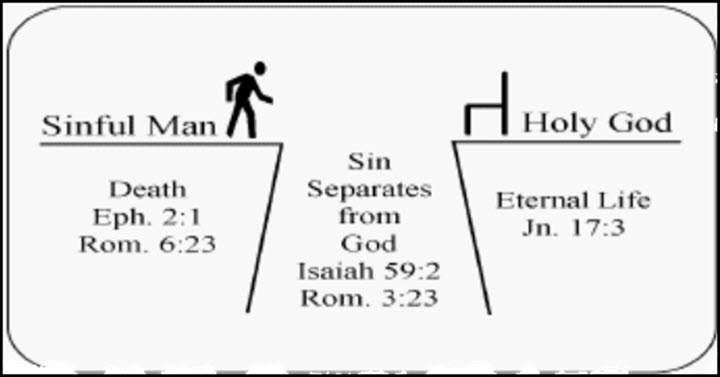
Salvation Graphic

1Chronicles 10 Was it God’s will for Saul to die is a question that comes to mind as we read this short but vivid chapter. In vs. 14, we learned that “the Lord killed him,” so the answer to that question is yes. God willed that Saul should die because he was unfaithful. He did not obey the Lord’s instructions. He tried to use a witch to determine his safety. These are hard words for us to swallow, and we would like Saul’s end to be like many of our fairy tales; they lived happily ever after. But, Saul chose his path and his destiny just as we do. God’s grace is ever-present because He is longsuffering even to the point of death.

Preparing for our entrance into eternity is as simple that a three old can understand it: Admit you are a sinner in need of redemption; Believe and trust in God. Confess your sin to a loving and holy God who will cleanse you in preparation for his glory. We stand on the threshold of eternity every day. The gospel is God’s power for salvation, and the righteousness of God is revealed in the gospel from faith to faith. It is also true that since creation, God’s invisible attributes, His eternal power, and divine nature – have been seen and understood through creation. Therefore men are without excuse for not knowing. Saul knew it, and men today know it.  

What do you want on your tombstone? This: “well-done thou good and faithful servant” or this: “he/she was unfaithful.” It really is your choice.  
Graphic: https://bible.org/article/gods-plan-salvation

“The Sin of Unbelief and the Rewards of Belief”

2Kings 7 to 10 There are two kinds of people in this world; they either believe the Bible, or they don’t believe it. You can’t mix in those people who say they believe some of it. Those are still unbelievers. They have one thing in common; they see the evidence but cling to their unbelief. They look for excuses not to believe even when the evidence is before them. God has no mercy on those, and at death, they will join the Luke 16 rich man in torments.

So what does have to do with today’s reading? The story begins and ends with a man who scoffed at Elisha’s prophecy of the salvation of a city. Lepers find the coats and armor and horses of the enemy left behind; go to the city to report it, but the king surmises a ploy. He sends horses and men to check it out, and the city is saved. In the end, the scoffer was trampled and died just as Elisha said he would because of his unbelief.

Is there any hope? Yes! God gives us a ray of sunshine in the Shunammite woman who obeyed Elisha, leaving her home to reside in the Philistine territory during the famine. After the famine, she returns home to claim her land. In the palace Elisha’s servant, Gehazi just happened to be in the presence of the king and verified her story. The king returned her property and the profit of it during the years she was gone.

Both stories reveal the principle of belief vs. unbelief and the rewards or consequences of each. Which category fits you?

You Can’t Fool God!

You cannot fool or hide from God

1Kings 14 The gecko in the garden tries to fool by staying still and changing his coat to match the plant. He thinks they don’t see me just like King Jeroboam thought he could fool the prophet Ahijah. He sent his wife to him disguised as just any woman to get help for their sick child. But, Jeroboam didn’t know that the old prophet was now blind and no disguise would be of help. Yet, God is God, and He would be His eyes. 

Is. 46:9 says, “Truly, I am God, I have no peer; I am God, and there is none like me.”

Our disguises do not fool God. Even blindness cannot fool God. We may change our clothing, put on a new face, but God sees us as we are. God sees our heart. He sees our motives. He sees the situation.

Do we attempt to conceal ourselves, so the world doesn’t know us a believer? Jesus reminded us: “For whoever is ashamed of me and my words, the Son of Man will be ashamed of that person when he comes in his glory and in the glory of the Father and of the holy angels.” [Luke9]

And also, this is true, if God wants someone to know us; He will reveal who we are.  Are we trying to hide behind a disguise? Come out from among them and let the world know who you really are.

From Unbelief to Belief

1Kings 8-10 There was no social distancing the day Solomon dedicated the Temple. The dedication lasted for seven more days. Also, three times a year, Solomon offered burnt offerings and peace offerings on the altar he built for the Lord.  God was at work there in Jerusalem.

The news of the dedication spread from Jerusalem to many nations—until it reached the ears of the Queen of Sheba. God had turned the world upside down, yet the Queen was skeptical. She could not believe what others had said and decided to see for herself.  She responded as unbelievers respond to our transformation. In fact, in the book of Acts on the day of Pentecost, a crowd gathered and heard the disciples speaking in their own language. Some jeered at the speakers, but many believed, and 3000 people were added to the new church. She came and plied Solomon with many hard questions.  Unbelievers do the same to us and why need to hide God’s word in our hearts so we can witness with boldness. End of story, the Queen was amazed; all that she had heard was true.

When others hear our testimony, are they amazed and see that our life has really been transformed?  Do they walk away like her saying, “The report I had heard was true!” Do they leave praising God? 

Earthly Stones vs. Living Stones

1Kings 6 Peter uses the word picture of living stones for people building the “living church.” The Temple used manual labor. We, as “living stones,” are building the living church using the ‘manual’ labor of scripture reading, witnessing, and prayer. 

Hiram willingly assisted Solomon all because David had laid the foundation of a lasting friendship. What lasting friendships have we cultivated?

In Exodus, we saw how the people gave willingly to build the Tabernacle. Here in this passage, we read that David had accumulated the necessary materials to build the Temple. Are we giving voluntarily to build the living church?

 The Temple used stones from under the earth. Believers are “living stones” on the earth to be a holy priesthood and to offer spiritual sacrifices that are acceptable to God through Jesus Christ.” [1Pet 2]

God led, but men did the work, all under the leading of the Holy Spirit.  God directs our work and records it in our Book of Life—if our name is there! It is only there if we have accepted Jesus as Savior. One day, the books will reveal what is in those books.

Are you ready to hear what the Book has under your name?

 Time is fleeting. Will your works be wood, hay and stubble or gold, silver, and precious stones?

“The Truth About God”

Ps 145:17-18 “The Lord is just in all his actions, and exhibits love in all he does. The Lord is near all who cry out to him, all who cry out to him sincerely.”


As we read the psalms, hold firmly to this truth: God knows, and God allows both goodness and evil to prevail. The best illustration of this is in Matt 13, with the parable of the weeds. The Son of Man has sown and continues to sow good seed into his field, but while his seeds are beginning to sprout and take nourishment, the sons of the devil sow tares or weeds. These tares or weeds are those who have willfully rejected the light. As Jesus illumined the eyes of the disciples to understand, he explained that both will grow until the end of the age, and only then will the tares be removed. There will be certain judgment when that happens. Whereas the disciples were confused, we can see in Psalm 145 that the Psalmist understood the principle of God’s plan.


And that is why we can say for certainty that God is as true then as he is now as he will be in the future. God is and God. He will be both just and love. Both attributes work in harmony, and one without the other is like a one faced coin, like a river without water, like a mountain without rocks and trees. Both love and justice complement each other. And that is why we can come as the Psalmist did and say:


Ps 145:21 My mouth will praise the Lord. Let all who live praise his holy name forever!

Lamps and Light

2Samuel 22:29/Psalm 18 “Indeed, you are my lamp, Lord. The Lord illumines the darkness around me.” The scriptures are filled with verses that teach us about the benefit of light.  Science has proven that plants lean toward the light, and if you want them to grow straight, you must rotate them each day. The Israelites were used to the Lamp of God, a.k.a. the pillar of fire, leading them in the desert. Jesus called himself the “Light of the World.” He illumines our soul with truth because, as he said: “I am the Truth.”

When God instructed the Israelites to build the Tabernacle, he chose the Menorah to illumine the Holy Place. It was to be made of beaten gold and exhibited seven branches. It was to be placed on the south side opposite the table of shewbread and illumined this place for the priests to do their work. The wicks were to be trimmed each week—what a beautiful picture of the Light illumining our work for Him.

Jesus illumines our soul with truth and is a guide out of the darkness of the sin-filled world in which we live and move and have our being. “Only bats, and owls, and unclean and ravenous things are fond of the night. Children of light walk in the light and reflect the light.” [Spurgeon]

Where are you reflecting the Light to others in this time of uncertainty?

Photo credit: One for Israel Ministries

“Shelter in Place”

2Samuel 22

We are told to shelter in place as this Corona Virus slithers into our communities. We often think of the word “shelter” as a structure where we can be safe from intruders or marauders but listen to David “My God is my rocky summit where I take shelter.” [vs3] If we look closely we see that David wasn’t talking about a permanent structure but God Himself. He was talking about confiding his hope in God.

David notes there is a greater shelter that is not tangible but is spiritual. In the OT, the Israelites were given a shelter of fire by night and a cloud by day to protect them. It provided shade from the desert heat and protection from the desert freezing temperatures at night. However, we are not in the desert and yet we still need that shelter’s presence. We find it in the scriptures, in prayer, and in community, therefore constantly pray.

The Lord is our shelter: Psa 91:1 As for you, the one who lives in the shelter of the Most High, and resides in the protective shadow of the Sovereign One –

God’s chosen leaders: Isa 32:2 Each of them will be like a shelter from the wind and a refuge from a rainstorm; like streams of water in a dry region and like the shade of a large cliff in a parched land, therefore pray for them.

The world would have us fearful, but God is our shelter in times like this. Where do you go to shelter?

‘Sad Tales are Teachable Moments’

2Samuel 13 a sordid tale

2Samuel 13

Some stories in God’s word are so painful to read that we want to skip them, but God has left them in there as a teaching tool for each of us. This chapter falls into the x-rated material, but we want to focus on what we can learn from the sordid tale of the rape of Tamar. One is that as much as Tamar loved her brothers, she was not discerning. Truth point: often, when we love someone strongly, we are blind to their faults. Secondly, when someone says no, they mean no. A third lesson is what Dr. Constable noted: 

“More Christians have probably memorized 1 John 1:9, which says: “If we confess our sins, He is faithful and righteous to forgive us our sins and to cleanse us from all unrighteousness” than Romans 6:12-13. “Therefore do not let sin reign in your mortal body so that you obey its lusts, do not go on presenting the members of your body to sin as instruments of unrighteousness, but present yourselves to God as those alive from the dead, and your members as instruments of righteousness to God.

 First John 1:9 deals with how to handle sin after we have committed it; it is corrective theology. Romans 6:12-13 deals with how to handle sin before we commit it; it is preventive theology. We need to pay more attention to Romans 6:12-13. 

One of the purposes of 2 Samuel 13 is to help the reader prevent this type of sin rather than help us recover from it having fallen. It is a strong warning against letting our passions lead us because of the consequences that will follow.”

“Grace Abundantly Flowing”

Unsplash Grace by Priscilla du Preez

2Samuel 9 Ever watched Mission Impossible? Those are fake, but this story is real! A bit of history here: for centuries, when a new king arose, he executed the remaining family members of the former king. David could have followed the pattern of others, but he is not like others. David had made a pretty significant promise to his best friend Jonathan, now dead, to care for any of his remaining family members. Imagine yourself as the one remaining son of Jonathan. What will the new king do? 

Enter in the spy named Ziba, who happens to know that disabled Jonathan’s son, whose name you can hardly pronounce, Mephibosheth, was in hiding. This is where grace enters the equation. In fear and trembling, Mephibosheth is called to the palace expecting the worst but hearing the best news ever. He will be given the land of his father and will be seated (said four times) at the king’s table for the rest of his life.

Mephibosheth is like us as unbelievers hiding from the king. We know as the family of the former king; our head is on the chopping block. However, Jesus is the true king, and like David, he extends his grace. King Jesus sends, Ziba, a.k.a the Holy Spirit, to find us and bring us home to his palace.  We fear the worst, but hear you will eat and drink at my table in my kingdom. Do we deserve it? No, but God’s grace is poured out on us called salvation, and now we can be in His presence forever. 

Are you a Mephibosheth? King Jesus is sending the Holy Spirit to rescue you if you accept his invite.

Optimized by Optimole