Reminiscing

forget the past

Job 29-31

When the new year begins, we often find ourselves reminiscing about the past year or even the years beyond that. I remember when this happened or that happened etc. Job is no different than us. He reminisces about what life was like before his struggles. “Oh that I could be as I was…” [Job 29:2] He is caught up in the past life and what life was like “then,” but this life “now.”

We can relate to Job in many ways. We, too, reminisce about how life was long ago. Then I could do thus and so, but now I cannot. Instead of looking back, we need to look forward to what God has done for us and what He plans for our future. Instead of pondering our past circumstances, look back at the blessings God placed over us. “God and Father of our Lord Jesus Christ, who has blessed us with every spiritual blessing.” [Eph 1:3] Also recall Jer. 29:11. God has a plan for us and does not include our past! Listen to the Apostle’s wise counsel: “forgetting the things that are behind and reaching out for the things that are ahead…” [Phil 3:13]


God Never Changes

God never changes

Job 24-28 Yesterday is but a memory; today will be what God has planned for us in eternity past. Are we watching to see Him at work? Yesterday the hand of God was upon us in all we did and all we said. Our responses show us what we believe about Him. Today we walk through life not knowing what it will bring, but we can rely on: God knows. So why do we fluster about each day?

Job is an example. He continues to exalt God in the biggest challenge of his life. He clings to this truth; God does not change; therefore, he is trustworthy. “God is not a man that he should change.” [Num 23:19] God has been and will be with him in the good and the bad because He draws the mighty with his power.   

We can cling to those facts and not give in to the ways of those who question our righteousness. We can echo the words of Job when questioned: I will not speak like the wicked; I will leave the judgment of my heart to God and him alone. I will cling to my integrity.[Job 27:4]

Take a page from Job’s diary and record your responses to today’s circumstances come. Ask yourself, am I clinging to what I know about God and His character?  

The Sad State of the Hypocrite

Hypocrisy

Job 21-23 If there is one sin that God hates more than any other, it is this: hypocrisy. A hypocrite has the form of godliness without power. But, strangely enough, both Eliphaz and Job agree on certain points. First, both agree that a hypocrite’s elation or joy is brief and lasts only a moment. [Job 20:5] Paul warned Timothy about hypocrisy. Beware; they have the appearance of religion but will have repudiated/denied its power. [2Tim 3:5] Job and Eliphaz agree on that point.

Secondly, the hypocrite will be revealed in the heavens when they stand before a holy, righteous God. But, here on earth, while they have life, they masquerade as godly, but God knows what is in their heart. They want God to depart from them; they do not desire the knowledge of God’s ways. [Job 21:14] As my neighbor said before his death, I never needed God in this life; I don’t need him in death. That is the most accurate picture of hypocrisy.

Thirdly, they think in their minds that God is “out to get them.” He watches to catch them in their sin and stores away a man’s iniquity for his sons. [Job 21:19] It is because of that faulty logic that they say the God of the OT is cruel while He is kind in the NT. 

Hypocrisy is a sin, so be wise, be discerning because this is true: You can be sure your sin [your hypocrisy] will find you out  [Num. 32:23]

Is God your Redeemer?

Who is God to you

Job 19 As Job sat in dust and ashes and listened to his miserable comforters, he echoed the words of Solomon: “My assailants revile and conspire against me all day long.” [Lam 3:62] Yet, in all this, God’s words ring forth; Job is “a blameless and upright man, one who fears God and turns away from evil.” God knew Job could be trusted to face adversity. “In all this Job did not sin, nor did he charge God with moral impropriety.” [Job 1:22]

Job not only knew but truly believed this truth: that no matter what is going on or what will transpire in the future, he can trust that his “Redeemer lives, and that as the last he will stand upon the earth.”

How about us in the midst of severe suffering? Do we cling to that truth? Is God our redeemer? Are we able to say as Paul: “I have learned to be content in any circumstance.” [Phil 4:11]

Are you prepared for eternity?

Job was sure are you

Job 14-16 Job listened and wisely reminded his friends that no one can know their appointed time of passing from this life to the next. No one knows the hour or the day of their departure to heaven or hell, but they can know their destiny. Job rightly knows that even if he dies, he will see the face of God.

Job explains that in death, we are not like the trees of the field that can spring back to life after being cut down if the circumstances are such that the seeds of reproduction which lay as if dead, spring to life. Instead, man is like a broken mountain that cannot be restored.

Job then responded to Eliphaz. You are not in my position; you have no idea what I am suffering! Instead of bringing words of sorrow, you ought to be pleading for my restoration. Why don’t you plead with God as one pleads for his neighbor? Indeed, when my time comes, I shall pass from here to eternity, and you will not see my face again.

Principle: Life is fleeting; death is certain. Once we die, we will be but a memory to others. But now, in the time of another’s suffering, may we plead to God for their healing. This is our time to encourage, not demean.

Do you trust God—do I?

Trust God

Job 10-13 Job is facing the hardest time in his entire life and is left with two choices: trust God or abandon Him. His friend Zophar is in the camp of the latter, just like Mrs. Job. Yet, Job is wiser than either Zophar or Mrs. Job because although he may not understand, he continues to trust God. “Even if he slays me, I will hope in him;” [Job 13:15]. How about me/how about you? Do we trust God even though we do not understand?

Job is also aware of his deepest fears: that God would remove His hand from him, much like Cain. The second is if he were able to see or know God, His very presence of God would terrify him. The Proverbs writer added another: “The fear of man is a snare.” [Prov 29:25] Fear is our greatest enemy. What do you fear?

Today trust God even when you do not understand. The words of God through Jeremiah speak:  “for I know what I have planned for you,’ says the Lord. ‘I have plans to prosper you, not to harm you. I have plans to give you a future filled with hope.” [Jer 29:11] God can be trusted.

The Why Me Prayer

God trusts me

Job 6 -8/Ps 8 When we are in the mode of suffering, we often begin our prayer with “why me?” We complain, and we mourn instead of looking for that eternal purpose. There is a chorus that begins, “open the eyes of my heart Lord, open the eyes of my heart, I want to see you.” Job was asking God to open his eyes to have God’s perspective. Both Job and the psalmist were perplexed and asked, “What is man that You magnify him, And that You are concerned about him, that you exalt him?” [Job 7:17; Ps 8:4]

Job has no idea what is happening, and we often don’t either. But we are learning that behind the scene in heaven, God is in the business of proving to Satan, and now to us, that God is truth and Satan is a liar and a murderer. [Jn 8:44] God knows who are His, and He trusts us with suffering to prove that we are one of the exalted, chosen ones from eternity past. [1 Pet 2:9]

How am I facing the perplexities of life today? Do I complain or thank Him that He has more trust in my faith than I do?

Are you Prepared?

are you dressed for battle

Job 1-5 A key to understanding the man Job is to look at his life in everyday circumstances. God noted he was blameless and upright, and we see how he responded to his children’s choices. He offered sacrifices regularly ‘just in case’ they had cursed God, not out loud, but in their hearts. Job’s care for his children’s spiritual character was intentional and deliberate. Are we intentional and deliberate regarding our children’s walk with God?

It was that character that Satan sought to undermine. Satan does the same for us because distraction from the important keeps us from being diligent and faithful. Satan sought to distract Job from his daily adoration, confession, thanksgiving, and supplication routine. Just as Satan sought to do it with God’s permission, he does the same for us. Jesus told Peter:  “Simon, Simon, pay attention! Satan has demanded to have you all, to sift you like wheat” [Luke 22:31]. We can respond as Mrs. Job, “curse God and die,” or as Job, “the Lord gives and the Lord takes away, may the name of the Lord be praised.” [Job 1:21] In all this, Job did not sin, nor should we. 

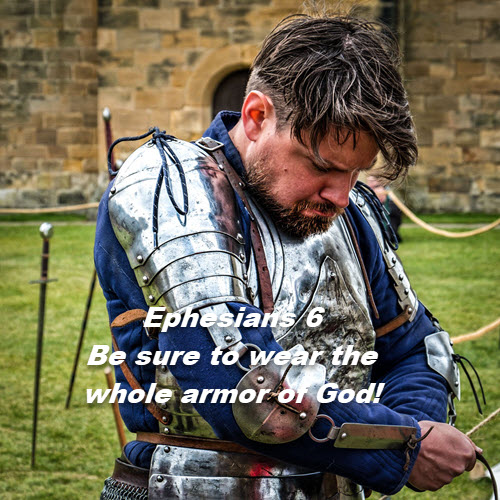
God has given us this story to help us understand that Satan’s methods have not changed. Therefore, we need spiritual armor to battle against the enemy of our souls. [Eph 6:10-18]

Are you prepared?  

God remembers…do we?

remember

Gen 8-11 God Remembered

Gen 8:1 “But God remembered Noah…” How’s your memory quotient today? Truth; God never slumbers or sleeps, and He remembers! How’s our “remember-er?” Do we remember God as He remembers us? When you go through each day, do you stop and give Him the praise that He remembers, that is recalls who we are? “For he knows what we are made of; he realizes we are made of clay.” [Ps 103:14] And it is because of that, He knows our needs and our wants, and He provides for each.

God remembered not just Noah but all the animals that were with him in the ark. Isn’t it interesting that God’s memory included not just Noah but the animals? How gracious is our God.

Today, stop and take time to thank God that He remembers and ask Him to recharge your memory bank to recall His faithfulness, love, grace, mercy, and lovingkindness. For I am ever aware of your faithfulness, and your loyalty continually motivates me.” [Ps 26:3]

Blessings, Blameshifting, and Consequences

God's grace

Gen 4-7 Three curses are mentioned in these chapters. First, the serpent would be cursed to crawl on its belly and eat the dust of the earth because it deceived Eve in the Garden. Secondly, the ground would be cursed because Adam and Eve blamed the serpent for their disobedience rather than confessing their sin to God. Third, Adam and Eve’s firstborn son, Cain, would be cursed by God for his murder and lie about Abel. Yet, in each, we see God’s grace.  

There is a principle here: God wants us to confess our sin, not blame another or our circumstances. He is full of mercy, grace and patiently waits for us to repent of our sin. The Hebrews author wrote: “Let us confidently approach the throne of grace to receive mercy and find grace whenever we need help.” [Heb 4:16] Neither the serpent, Adam, nor Cain took advantage of that. How about us?

Later, God graciously gave Adam and Eve a new son to replace Abel. Seth honored God, and unlike the line of Cain, his descendants began to call upon the name of the Lord. Out of his line came Enoch and Noah, who walked with God and were blessed by God.

God gave us these pictures to show us the effects of sin and the blessings of obedience.

Optimized by Optimole