“Have you Planned for Your Retirement”

Retirement

Do you know that there is no retirement in the Bible, right? When you are dating, did you talk about this subject? Probably not, but then again, some are forward thinkers and were thinking about that subject. Even God thought about retirement. In Numbers 8, he provided retirement for the Levites after the age of 50. They were to retire from performing the work of carrying the tent materials.

How does one prepare for that stage of life? The psalmist [Ps 71] looked back and noted “that he had leaned upon God since birth,” so he knew that God would sustain him in his old age when his strength failed. He and God were close friends. They walked and talked together each day, much like Enoch. Like the retired Levites, we are to share our wisdom with the younger generation. [Psalm 78] Are you developing the habit of teaching the younger generation about God? As a retired person, are you looking for ways to mentor the next generation—even if you don’t have grandchildren!  

How’s your attitude? They say if you are a grumbler in your younger days, you will be a grumbler in your old age. Start now to develop an attitude of gratitude now so you will be a joy in your old age.

May I ask: Do you know God like that?

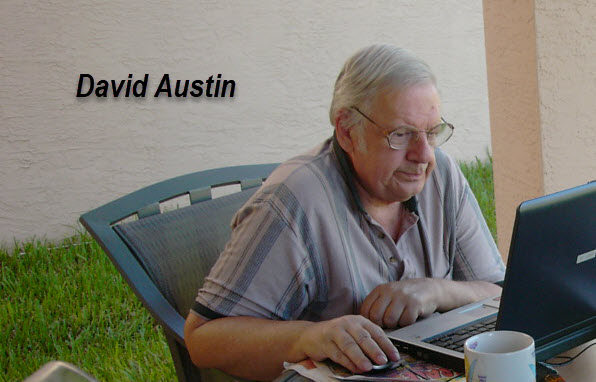
Check out David Austin’s blog post on this topic: https://blogs.bible.org/director/david_austin/retirement_whats_next

Nehemiah 4 to 6 How to Fight the Spiritual Battle

    Many are in quarantine and isolated in many different ways and are missing the human touch of friends and family. Our arch-enemy seeks to use this to his advantage, but remember our God is greater than he. The church building may be closed, but the church is rising out of the ashes to bring new converts into the kingdom. Spiritual battles are not new; Nehemiah faced the onslaught of the enemy there in Jerusalem. When God opens doors for us to work, Satan seeks to come in and destroy. Satan does his work both without and within. If he can’t win using unbelievers, he will try to win using the people of God.    But through it, he lived 1 Cor 15: “be ye steadfast, immovable, always abounding in the work of the Lord.” The secret that Nehemiah had and we have is the weapon of prayer. Nehemiah 4:4 “Hear, O our God for we are despised…” The enemy sought to destroy through fear, but God enabled through the enthusiasm of his servant Nehemiah. He prayed: “Strengthen my hands!” [Nehemiah 6:9] and “the people were enthusiastic in their work.” [Nehemiah 4:6]When we are a “team” working on a project bathed in prayer against the enemy, “God frustrates their intentions.” [Nehemiah 4:15]

While all of that was happening, Nehemiah remained a man of prayer.

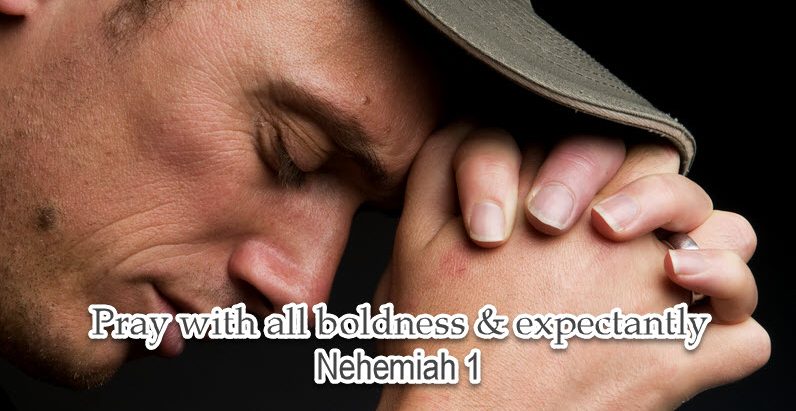
Nehemiah 1/Ps 5 Pray with Expectancy

Nehemiah is a man of prayer, but he also knows this principle: a key aspect is to listen, discern, and use your time reflectively. Like Daniel and many others, Nehemiah did not just pray once but for many days. Hannah prayed over and over for a child. Jeremiah prayed for Jerusalem and its people that they would repent. Daniel prayed over and over as he read scripture, and God honored his questions.

Are we like these? Do we spend time in a mode of prayer for

ourselves, our church, our country?

Like David in Psalm 5, Nehemiah began; Lord “carefully consider,” meaning, Lord pay attention to my cry. Nehemiah prayed with boldness since he was a servant of King Artaxerxes. So he went to his prayer closet, where he met with the real and true king, Jehovah. Like the psalmist, Nehemiah came in a mode of repentance: “I am praying to you today throughout both day and night on behalf of your servants the Israelites. I am confessing the sins of the Israelites that we have committed against you.”  He closed his time in prayer by asking the Lord to listen and to grant him success “today.”

Father, may we be bold to pray that we would be successful ‘today.’ Spend time in prayer and “then wait expectantly for an answer,” knowing that God rewards the godly and protects them with His shield.

Ezra: A man with a missionary’s heart.

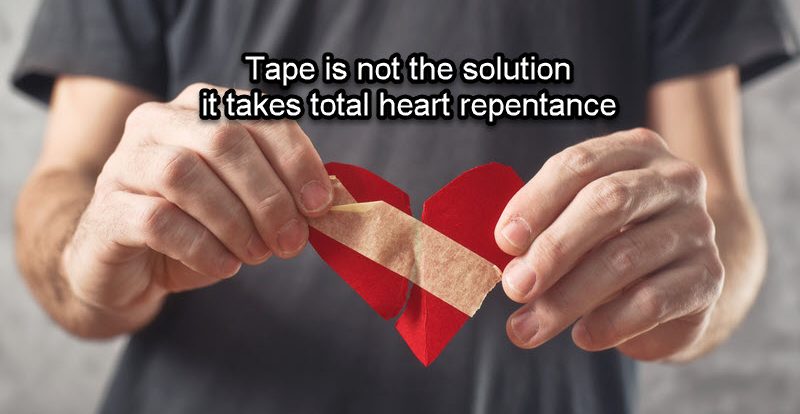
God requires a broken heart for repentance

In Babylon, Ezra spent his time memorizing scripture, praying, and seeking help from the king. He prepared to leave Babylon and return to Jerusalem – the city he probably never had seen, yet it was in his heart to go there and teach the people about God. [Ezra 7:10] Ezra trusted God to provide all he needed and set the example of how to lead both practically and spiritually. Committed, like Moses and Joshua, he prepared the people to follow him. 

We are experiencing social distancing, but the Babylonian kings had it down to a science. All Jews were isolated from the Babylonians. God isolated them so He could raise a holy people to return to Israel; but not so in Jerusalem. There the influences of the wicked culture had impacted the people’s resolve to be pure before God.

The leaders in Jerusalem decided to wait until Ezra had shared the treasures of the king—then they shared about the unholy alliances they had made. The news brought Ezra to his knees; he tore his hair and his robes and sat down devastated. Chapter 9 is the example of a missionary’s repentant prayer that brought the people to their knees. What about us when we see the sin of our nation? Do we drop to our knees and spread our hands to the Lord God?

LFL: Lessons for Life

2 Chronicles 35  The story of King Josiah teaches us that not IF but WHEN we fail to consult God, we may face severe consequences. Josiah set out to intercept Pharaoh without asking God. He went looking for trouble where he didn’t need to be. Had he consulted God, the outcome may have been different.  An archer drew his bow with Josiah as his target. We might ask: ‘why didn’t God protect righteous King Josiah—why did he allow him to die at such a young age?’

Excellent question with a practical answer: When we fail to consult God, he may send his counsel to us— even through unbelievers as he did with this unrighteous Pharaoh. Pharaoh Necho told Josiah to “Refrain from meddling with God, who is with me, lest He destroys you.”

As a believer, we have the Holy Spirit to teach and guide us, but more often than not, like Josiah, we grieve and quench his power when we make decisions on our own.  Josiah had everything at his disposal to seek God’s will, but he chose not to do so, and we are guilty of the same.

Even though Josiah did not consult God, God was true to His promise. Josiah did not see the calamity God had foreordained for Judah. The LFL (Lesson for Life):  Do not rely on your own understanding. Seek God’s wisdom first before setting out. Sometimes God is gracious but not always as we see in Josiah’s case.

Optimized by Optimole