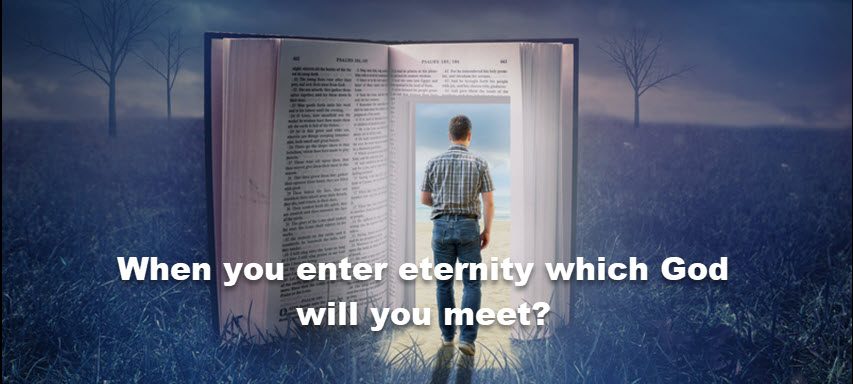
What God do you serve?

2Kings 1-3 King Ahaziah had a nasty fall through the ceiling of his apartment. He must have had some severe injuries due to this and wanted to know if he would recover. He knew Elijah was one of God’s prophets yet did not call upon him. Instead, he sent messengers to inquire of the idol god Baal: “Go, ask Baal Zebub, the god of Ekron, if I will survive this injury.” As they were going, God’s angel came to Elijah. He was to go and ask the messengers “You must think there is no God in Israel.” As he sat there three g groups of soldiers came to inquire of Elijah. The first two companies of 50 were consumed by fire, but the last captain came and bowed before Elijah and sought mercy. Because he was humble, God told Elijah to go to the king. As he had said to the soldiers, he said to Ahaziah: ‘You must think there is no God in Israel!’  But, just like on Mt Carmel, the question was which God did Ahaziah serve: Baal or Yahweh.

Today many are like Ahaziah. Instead of asking God their question, they seek answers from any other source than Him. Our culture has put aside God and replaced him with the things of this world, which will surely pass away. Just like Ahaziah, we all will die and face the judgment. [Heb 9:27] It will be too late then to decide which God is the true God. I would love to show you the way to the True God: Yahweh. Send me a note if you are interested.

 When you enter eternity, which God will you meet: Baal or Yahweh?

Psalm 125: Be A Mountain! Trust God!

Last year as we traveled to Calgary Canada we were thrilled with the majestic Canadian Rockies. The mountains are stunningly tall, seemingly impenetrable and a reminder of Psalm 125. God has created the sea, the mountains and all of the lands in between. All of which is a reminder of the psalmist’s words in Psalm 125: if we trust in the Lord we will be like Mt. Zion.

mountains2a

A mountain can withstand a storm’s fury or stand tall and erect on a sunny day yet from a spoken word the rocks can tumble forth. As Elijah stood in the mouth the cave he listened for God’s voice which was not in the earthquake and tumbling rocks but instead in the still soft quiet whisper of God. It was there that Elijah learned to trust in the God of the mountain and it is where we can retreat to find our own peace and strength because the mountains offer us a picture of stability and security.

Where is your trust? The psalmist tells us that if we trust in the Lord we will be “like” Mt. Zion which cannot be moved or shaken but endures forever.

Waiting is Hard!

wait on God2Waiting is probably one of the hardest things for me to do. In fact, I find exasperating. If truth be known I tend to fret, fume and frame my words to show exactly how I am handling this when answers do not come as quickly as I  think they should. Can you relate? Perhaps the psalmist had this problem and why he begins his prayer with these words and echoes them again later: “Wait in silence—For God alone I patiently wait.”
How does one wait? What do you do while you wait? Is silence hard for you as it is for me?

The psalmist began to meditate upon the God whom he knew and trusted. “He alone is my protector and deliverer.” The Apostle Paul knew how to wait in times of distress; persecution; famine and all other kinds of things that the archenemy planned for his destruction. Both the psalmist and Paul counted on this truth: “in all these things we have complete victory through him who loved us.”

We can wait because God is immoveable as a rock, steadfastly implanted in our frame. Yet often, like Elijah, I am so impatient to know God’s plans. I must remind myself to be still and know that until I hear the still small voice of God I will not know His plans for me.

“Hear, O Israel, the Lord our God, the Lord is one.” He was sovereign at the beginning and he has not ceased to be. He is rock,  salvation, defender, refuge and  glory because all power belongs to Him.


What Lap Are You On?

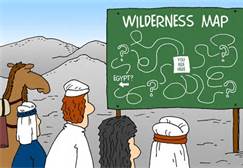
ImageWe all know that when the Lord teaches us a lesson and we oft forget it, He sends us around the wilderness, so to speak, to re-learn it. Some of us “get it” and others are still out there wandering like the Pharisees and Sadducees who are blind and leading the blind into the pit. Maybe that is why  they are “sad you see.” They came seeking a sign, but this time they wanted a sign from heaven. It is hardly any different today as I can readily attest as I have spent the last 4 yrs discussing biblical truth with an atheist or a family member who says I will read the Bible when I find the true one. Like the Pharisees, they are seeking a heavenly sign when it is right in front of their noses! Friend, these are traps set by the enemy. Jesus rightly pronounced that it is a wicked and adulterous generation that seeks for a heavenly sign.

Moving on, Matthew now gives us a glimpse into the disciples thinking and Jesus irritation with them. Imagine His frustration with them. It is as if Jesus, after listening to their arguing, finally says to them “Hello!! Where have you been? You have such little faith! You saw the miracles and yet you are bickering about bread?” And then came the “aha” moment when the light bulb came on and they “got it.” How often are we like that as well. We hear the truth, we see the truth, but we get caught up in the nitpicky mundane extras rather than seeing the jewel of truth before us. Or how often have we experienced God’s truth only to forget it when we face a similar experience or read and then re-read and then finally it dawns on us what He is saying. No wonder we have to do laps!

It is time now for Jesus to see what is really within the disciples thinking. Who is He to the crowds? Who is he to them? He is asking us the same question. Who am I to you? Am I just a prophet like Elijah or Jeremiah? Am I just a man who was a good teacher as the rich young ruler said? Or am I the Son of God? Peter rightly answered You are the Son of the living God.  Where are you in your thinking? The Father in heaven will reveal Jesus to you if you do not know—just ask. He is who He said He was.

Go and read the entire Matt 16 chapter to get the context.

Optimized by Optimole