 Numbers 36 Zelophehad had been a devoted father but his dear wife, who is not mentioned, bore him only daughters and no sons. In fact, she gave birth to five daughters! We know he was faithful because the daughters eulogized him in chapter 27 ““Our father died in the wilderness, although he was not part of the company of those that gathered themselves together against the Lord in the company of Korah, but he died for his own sin, and he had no sons.” Because the tribal lineage and legacy went through the male line, these daughters learned that their father’s name would be lost from among his family because of this rule of law. So they asked Moses to rule that they would be given them Zelophehad’s inheritance. God agreed with them. Fast forward to chapter 36 and we find that the heads of their tribe came to Moses with a “stickey-wicket” problem of marriage. If these daughters married out of the tribe then their inheritance would be given to the new husband and the new tribe and the land to the new husband. What to do!
Moses concurred with the men that these girls should only marry in their tribe so that in the year of the Jubilee there would not be a problem with the land inheritance. The girls agreed and they went on to marry men of their tribe.
God placed this long tale to remind us of how to honor our leaders. These daughters are a role model for obedience, decisions, and choices. They are mentioned in 3 chapters of Numbers and in Joshua—and always named in their birth order.
 Numbers 33



 Numbers 16 We have all, as children, played a game called follow the leader, and the followers mimic the leader’s actions. Elimination happens when you fail to comply, thus eliminating yourself from the competition, and there always seems to be one who wants to do his/her own thing. God calls it rebellion in Numbers 16, we find one man, Korah, who challenges the leadership of Moses. He, like some, usurped the leadership by placing himself in the “I” position. When “I” gets in the way, the ego is puffed up, and we begin to say: I know better! This same scenario is what took place in the Garden of Eden, and men have not learned from that lesson.
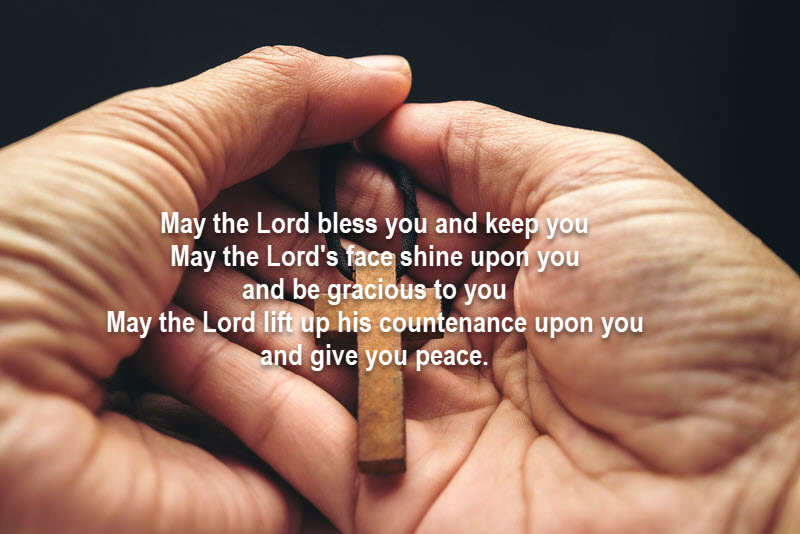 Numbers 6: The word blessing has the idea of pronouncing a wish of happiness given by one to another for the divine favor upon them from God. Dr. Constable notes that it is a benediction to the priests to offer for the sanctification for the people. It is often used in our liturgical blessings for people as they prepare to leave a religious service. Within it, the word “you” is noted six times, making it personal and applicable.