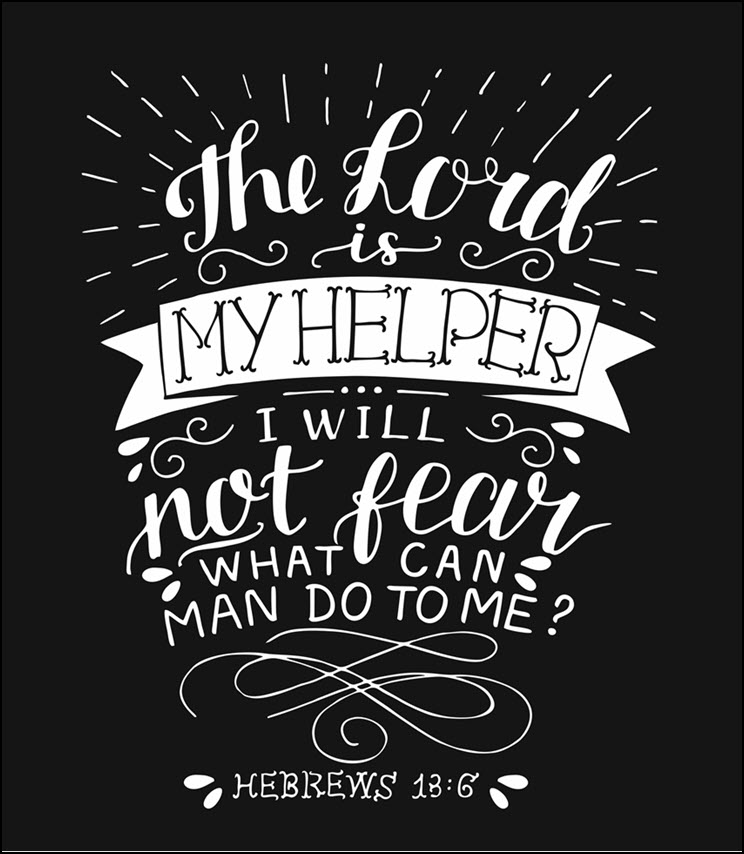
Whom do you fear?


Gen 11 fear God not manEvil Hearts Fear Men Not God – Gen 10-11

When God made the decision to flood the earth and remove mankind, He noted that although men’s hearts are inclined to evil, He would be gracious and not destroy them again. The rainbow is His sign to men that He is a promise keeper. If only men would see that and remember but *sigh* they do not! And so we find them in the plains of Shinar planning to disobey God’s explicit command to be fruitful, multiply and fill the whole earth. “Come let’s build a city and a tower with its top in the heavens. Let’s make a name for ourselves.” They feared being scattered instead of trusting the Lord. They sought self-protection rather than God’s protection.  Their hearts were self-centered—and today men are the same! God noted that “nothing they plan to do will be beyond them.”

Because they intentionally disobeyed God’s command, He confounded their language and scattered them across the face of the earth. And that, in a nutshell, is the story behind the word “Babel.”

There are some lessons we can glean from this incident. One “they hated moral knowledge, and did not choose to fear the Lord,” [Prov 1] Secondly, just like in the Garden, they heeded the words of our adversary: “you will not die but be like God.” His motive is always to get men to not believe God but to elevate self above God. Fearing the Lord is the beginning of discernment, but fools have despised wisdom and moral instruction.

2kings test herat.jpgProverbs 3:5 reminds us to Trust God! “Trust in the LORD with all your heart And do not lean on your own understanding.”

This is a lesson we need to heed. Whom do you fear? Men or God?

Psalm 125: Be A Mountain! Trust God!

Last year as we traveled to Calgary Canada we were thrilled with the majestic Canadian Rockies. The mountains are stunningly tall, seemingly impenetrable and a reminder of Psalm 125. God has created the sea, the mountains and all of the lands in between. All of which is a reminder of the psalmist’s words in Psalm 125: if we trust in the Lord we will be like Mt. Zion.

mountains2a

A mountain can withstand a storm’s fury or stand tall and erect on a sunny day yet from a spoken word the rocks can tumble forth. As Elijah stood in the mouth the cave he listened for God’s voice which was not in the earthquake and tumbling rocks but instead in the still soft quiet whisper of God. It was there that Elijah learned to trust in the God of the mountain and it is where we can retreat to find our own peace and strength because the mountains offer us a picture of stability and security.

Where is your trust? The psalmist tells us that if we trust in the Lord we will be “like” Mt. Zion which cannot be moved or shaken but endures forever.

Facts or Feeling?

Psalm 13  Into thy hands I commit my spirit we somberly say but do we really mean it? What does it mean? David has been in some sort of conflict but in the quiet, he pens the words of his heart to the Everlasting God. Four times he asks God “how long?” It is as if we are re-reading the book of Job where he too asked God “how long?” It is so much like us. When facing a situation that seems that it goes on forever, we hear ourselves say “how long? We can relate having walked that road many a time and may even now be walking that road. We feel adrift with no answers, no solutions, and no help from man or God.

ps 13a joshua-earle-12689-unsplash

It is in these times we must determine that our emotions are not led by our feelings but the facts. And the fact of the matter is this: God promises He will never leave us nor forsake us. He is faithful even when we rail and pound our hands crying out for His answer. He delivers—in His perfect time for His plan is greater than ours. It is then that we fall upon our faces and commit ourselves to Him who knows the end from the beginning and say “I trust you Lord!” You have not failed me in the past nor will you fail me in the future. Therefore, I trust, I rejoice, I sing for You are my God and my Savior.


Optimized by Optimole