“Forgiven and Healed”

ImageWe are all so familiar with the story of the paralytic that we often fail to see all of the dynamics and the underlying truth which is: we are all in need of both forgiveness of our sins and healing from our natural human “paralysis.”

Thus Mark included this story at the beginning of this chapter to show us how we often jump to conclusions which are irrelevant or misguided because we have not been taught the basic doctrines of scripture. The rabbi’s had a saying “there is no sick man healed of his sickness until ALL of his sins had been forgiven”— yet they also said and affirmed that only God can forgive sins. How then does one know if “ALL” their sins were forgiven?

Enter Jesus who will shatter their perceptions. He asked: “Which is easier, to say to the paralytic, ‘Your sins are forgiven,’ or to say, ‘Stand up, take your stretcher, and walk’? “ Thus by doing the harder first—that is forgiving of the man’s sin, which is invisible to the naked eye He proved that He was Forgiver of sins and the long awaited Messiah, the very Son of God. From that Jesus then vindicated his power by doing the easier which was healing of his paralysis which was visible and tangible. Now the scholars had a dilemma before them. They had asked: ‘Who can forgive sins but God alone?” and Jesus answered their thoughts with a threefold action: “rise” which tested the man’s faith, “take up your bed” which tested the man’s ability, “go home” which tested the man’s obedience. Thus Jesus answered the scholars question with the evidence: “the Son of Man has authority on earth to forgive sins.”

Barclay wrote: “The experts in the law were hoist with their own petard. On their own stated beliefs the man could not be cured, unless he was forgiven. He was cured, therefore he was forgiven. Therefore Jesus’ claim to forgive sin must be true.” This is the “aha moment” and when we are brought to the same point and see the evidence we have to ask: will I now take the step of belief that Jesus is who he said he was, the Son of God. From that moment we can then come to Him and not only be forgiven but healed of our human paralysis.

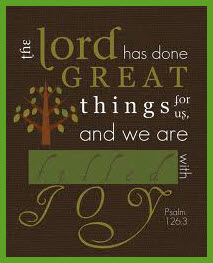
 

Dreaming…

Jn 5; Ps 126-128 “Dreaming…”

ImageThe invalid of John 5 must have thought he was dreaming as he obediently picked up his mat and walked to the Temple. How could this be? Who healed me? Entering the Temple full of awe and surprise whom does he meet but the ‘religious police’ of his day; the Pharisees. Upon hearing of his healing they did not stop to celebrate with him but rather began to question him. Who would tell you to do this “on the Sabbath?” Caught off guard by this barrage, we wonder what his thoughts were; why the Pharisees would not stop to give praise to God for this marvelous healing. Answering as best he could he continues on. It is then that as he walked to worship with his mind filled with thoughts, questions and wonderment that John tells us that the healer appears from out of nowhere. There is only one statement to the man and no return dialog. In vs 15 the man reveals to the Pharisees that it was indeed Jesus. Why did he go back to the Pharisees, these religious naysayers? Could it be that the truth of Prov 29:25 fit in here? 29:25 “The fear of people becomes a snare”? We may never know.

Yes truly the man seemed to be in a fog, so unable to understand what has just transpired. So too, the early Israelites after being freed by Cyrus command from the Babylonian captivity, find themselves in much this same frame of mind, filled with awe, filled with surprise, filled with wonder as they return to Jerusalem. Ps 126:1 “When the Lord restored the well-being of Zion, we thought we were dreaming.” Seventy years of captivity have come and gone. We are really here even though we thought this could not happen in our lifetime! We are in the midst of Jerusalem shouting for joy, laughing loudly and the naysayers are not raining on our parade but giving God praise: “The Lord has accomplished great things for these people.” What a change of heart!

The ‘religious police,’ the naysayers of Jesus’ day, will always be with us. But, also there will be others who, when they see God at work, will have to stop and give God praise. Recognizing that this could only happen because of God’s grace we too need to stop and give God praise.  The psalmist in these three psalms gives wise principles. It is truly a choice on our part. We can choose to return to the naysayers or we can choose to join the chorus and give God the praise!  These psalms, although written to the Jew, are as practically applicable to us today as they were then.

Image

  1. Give praise to God first and foremost: 126:3 The Lord did indeed accomplish great things for us.
  2. Recognize that apart from God no good thing comes to pass: 127:1 If the Lord does not build a house, then those who build it work in vain. If the Lord does not guard a city, then the watchman stands guard in vain.
  3. Fear the Lord in all holiness and reverence: 128:4 Yes indeed, the man who fears the Lord will be blessed in this way.
  4. Seek God’s blessing upon others: 128:5 May the Lord bless you from Zion, that you might see Jerusalem prosper all the days of your life,
  5. With restoration comes a responsibility to live a righteous life. Blessed with God’s provision of healing seek to abide by what Jesus told the healed invalid: “Look, you have become well. Don’t sin any more, lest anything worse happen to you.”  

Did the invalid follow these principles? We must wait until eternity to find out. In the meantime, we are left with a choice. We can follow these principles today or we can join the naysayer’s camp. What will we choose to do?


Optimized by Optimole