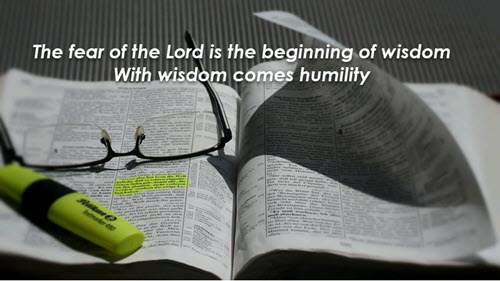
12.17.24. Humility Check

My heart reveals who I am
Keep me humble Lord!

Proverbs 30: Humility is a gift from the Lord and Agur seems demonstrate it. Listen carefully to what he says: I have not learned wisdom. Does that mean he has not been taught or is he saying my wisdom is lacking in depth? We could say the same as we read, study and meditate on God’s word. One thing he knows is that there is a God whose character is seen in his demonstrable attributes. 

He also knows that God is like that which protects as we take refuge under His everlasting arms. Agur reminds those who are listening just as the Apostle John did: do not add to the word of God lest he reprove you and prove you and you are found to be a liar! 

The rest of this chapter is Agur’s prayer which proves his humility. He asks for two, not more answers to how he faces life along with the reasons why he only asks for two not more answers.

The lesson from Agur is remain humble so that God can bless you.

A Prayer for Restoration/Revival

Lamentations 4-5 Jeremiah takes us on a whirlwind tour of the destruction of Jerusalem, and we “walk” with him through the ruins of what was once a beautiful city. Not too long ago, as we walked through Ephesus, it was like seeing what might have been, and it was so in Jerusalem. The beauty and grandeur are gone, only rubble and broken homes and the temple as well. How quickly life changes, and then we must stop and consider why God has allowed this. Today we hear over and over, why does God allow all of this evil to occur? It is so that we will stop and consider: He has spoken, He has done this to humble us.

As Jeremiah closes his lament, he reminds us that the Lord has spoken and sovereignly has brought this about to humble his people.

As I look at our own nation, I see how God is divinely bringing about the curses because of our disobedience. Like Israel of old, we have been blessed, but we have turned a blind eye to Him who has provided those blessings. Turn us back, Lord! Open our eyes to see and our hearts to yearn for you. Jeremiah closes with these words:

Restore us to You, O LORD, that we may be restored; Renew our days as of old, [Lam 5:21]

The Contrasts: Pride & Humility

Pride and Humility

2Chron 26 Pride goeth before the fall.

Uzziah started with glowing statements of following God, but like Joash, who was faithful only as long as his mentor Jehoiada the priest was alive.  Uzziah, similarly, was only faithful during the lifetime of the priest Zechariah, who had faithfully taught him how to honor God.  Both Joash and Uzziah are, as Romans 1:20 says, “without excuse.”  God always provides what we need to be faithful, but it is our choice, and for both Joash and Uzziah, the lack of repentance came at a cost.  Uzziah had a faithful façade, but behind that was an insatiable desire for power, leading to his downfall.  Listen again to the Proverbs, “a proud and arrogant person, whose name is scoffer acts with overbearing pride.” [Prov 21:24] King Uzziah lived that verse at the most critical point in his life; when he became powerful.  

How then can we master this enemy of pride?  Interestingly, the Proverbs writer again counsels us: the fear of the Lord is the beginning of wisdom.  [Prov 9:10] As sinful people, we do not naturally seek to fear and honor God.  It goes against our nature because we want to be God, like our arch-enemy, Satan.  We must cultivate a reverent fear of the holiness and majesty of God, so we are not caught in the sin of pride like Uzziah. 

An Audience with God

Meeting God

Ezekiel 43 Do you meet with God each day? Is your meeting casual or reverent? In Chapter 1, when Ezekiel had his first vision, he was by the River Chebar, and there he fell on his face. In Ezekiel 43, he again falls on his face. When John saw the risen Christ, he too fell on his face.[Rev 1:17] Both show us we dare not be careless and lackadaisical as we spend time in His holy presence. The very presence of God should cause us to stop and consider who He is. He is holy; He is glorious; He is majestic.

When God’s Spirit left the temple, He hovered, but now He enters like the sound of a mighty waterfall, and the earth shone with his glory. When the Spirit of God came upon the disciples, it was with the sound like a mighty rushing wind followed by the tongues of fire. Centuries later John recorded that when he heard the voice of Jesus it was “like the roar of many waters [Rev 1:15]

When the Spirit of the Living God enters us we are now as Paul describes: “you are God’s temple and that God’s Spirit dwells in you. God’s temple is holy and you are that temple.” [1Cor 3:16, 17]

As you meet with God, come as a little child in humble adoration.

Beware of Fame

Fame is Fleeting

2Kings 14, 2Chron 26 You have heard this phrase: “the apple never falls far from the tree.” We find the truth of that parable in the life of King Uzziah, the son of Amaziah. Amaziah had a problem with pride, and Uzziah, it seems, had the same problem. So whereas many wanted to see the death of Amaziah and sent assassins to carry out that dastardly deed, they looked up to his son Uzziah (also called Azariah).

Uzziah was a good king for many years. He did what the Lord desired, and he reigned for 52 yrs. He did what the Lord approved just as his father Amaziah did…BUT. There is that little word again to draw our attention to the whole story. What happened after the “BUT?” The author of 2Kings doesn’t tell us the entire story, but the Chronicler does.  It seems that, like Amaziah, he had a problem with pride. He became very famous and powerful, and BUT, (there is that little word again BUT) once powerful, his pride destroyed him. His undoing was fame. He thought he could do not only what a king does but also what a priest does. So there is a lesson here for us; beware of fame because it becomes a temptation. Remember, these wise words: After pride came, disgrace followed; but wisdom came with humility.” [Prov 11:2]

Will Uzziah’s son learn from his grandfather and father? Stay tuned.

How Forgiving Are We?

hymn 2Tim 1_122Today as in the days of Paul, we may face circumstances when all those who once stood by our side forsake us and we stand alone. How do we respond when this happens? Paul has learned his lessons well and he learned the art of forgiveness from the lips of Jesus “Father forgive them for they know not what they do” and the first martyr Stephen, whose cloak he held, “Lord, do not hold this sin against them!” [Acts 7] Now Paul can say about those who have abandoned him in his time of deep distress: “may it not be counted against them.” That is true grace.

We must be ready in season and out of season because there will come a time when we must be ready to offer forgiveness for these who once stood beside us but now have forsaken us and like the words of Jesus: we must forgive not seven times but forgive with no limits. [Mt 18]  It is now that we come back to the Word and remind ourselves, that we have “been crucified with Christ; and it is no longer I who live, but Christ lives in me; and the life which I now live in the flesh I live by faith in the Son of God…” We are indwelt by the Holy Spirit who gives power to forgive even the most unforgivable remembering this truth: although men may fail you the “Lord your God is the one who goes with you. He will not fail you or forsake you.”[Deut 31/Heb 13] This is mature faith, true grace and true humility.

The Radiance of the Son of God!

ImageThe  theme of Hebrews is to persevere in and for the faith because Christ is superior. Point to consider: Written to 2nd generation believers who are admonished to know that we are all one in Christ; that Christ is superior and to Him alone we are to focus. In this first chapter the author, who is an unknown, reveals to us succinctly who He is and why He is to be worshiped and not the angels as was occurring within the first century. Thus the author brings his audience back to the basics of why that is not God’s plan. He gives us in just the first 4 verses seven characteristics of who Jesus is that we might bow the knee in total reverence and humility.

  1. He is the heir and yet He is God
  2. He is the heir and yet He is Creator
  3. He is the radiance of God’s glory
  4. He is the manifestation of God in flesh
  5. He is the Word by which He sustains all things
  6. He accomplished cleansing for sin
  7. He sat down at the right hand of the Majesty on High

As we read these 7 fully complete characteristics of our Savior, we recall these words of Jesus to Philip. John 14:8-11  Philip said, “Lord, show us the Father, and we will be content.” Jesus replied, “Have I been with you for so long, and you have not known me, Philip? The person who has seen me has seen the Father! How can you say, ‘Show us the Father’?  but if you do not believe me, believe because of the miraculous deeds themselves.’

If you believe Jesus was the incarnate revelation of God, ponder these words and rejoice that we know Him, walk with Him, and one day will reign with Him. Have you been with the Savior today?

Piercing the Darkness

ImageFrank Peretti may have written a novel titled “Piercing the Darkness” but in Mark chapter 5 we experience this first hand.


If there is one thing that Jesus is an expert at it is this: do NOT waste a teachable moment! We would do well to glean from this chapter just how he uses each one to open the eyes of the disciples and us the reader to his power to redeem mankind—whether from demons, a hemorrhaging, or an impending death. And in each instance he provides the backdrop for responses for those who see his power in action or those who experience it firsthand.


When Mark wrote he just added one story upon another like a person who seeks to share without taking a breath. So as we read about the fearful storm on the Sea of Galilee in chapter 4 and hear the disciples ask, ““Who then is this? Even the wind and sea obey him!” the modern day reader stops at vs 41, but in reality the answer to that question lies in the beginning of chapter 5 where we meet a man encased by the demons. Where the disciples are left wondering the demons cause the man to bow in reverence and cry out: “Jesus, Son of the Most High God!” Did the disciples thus discern the answer to their question? It is not until later when Jesus asks “who do men say I am” that Peter responds: “You are the Christ, the Son of the Living God.”


The question before us is the same. Who is Jesus to you? The demoniac freed from his prison knows and in humility he desired to follow Jesus much like the blind Bartimaeus would do, but this is not the time. Jesus needs the “man freed from demons” to be left behind for Jesus is not wanted in the region of Gadarenes but the message of who He is needed. He will always be known as the “man freed from demons” and will be the first missionary to carry the “LIGHT” to his pagan land. The swine herders may have not wanted to hear the good news of the kingdom for they “loved the darkness rather than the light, because their deeds were evil.” However, God had a love message that needed to be shared and who better to do it than one through whom the LIGHT pierced the darkness.


Today spiritual darkness hangs like a pall over our culture but we have the LIGHT to pierce it. Will we like this man “Go to your home and to your people and tell them what the Lord has done for you, that he had mercy on you”…that you have been redeemed from darkness to be His witness to your family and friends. How are you doing on this task?


Heart Issues…1Cor 11

ImageIn all of life there is an order to be followed. God designed order so that there would be peace and tranquility. He even asked Job where he was when He laid the foundation of the earth for that is when He instituted order in creation.  In chapter 10 Paul reminded the Corinthians that orderly public worship brings glory to God. Later Paul will remind the Corinthians: 1Co 14:33 for God is not characterized by disorder but by peace.  Thus the principle is this: without order there is disorder and confusion, without order we cannot glorify God, without humility before God we bring dishonor and confusion to our public worship.

Now in the Corinthian church there seems to have been some disorder and confusion and it related to praying and prophesying and the Lord ’s Supper. To set the stage Paul writes:  “But I want you to know that Christ is the head of every man, and the man is the head of a woman, and God is the head of Christ.” Further on Paul remarks: “I hear that there are divisions among you and in part I believe it.” Paul notes that this has occurred due to their misunderstanding regarding headship, specifically noted with the issue of head coverings in public worship and their confusion as they take the Lord’s Supper. From this premise Paul speaks to both men and women that they know, understand, and follow this order for one reason; OUR PURPOSE IS TO GLORIFY GOD.

What does this entire section have to do with understanding? What is the bottom line issue that we need to grasp? To help us understand we might look at the parable of the Publican and the Pharisee in Luke 18. Jesus used this parable to teach a principle: God looks at the heart and that is the important issue. In this parable the Pharisee stood and prayed about himself. The Publican stood far off and would not even look up to heaven. One was proud and one was humble. The issue the Corinthians were facing was a problem with pride and arrogance as we have been discussing and this parable reflects where they were spiritually. Paul is saying not only is order needed in the church during public worship but also there must be humility for Jesus taught that it was the Publican that went home justified not the Pharisee.

Image

The relevant issue is this: When we pray or prophesy, when we partake of the Lord’s Supper, we are to be humble before God and before men that God is glorified. The Lord spoke to Samuel “God does not view things the way men do. People look on the outward appearance, but the Lord looks at the heart.”

Mirror Mirror on the Wall…Who is the Fairest of Them All?

 ImageMirrors have a way of changing our view.  We have a choice: will we look in the mirror and walk away forgetting who we are (James 1)  or will we look in the mirror and with a gasp see the true reflection and then choose to alter our view to mirror Christ? Are we seeing a servant spirit or a proud spirit? That is the question that Paul is asking the Corinthians to do in chapter 4.

Recently a friend has posted many times of the gratefulness he has experienced for his new pastor who is still driving 100 miles round trip to serve at his “wee” church. So too Paul had put a lot of shoe leather to the test as he walked from place to place. It is easy to get up and attend church when you live a mere 5 min drive or walk but this dear pastor and Paul put service above their personal needs.  The question Paul is asking in this chapter is how do we view ourselves and more importantly, how do we view those in leadership. There is a saying: do not judge unless you have walked a mile in another’s shoes. That is what Paul is driving home in this chapter through his analogy of the servant and a steward.

Paul says there is a right way and a wrong way to view those in leadership and the Corinthians were leaning towards the wrong way. Paul uses two words to grab their attention and to get a true view. The Corinthians had a problem of elevating three people: Paul, Apollos, and Cephas more than Christ and not only that but they were beginning to elevate themselves with the mentality of “I have arrived.”  To help them, Paul now gives them a picture of how we are to view those in leadership in our own churches which then gives us a proper perspective of who we are. Paul encourages them to imitate him as he follows Christ, the ultimate example of servanthood and stewardship.

Servants and stewards. Here he uses the word “hyperetas” which means a subordinate servant who ministers or renders a service to another. Secondly, Paul uses the word stewards which is the word “oikonomos.” This is one who has been entrusted with the management of a household. Ultimately they must give a report to a master and Paul is saying, I must give an account to God. God is looking for one key component: faithfulness.  As you look at the leadership in your church what do you see? Does Jesus shine through them? Do you see them as servants/stewards or do we look at how they dress, how they market our church, their entertainment value, their humor? Instead we should be looking at those in leadership and their gift of servanthood and stewardship and ask: Are they being faithful?  We might ask that same question of ourselves. How does God see me?

Image


Paul is saying to the Corinthians and to us: don’t elevate one leader over another. Consider this fact: God is the giver of every perfect gift from above, for He is the Father of lights. See your leadership as a gift from God. Praise God for those in leadership and pray for them that they would be wise servants and stewards of that which has been entrusted to them which they are now sharing with you. Lastly, see yourself also as a servant in the Body of Christ.

Four questions: (1) Do I truly give God credit for my salvation? (2) Do I live with a spirit of humility? (3) Seeing all things come from God, what can I give in return to Him? (4) How can you demonstrate gratefulness for those in leadership over you?

Image


Optimized by Optimole