Wise Counsel about Truth and Hypocrisy

Luke 12 Jesus reveals the hypocrisy of the Pharisees to his disciples and provides warning signs that they, too, could become just as counterfeit in their faith. To remain pure and true, Jesus repeatedly says “do not and do” in light of how they are to walk and live in the world. Hypocrites say one thing but often do another. Jesus is warning the disciples against those who wore long robes and flowing tassels as evidence they were seeking God’s approval through works, not the heart. Jesus pointed to them and said: Be on guard!

Jesus also warned the disciples about denial. Don’t fear those who kill the body because, after death, they are powerless. Later, John the Apostle would write: “The one who kills you will think he is offering service to God.” [Jn 16:2] Therefore, prepare your mind not to be fearful knowing this truth: “Precious in the sight of the LORD Is the death of His saints.” [Ps 116:15]

If God came for your soul today, would you be found true and faithful or a hypocrite?
Commandments are Required, Traditions are not.

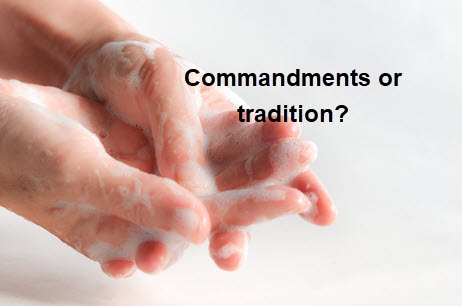
Mark 7 The religious leaders challenged Jesus about hand washing and asked him: 

 “Why do your disciples not live according to the tradition of the elders but eat with eat with unwashed hands?”  [Mk 7:5]

Jesus shows us how we can answer those questions from so-called religious people about why we do or do not do certain things. Jesus carefully reminded them that nowhere did Moses command the washing of hands prior to eating. It may be beneficial but there is no law regarding this. The Pharisees had taken what is beneficial and made it mandatory which God had not.  

So how do we interpret this and understand what we are to do. First, there are the Ten Commandments which are required for men to follow. Anything beyond that is your tradition or suggestions to follow. Church groups and religious people use this to circumvent what is required. Jesus carefully pointed his audience to what God said must be done: Honor thy mother and father but professing and doing something else is hypocritical.  

Today watch what I say and what I do for that reveals my obeying God’s commandments or my traditions.  

Impatient Hypocrisy

Jeremiah 41-45 The remaining Judahites come to Jeremiah to seek the counsel of the Lord. They hypocritically say they will listen and obey what God wanted them to do. But, in reality, God knew their heart, which was full of hypocrisy. To say one thing and yet do another is hypocrisy. These men wanted to have God say what they wanted to hear. After waiting ten days, God sent them a message: do NOT go to Egypt. If you do, you will die there. How like today! God sends his messengers to tell men to repent and be saved. Yet, men say I must have to do something; first. I must clean up my life, give more money to the church, etc. Men just cannot believe it is a simple gospel message. This story of the murder of the Babylonian governor’s murder and then the Judahite’s fear of the Babylonians is the backdrop of this hypocrisy. In hindsight, it is the truth of Prov 29:25 “the fear of man is a snare, but he who trusts in the Lord will be exalted.” 

Where has God spoken, and you have denied the truth? Where is God calling you to Himself, and you are not believing His way? 

Reconciliation or Steadfast unforgiveness?

Obadiah 1, Ps 82-83 “An Unforgiving Heart” Edom is the land of Esau, the twin of Jacob. Jacob stole Esau’s birthright as well as his father’s blessing. Esau fostered this hatred throughout his nation, and they carried a bitter grudge for centuries. Outwardly, Esau acted like he forgave Jacob when he returned home, but years later assisted the Babylonians as Judah was fleeing. They were traitors to the core, all because of an unforgiving spirit.  So Obadiah writes that they will be made small, be slaughtered, face shame, be swallowed up, and be extinguished from the earth. What strong words!  

Obadiah reminds Edom that they “should not” have done what they chose to do and provides a lesson for us about cultural and racial hatred. Instead, we are to pray for those who curse and mistreat us, hoping they will turn and be saved. [Luke 6:28]  The reason is to hope “that they may seek you, O Lord…and know that you alone are the Lord, the Most High over all the earth.” [Psalm 83:16-18]

Where are we praying for cultural and racial reconciliation? Are we a part of it or a hindrance?  

Are you Loyal or not?

loyalty

2 Sam 19-21 The word loyalty means having an attitude of devoted attachment and affection. In these chapters, for today’s reading, we find examples of those loyal to the bitter end and those who were both disloyal and treacherous. It reminds us of Judas, who was the prime example.

Joab was loyal to David and caused David to see how his outward mourning over Absalom was tearing the nation apart. Sometimes we need a Joab to wake us up to what is happening, and Joab was that friend. Disloyal Shimei cursed David yet received gracious forgiveness from David. Finally, Mephibosheth comes to David to seek forgiveness for not accompanying him, and then the truth is revealed; his master deceived him and lied about him to David. Now David knows the real story behind his absence. Amidst all this, we meet the ever-present loyal Barzillai, who proved it by providing for David’s men’s needs.

We all have those who say they are loyal but prove they are not by their actions and even words. We call them hypocrites. However, we also have those who say they are loyal, like Barzillai, and prove it through humility.

Jesus had both those who were loyal and those whose treachery would bring about his death. God knew both, and He knows both in our lives. Pray and ask God to provide you with discernment to know both.

Rejection and Decisions

1Sam 13-14 How do we handle rejection? The people rejected Samuel in favor of a king. God reminded him that they were not rejecting him but God Himself. That is a powerful lesson for us to remember when we, too, face rejection. Samuel’s humble character is revealed in how he faced this. He went to God, not other people. What do I do when rejected? Do I turn to God and lay this burden before Him, or do I wallow in my self-imposed pity party? May I learn from Samuel that when rejected, handle it with humility.

Saul is chosen king, but he is a faithless king. He is ensnared by his fear of people rather than God. [Prov 29:25] He makes foolish vows which cause the people to be faint, which happens when God is not consulted. He who makes foolish vows will ultimately pay the price as King Saul did. Be wise and discerning when considering a vow because it is usually hypocritical and because of pride. “OUCH!”

Lessons for us from these passages: Remain humble when rejected and understand that God is rejected more so than us. Secondly, consult God before making decisions that will affect others.

Pray for Discernment

Judges 1:14-15 and Judges 19-21 Hypocrisy in Living Color

We remember that the author of Judges opened his diary to show us the ugliness of sin and the contrast between purity and righteousness. Thankfully, the author of Judges reminds us that not all men are like this horrid Levite who cares so little for his concubine that he is willing to throw her to the wolves. He did not care about her spiritually or physically. But God shows at the beginning of Judges that not all men are like him. There are some righteous men in this world, and Caleb is one of those knights in shining armor. He loved his daughter Achsah and provided a husband, land, and then springs of water. He is the antithesis of this Levite. Unfortunately, there are such men as this Levite, who are despicable. There are not enough words to describe his way of life. He was a fraud and hypocrite in the truest sense. Levites were to be the spiritual leaders of Israel, but this Levite had no spiritual longings for God or His word or His people.

Beware of frauds and hypocrites like this Levite. Pray for discernment and wisdom to unearth the true qualities of a person. Pray for your girls to be discerning and for your young men to be righteous. Then put your tears in the bottles that God protects: Psa 126:5 Those who shed tears as they plant will shout for joy when they reap the harvest.

Excuses we use…

Excuses we use

Genesis 32 Feigned Love.

There is a little bit of Jacob in all of us. For example, you are invited to someone’s home or some fellowship outside but feign illness or busyness not to attend. That is where we find Jacob—and ourselves.

Again we return to the truth of Prov 29:25 “the fear of man is a snare..” Like Jacob, we are not willing to seek forgiveness; instead, we cover our behavior with excuses. So, when Jacob hears about Esau’s 400 men, he clearly thinks this is the end of his life and his family’s. Yet, the memories of his deception are still there. In his heart, he knows he was wrong, but he is still unwilling to confess to Esau his wrongful behavior, and so he fudges in his explanations—just like us.

In contrast, Esau has reconciled his past and is ready to move forward. Instead of being honest, Jacob dreams up excuses as to why he can’t accompany Esau to his home. The contrast is clear: the unrighteous often behave better than the righteous. We say we are righteous, but our behavior speaks of hypocrisy. This is a wake-up call for all who call themselves believers. Are you willing to be righteous before others?

Blameshifting

hypocrisy

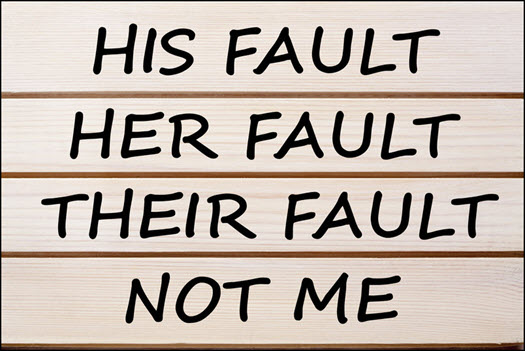
Job 40-41 Job has been seeking time to speak to God, saying if I had the chance, I would inquire of him and ask why I was being punished, yet in all of his longings, he “did not charge God with moral impropriety.” [Job 1:22] Yet Job had continued his desire to speak to him face to face so he could hear his response. So now it is God’s turn to speak, and he asks Job will you seek to correct Me? God asks Job would you annul my justice and declare Me guilty so you can be right? [Job 40:8] How often are we also guilty of this same behavior? We can’t understand our suffering, can’t understand what God is doing, so we contend that God is just being unfair so we can be right. It is called blameshifting, and it goes like this. I don’t understand why I am suffering. I am innocent! I am righteous! So it must be someone else’s fault, and God becomes our target. We are as guilty as Job.

But, Before that question, Job rightly understands that he is wholly unworthy and should therefore be silent. That is good advice for us as well. We are all unworthy! Our righteousness is as filthy rags. [Is 64:6] Such hypocrites are we!

Today take a page out of Job’s diary and listen to what you are doing by blameshifting another so you can be proven right. This should not be Beloved! God is right 100% of the time!

Are you/Am I a Hypocrite?

Beware of hypocrisy

Hebrews 8-10 Satan is not picky. He can use the hypocrisy of one to sway our minds not to obey Christ, who is the perfect sacrifice. His tool is to blind not just the unbelieving but also the mind of those who claim to be followers of Christ. He does it by the sin of one to determine our obedience to Christ. The author of Hebrews is warning us not to let the hypocrisy of one or others determine our walk. He forcefully reminds his readers not to fail in their assembling with other believers. In doing so, we trample the perfect sacrifice of Jesus and the Holy Spirit of grace.

How often do we hear I do not attend that or another church because the church is filled with hypocrites? Thus, he asks, are you not also a hypocrite by your judgment of them and your lack of obedience? The author is reminding them the world is looking for faithful believers. When they do not see us obeying, they have no standard by which to know the truth.

Know this principle: He who says he believes should obey to assemble with others of like faith. If you say you believe the Word of God, you should not let the hypocrisy of one determine your obedience. You are called to be faithful, not take on the job of judgment. That is God’s job, not yours.

Optimized by Optimole