Sin and Holiness cannot co-exist!

Numbers 33 God desires a holy people. As Israel’s people near the end of their wilderness wandering, Moses takes them aside to remind them to purge the land of the idolaters and their idols. “Destroy all their carved images, all their molten images, and demolish their high places.”[Num 33:52]Then God gave them a warning: “But if you do not drive out the inhabitants of the land before you, then those whom you allow to remain will be irritants in your eyes and thorns in your side, and will cause you trouble in the land where you will be living.” Further: if you do not do what I intended to do to them, I will do it to you. [Num 33:55,56]

Yes, when we do not purge the idols in our lives, they become irritants, a constant reminder of our unwillingness to get rid of sin. Paul reminded the Ephesians to imitate God, not the other way around. We must be holy people because God is holy. Psalm 1 reminds us of how to test ourselves. Do we walk in the ways of the ungodly? Do we stand in the way of sinners? Do we sit in the seat of the scoffers? Practically, what does that mean? We must choose our associations, the places we visit, and our companions.

What choices are before us today?

Vows are Serious Promises!

Num 30 A vow is serious and one that, if made, must be kept. When we stand before the magistrate or the pastor who is performing our marriage, we make promises to love and comfort, honor and keep and forsake all others, meaning we will be wholly true to the one to whom we recite these words all the days we are married. In court, we take a vow to tell the truth, and we end it with “so help me, God.”  If we invoke that name, it means that we are serious, and God takes serious notice of those who make vows. They are binding and ones that cannot be revoked.

 In fact, it is so serious that even King Solomon noted it: “When you make a vow to God, don’t delay fulfilling it, because He does not delight in fools. Fulfill what you vow.  Better that you do not vow than that you vow and not fulfill it.  Do not let your mouth bring guilt on you, and do not say in the presence of the messenger that it was a mistake.” [Eccl 5:4-6]

Where have you made a vow, and are you keeping it?

Preciseness and Sweetness

Num 28: God is precise in what He desires. The amount that was offered was staggering! Are the offerings we give to our church staggering and sacrificial? Why do we give? How much do we give? God loves a cheerful giver, and He blesses both the gift and the giver. [2Cor 9:7] God looks at the heart and desires that the heart matches the gift, yet He gave precise instructions for what was to be offered. It was to be the best of their flock, unblemished and given as prescribed. They were to select the best of their lambs and bulls because nothing is too good for God; it must be the best, for God has given His best and we must give our best.

May we have the right motivation, the right heart, and the best of our best for God this week.

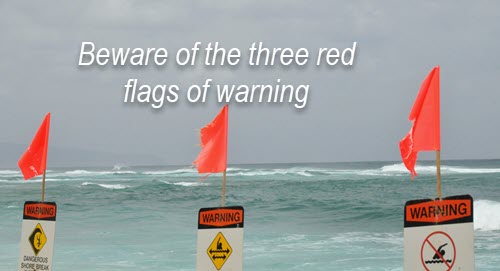
Beware of the Red Flags

beware and be blessed

Numbers 25: I have been thinking more about the story of Balaam and what God is teaching me through this story. It seems that God placed this story here to remind us/me of the ways of our arch-enemy, Satan, in contrast to the man of Psalm 1. In Psalm 1, God lays out the plan for His blessing. The King of Moab is that ungodly man. He knew that God was blessing the Israelites because they were more in number than his own nation, so he sought a way to curse them.

Red Flag #1: We must listen and obey the still, small voice of the Spirit of God. We must have ears to hear and discern so we can decline the enemy’s voice. How often do we compromise by saying I will just stand here and listen, just as Balaam did? God is not the author of confusion. He will never speak words that are against His character. 

Red Flag #2: Where will you stand? Balaam went and stood in the king’s presence. Like him, when we make this choice, it is getting harder for the Spirit of God to speak to our hearts.

Red Flag #3: Balaam sat in the presence of the King rather than moving away. Each time, Balaam was making it harder for the Spirit of God to guide him in righteous ways. And when we have reached that last flag, it makes it harder for the Spirit to speak and harder for us to listen.

Today we must choose the way of the Psalm 1 man model so that God can bless us and we can bring forth fruit. Beware of the red flags.

Wrong Way Balaam

Wrong way Balaam

Num 23-25 We have heard of ‘Wrong Way Corrigan,” the man who filed a flight plan for a flight from NY to Ireland but was denied. After liftoff, he turned his plane and flew to Ireland anyway. In some ways, Balaam, the soothsayer hired by King Balak of Moab, is like Corrigan. He was hired to curse Israel but blessed them instead. All was well until the fourth time when he, like Corrigan, decided on his own plan instead of obeying God. How often do we follow God’s plans until the money train runs out or we have what we consider to be a better idea? In this humorous but sad tale, complete with a talking donkey, we see a man hired to curse, claiming he was following God’s orders. King Balak continued to offer a prize for his cursing, but God controlled Balaam’s tongue until we enter Chapter 24 and see him setting his face toward the wilderness and not listening to God. 

The rest of Wrong Way Balaam’s story is told many times over as a man whose heart was greedy and self-serving. The result was that in the end, Moab cursed Israel through sexual immorality, and thousands died as a result. There is always a cost and a consequence to our sins, and Balaam is proof of that.

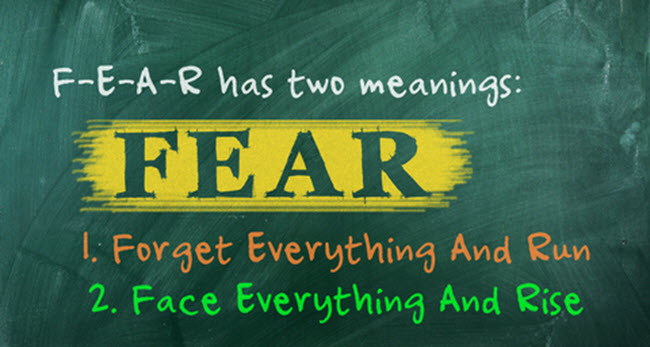
Fear of Man or Fear of God?

fear has two choices

Num 22 Recently, we have seen the revolution of the Spirit of God upon several who have repented of their sins. Some people are fearing God, and others are openly criticizing it as fake. What is now is the same as in the time of the wandering Israelites.

The king of Moab, Balak, son of Zippor, also saw the power of God, and he too was fearful—but not the fear that leads to repentance. Just like the Pharisees in the NT, he was fearful of losing his power and prestige. [John 11:50] Rather than bow the knee to Jehovah, he bows the knee to a false prophet, Balaam, son of Zippor, a soothsayer. Over and over through the OT and the NT, God refers to him as one who, for greed, disobeyed God. [2Peter 2:16]

Was he a believer in Yahweh? Scholars differ on that. What we do learn is that God used him to pronounce provision and protection for His people and the demise of the Moabites, an ungodly unrepentant people. 

The question before us is this: How do we respond when we see the hand of God at work? Do we, in reverence, fear Him, or do we fear the loss of our perceived recognition of earthly power? Again we see the truth of Prov 29:25. If you fear men you will find yourself in a trap but if you fear God, He will exalt you

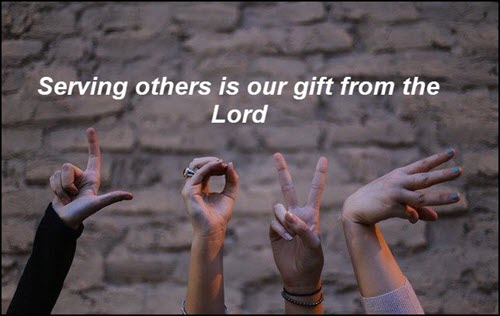
“Saved for Service”

Saved for service

Numbers 18 We often are reminded of this saying, so where does that come from, and is it true? The priesthood in the OT is our model. God only spoke to Aaron in Numbers 18:7 and Lev 10:8 to remind him that his position as High Priest was a gift from the Lord. He was not to keep it for himself but to be a ministering servant priest for the congregation. Today we are to be ministering servants, and we take our orders from Rom 12:1 “Therefore I urge you, brethren, by the mercies of God, to present your bodies a living and holy sacrifice, acceptable to God, which is your spiritual service of worship. And again in [2Cor 8:14], Paul reminded the Corinthians: your abundance will meet their need, so that one day their abundance may also meet your need,


Is there someone in need today? Consider meeting another’s need as your work order for today.

The Proper Response

respond with grace

Numbers 16 Envy, resentful longing for what you don’t have, is one of the ‘dark’ sins, one of the “deadly d’s.” It is like an infection. If not treated, it spreads from one person to another, and Peter warns us about it. [1Pet 2:1] It begins with a thought, and then the idea is enlarged by adding other innuendos. Such is the plan of our arch-enemy, whose whole purpose is to seek, kill and destroy. [Jn 10:10]

As a Levite, Korah was privileged to assist in the Tabernacle service with Aaron as the High Priest. He had seen the power of God over and over, but an envious thought began in his mind. Why does this person think he should be the leader? I am just as important. Envy is a deadly sin, and it begins like one germ but multiplies by gaining affirmation from others. Never underestimate the power of envy. As it increases, so do our thoughts and ideas, and sadly, we often include others in our path of infection. Moses was aghast when Korah confronted him. Yet, rather than responding angrily, Moses fell face down and pleaded with God for Korah’s forgiveness. Is this our response?

How do you face this type of sin from others? Do you vent and seek a following like Korah, OR do you ask God for their forgiveness like Moses?

Faith or Fear?

Faith or Fear?

Numbers 13-14 God noted that over ten times, He tested them, and over ten times, they failed. So now God would give them the biggest test of all. He would reveal treasures beyond their wildest imagination. Would they remember God’s faithfulness in the past and His provision?

Ten spies sent to scout out the Promised Land saw the beauty, but their faith waned when they saw the giants. Only Caleb stood up to them and said: Let us go! Let us occupy!

God’s promises are real, but we have to have “Caleb and Joshua” eyes to see and “Caleb and Joshua” hearts to trust. God shows us the treasures of His Word, but just as the Israelites saw the enemies, our arch-enemy is always seeking to offer his fruit, and if we listen and partake, we will find that it is deadly. We have a choice, just as the Israelites did. Will our faith conquer our fears?

The Israelite’s fear triumphed over their faith. Prov 29:25 reminds us that the fear of man is a snare, but he who trusts in the Lord will be exalted. Their fear revealed their lack of faith with words of “yes…but,” and only Joshua and Caleb lived to tell about it for over 40 yrs. How often does God show us His treasures, but our enemy “fear” triumphs over our faith? Be a Caleb and a Joshua!

Optimized by Optimole