The Price of Sin

The price of sin

1 Chronicles 21 King David decides he wants to know how big his army was, but we aren’t told why. The backdrop note is that God allowed the adversary to slip in unnoticed.  To alert David to the sin he was about to commit, God sent wise a counselor through Joab, His General. Joab pleaded with David to not do a census, but his words fell on deaf ears. David insists, and so finally, Joab follows through. God, in His patience, allowed this sin to fester for over a year and a half. Not always does God allow us to see the fruit of our sin.

We all need a Joab in our life to challenge us as to our motives in decision making. God uses them to discern where our hearts lay. For David, his heart was in his pride of the army he had amassed. What he had not counted on was the price that would he would have to pay for his sin. David was “like someone who gazes at his face in a mirror. For he gazes at himself and then goes out and immediately forgets what sort of person he was.” [James 1] It is because of his filtered view that God sent Joab into his life. 

David didn’t back down, but somewhere along the path of foolish decisions; the Spirit came to him to prick his heart. Although God forgave David, the price for his sin was grievous. The same goes for us when we sin. There is always a price to be paid. God set the price for our sin with the body and blood of His Son.


How do you face the death of a dream?

Dreams that die

1 Chron 17 Being quarantined to protect ourselves from the coronavirus has been a challenge for many. Some of us have had our dreams put on hold or even terminated. This might be a good time to ask God what He is doing. Does He have a different plan for your life?

King David had a vision or a dream. It came from a pure and humble heart. There was nothing wrong with David’s dream, and there may be nothing wrong with yours. But God wants us to dream with Him. Sometimes we share our dream with those closest to us, just as David shared his with the prophet Nathan. Nathan was excited and encouraged David to commence—but then God came to Nathan with a message for David. God was not only delaying the dream, but he also was not going to fulfill it. Hearing Nathan brought David to a point where he had to make some choices about how he should respond to the “death of his dream.”  He went in and sat before the Lord humbly. How we respond shows whether our dream was ours or His. Note this lesson; God didn’t take away David’s dream. Instead, God was saying; your dream is too small. I have bigger plans for you that you can’t even imagine just as the prophet Jeremiah told the Israelites. In a nutshell, God said: I have plans to prosper you and to give you a future filled hope. {Jer 29:11 author’s thoughts}

Don’t stop listening when God says no. He usually has something far greater or bigger than you can imagine.

“Praising God in Song”

1Chron 16 There are exciting and powerful nuggets in the OT.  For instance, the prayer of Jabez in 1Chron 4 and the prayer of Nehemiah are very similar. Check them out. Now in 1Chronicles, we have insight into the praise and worship of the Israelites. The author saved it as an example of our praise and worship.

If you take time to read this praise and worship hymn that David recorded for the people, you will see that the focus is on God, not “me.”  It seems that lately, many of our praise songs are touchy-feely in sharp contrast to this one in which God is extolled and honored. David asked Asaph to teach it and rehearse it. Some scholars think it was incorporated into the worship services from then on. When Paul tells us to speak to one another in psalms, hymns, and spiritual songs, could he have been thinking of this passage?

Note there is a reminder to sing, seek, and thank God.  David wanted the people to consider the wonder of God and to boast about his holy name. He wanted them to recall and remember what God had done. He wanted them to do it continually. In fact, if you read it from beginning to end, there are ten commands but only one request.

There are essential stories behind many of our favorite hymns. Do some research and learn about your favorite hymn. Then share what you found with us.

Photo: Crosswalk.com

“Saul’s Death”

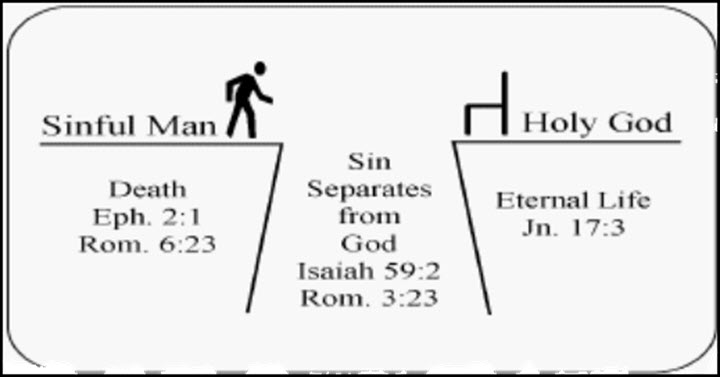
Salvation Graphic

1Chronicles 10 Was it God’s will for Saul to die is a question that comes to mind as we read this short but vivid chapter. In vs. 14, we learned that “the Lord killed him,” so the answer to that question is yes. God willed that Saul should die because he was unfaithful. He did not obey the Lord’s instructions. He tried to use a witch to determine his safety. These are hard words for us to swallow, and we would like Saul’s end to be like many of our fairy tales; they lived happily ever after. But, Saul chose his path and his destiny just as we do. God’s grace is ever-present because He is longsuffering even to the point of death.

Preparing for our entrance into eternity is as simple that a three old can understand it: Admit you are a sinner in need of redemption; Believe and trust in God. Confess your sin to a loving and holy God who will cleanse you in preparation for his glory. We stand on the threshold of eternity every day. The gospel is God’s power for salvation, and the righteousness of God is revealed in the gospel from faith to faith. It is also true that since creation, God’s invisible attributes, His eternal power, and divine nature – have been seen and understood through creation. Therefore men are without excuse for not knowing. Saul knew it, and men today know it.  

What do you want on your tombstone? This: “well-done thou good and faithful servant” or this: “he/she was unfaithful.” It really is your choice.  

Graphic: https://bible.org/article/gods-plan-salvation

The Man Jabez & His Prayer

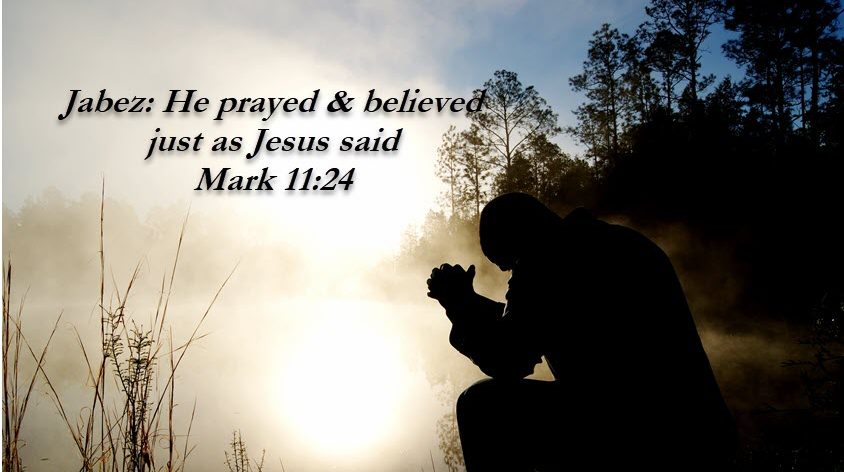
1Chron 4 As we ponder the many names listed in chapters 3 and 4 we come away with a yawn until we reach chapter 4. Of all the names listed, only Jabez is listed with a full description of his birth and a prayer he offered. He stands out amongst the others because of his pure heart.

First, he was respected or held in honorable estimation more than his brothers and that his mother birthed him in great pain but we are left to surmise the reasons. We know that Jabez called out to the God of Israel in sharp contrast to the culture about him.  He was spiritually alert to God and His workings in his life. He sought Him in a time when his need was great. In his plea, he asked God to greatly bless him and expand his territory. Jabez asks God to expand his territory for more opportunities. Do we pray that God gives us more opportunities to glorify Him?  Jabez believed this: “Lord, first, above all else, let there be this consciousness that you are my God; that I belong to you and you belong to me.” [Ray Stedman]

Jabez turned to God. He believed in the God of Israel. His prayer was that of a heart that was pure. His one desire was to honor God.  Jabez believed as James says “without doubting” that God would transform his life for His glory and “God answered his prayer.” We can learn much from this simple man for our ministry today.

The Sacred Graveyards

1Chron 1-3

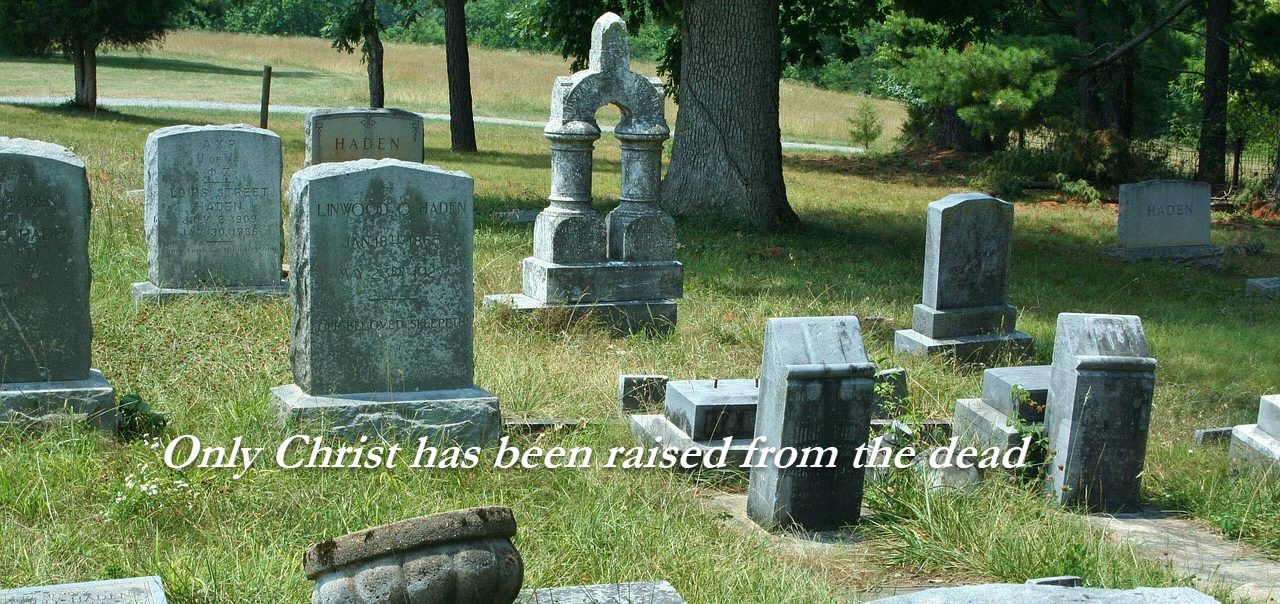
Easter was a glorious reminder that Christ rose from the dead and that because of that we have hope and will rise one day and meet Him in the clouds. As we read this list of unpronounceable names we are reminded that only Christ has been raised. Until then men will still die and will not experience the resurrection until our risen Christ returns. We will join many in the sacred graveyards and the living will only have a gravestone and memories. Why did the Chronicler record so many unpronounceable names? Why did he register the names of Israel’s enemies? Why are there so few women’s names? So what are we to glean from this sacred graveyard?

The Chronicler wants us to know that life is short, eternity is long, and God has revealed His plan for our redemption.  Woven in this chain of people, we find that God sent His son born of a woman to redeem those who were under the law. Some bowed the knee and whispered God save me for there is no other name under heaven whereby we are saved. We are saved not from perishable seed but imperishable. No matter how great our first birth privilege or heritage is, it does not secure our salvation for by no works are we justified, but by His grace alone.

One day all of us will stand before the Lamb of God when the books are opened. To some, they will hear well done, thou good and faithful servant; but to others, they will hear–depart from me I never knew you.

This is a sobering thought. Consider your decision for Christ today.

The Sacred Graveyards

1Chron 1-3 Easter was a glorious reminder that Christ rose from the dead. His resurrection gives us hope that one day we will hear the trumpet and rise to meet Him in the clouds. For now, we are left with a list of unpronounceable names to remember that only Christ has been raised from the dead. Men will still die and join many in the sacred graveyards leaving only a gravestone and memories.

Why did the Chronicler record so many unpronounceable names? Why did he register the names of Israel’s enemies? Why are there so few women’s names? So what are we to glean from this sacred graveyard?

The Chronicler wants us to know that life is short, eternity is long, but God has revealed His plan for our redemption.  Woven in this chain of people, we find that God sent His son born of a woman to redeem those who were under the law. Some bowed the knee and whispered God save me for there is no other name under heaven whereby we are saved. We are saved not from perishable seed but imperishable. No matter how great our first birth privilege or heritage is, it does not secure our salvation for by no works are we justified, but by His grace alone.

One day all of us will stand before the Lamb of God when the books are opened. To some, they will hear well done, thou good and faithful servant; but to others, they will hear–depart from me I never knew you.

This is a sobering thought. Consider your decision for Christ today.

“Tuck this away for a hard day…God hears your cry”

Stormy times

2Kings “Tuck this away for a hard day”

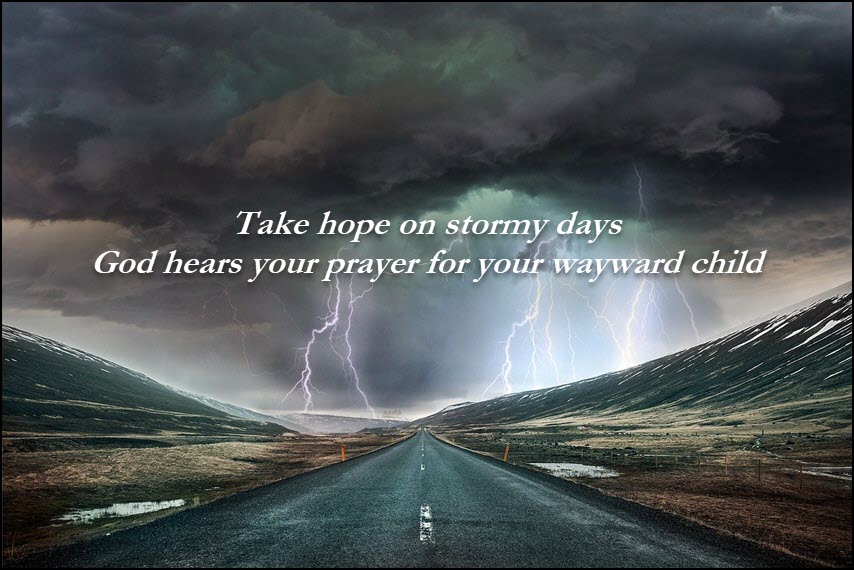
Are you facing a storm in your life with a child that just refuses to obey? Although Hezekiah was a good king, he was not a faithful father. His son Manasseh was the worst of the worst! However, after being captured by the Babylonians, he repented, and God returned him to his homeland. His story is just what is needed when you face a hardened sinner. Tuck that away for such a time as that. Manasseh is the story of us all: sinners saved by His grace.

Manasseh’s son Amon followed in his footsteps but never repented.  Manasseh’s grandson Josiah was the model king, faithful, obedient, and godly. He obeyed the Law to the letter, cleansing and rebuilding the Temple. He cleansed the land and its people. God blessed him in many ways. Yet, as godly as he was, his son Jehoahaz returned to the ways of his grandfather and uncle.

There are some lessons here for parents who are discouraged because of their children’s choices. God was gracious to Josiah that he never saw the ultimate rebelliousness of his son. Sometimes that happens to us as well. Even when you raise them correctly, children make choices, some good and some bad. Tuck that lesson away when you are facing an uphill battle.

Parenting is the toughest job given to a person. We need to remember that and pray and disciple young parents.   Come alongside them; encourage them; listen to them.

Do you have a rebellious child? May I pray for you?

When Tests Come, Trust God

Prayer is the answer

2 Kings 18 Hezekiah lived in a time when Judah had prophets like Isaiah to guide and teach.  Hezekiah was mentored by him nearly all his life, yet Hezekiah had two areas of weakness: fear of men and pride. Hezekiah fell into the trap of fear when Assyria threatened his kingdom. Although the Assyrian king accepted his tribute, like Satan, he upped the ante and Hezekiah prostrated himself before the Lord. That is how Satan works; he will give a little only to take a lot. Beware of Satan’s tactics. He is our arch enemy.

Hezekiah fell ill unto death, and Isaiah tells him God is knocking at his eternal destiny door.  Hezekiah wept before God and reminded God of his faithfulness and he was healed. But, then another enemy, Babylon, comes knocking and Hezekiah is fooled by their gifts and get well wishes. Hezekiah’s heart was proud of his wealth and missed an opportunity to share the power of prayer and God.   The Chronicle writer notes that God left Hezekiah alone to “test what was in his heart.” Pride is one of Satan’s masterful tools.

Hezekiah possessed God’s blessings, and God approved him, but he failed in these two areas and missed the golden opportunities God placed in his path.   

Have we missed them as well?   

Is it Good Friday? Can beauty come out of the ashes?

Luke 23 “Good Friday & Beauty out Ashes”

Dr. Luke records for us the witnesses at the cross. Only by the Spirit of God could one chapter hold so much that grabs our attention and cause us to fall upon our knees in humble adoration for the Messiah who gave all that we might worship Him alone.

Today of all days, we hear the very pilgrims who shouted Hosanna, but now are shouting Crucify Him, Crucify Him! These were led by the unrepentant religious leaders. They had been given the privilege of treasuring and imparting the sacred scriptures. These leaders had been called, chosen, and anointed and cleansed. Yet it is not the outward cleansing but the cleansing of the heart that God desires. Jesus pinpointed their heart problem:  But the Lord said to him, “Now you Pharisees clean the outside of the cup and the plate, but inside you are full of greed and wickedness.” [Luk 11:39] God desires that we  draw near with a sincere heart in the assurance that faith brings, having our hearts sprinkled clean from an evil conscience..” [Heb 10:22] 

Contrast this scene to the one criminal on the cross who recognized and submitted to the Son of God. Listen to his words; Jesus, remember me when you come into your kingdom.” In that one brief interchange, Dr. Luke transcends earth to heaven so that beauty may come from the ashes of sin, and we learn of the plan of salvation. First, one must revere God; secondly, one must recognize that they are a sinner in need of repentance. Like the criminal, we are justly condemned for our sin. We must seek His face and His forgiveness. We then hear his response: “I tell you the truth, today you will be with me in paradise.”

Note the promise: it happens today, not in the future. We will be with Him! We will be in paradise with Him.

Optimized by Optimole